


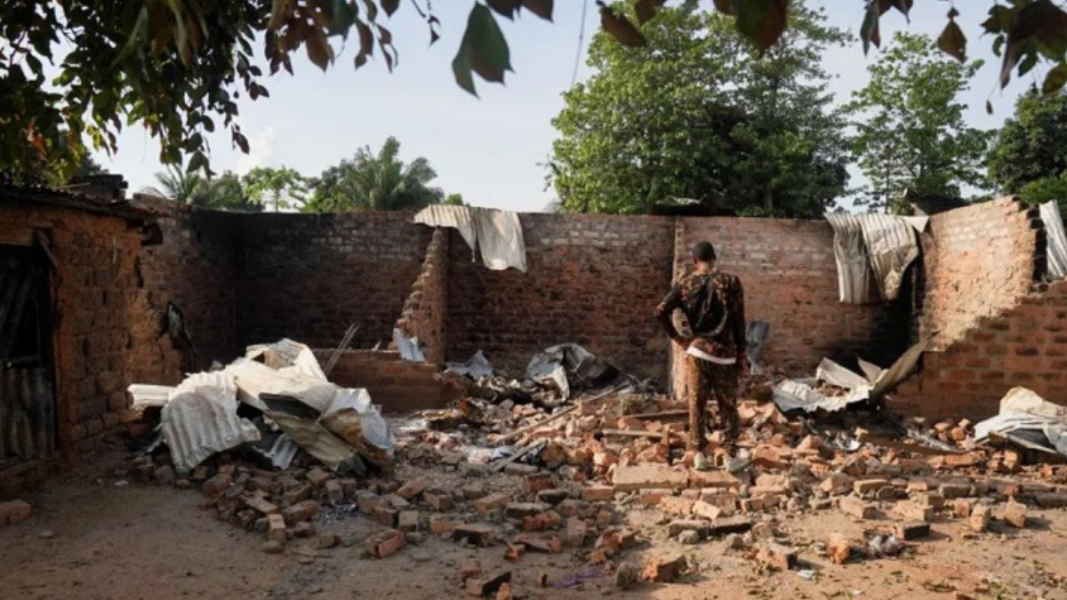
A new wave of armed attacks against Christian religious and healthcare facilities in north-central Nigeria has once again spotlighted the insecurity faced by the country’s Christian communities, according to Tribune Chrétienne. The incidents occurred in early February in Niger State and included assaults on a Catholic convent, clinics, hospitals, and churches.
The actions, carried out almost simultaneously in several locations, affected both ecclesiastical infrastructure and civilian homes and police posts, forcing numerous residents to flee the area for fear of further armed incursions.
Nocturnal Assaults and Destruction of Infrastructure
During the night of February 1 to 2, armed groups attacked various populations under the jurisdiction of the Diocese of Kontagora. Among the targets were a convent linked to a Catholic clinic, diocesan healthcare facilities, and Christian temples belonging to various denominations.
Although the nuns managed to take shelter, several of the structures were looted or set on fire, leaving communities that already lived in extreme precariousness without medical care. After the attacks on religious and healthcare buildings, the assailants intercepted vehicles on the area’s roads, causing fatalities and kidnappings.
Official Confirmation and Kidnappings
Police authorities in Niger State confirmed at least one of the attacks, including the assault on a police post using explosives, as well as the kidnapping of several people. The incidents once again demonstrate the operational capacity of armed groups that act with little effective opposition in wide areas of the country.
A Pattern of Repeated Violence
These episodes add to a long series of attacks that recurrently affect Christian communities in central and northern Nigeria. In recent weeks, bishops and church leaders have warned about the normalization of violence and the lack of effective responses from state institutions.
The repetition of assaults against churches, convents, priests, and services linked to the Church has fueled the perception that these are not isolated incidents, but a sustained dynamic of harassment.
NGOs Alert to a Process of Elimination
Various non-governmental organizations specialized in religious freedom have gone further in their diagnosis and openly speak of a systematic process of eliminating the Christian presence in certain regions of the country. Figures disseminated by these entities point to thousands of Christians killed in recent years and the destruction of numerous churches since the start of the Islamist insurgency in 2009.
For these organizations, the combination of murders, kidnappings, destruction of temples, and forced displacements points to a strategy of terror that has a clear religious impact, even if it is not officially recognized.
The Rejection by the Nigerian Government
In response to these denunciations, the Nigerian federal government continues to deny that the violence has a specific religious motivation. The authorities maintain that the conflicts respond to complex factors—ethnic, economic, territorial, or climatic—and reject the use of the term “genocide.”
However, for numerous church leaders and international observers, this interpretation minimizes a visible reality on the ground: entire Christian communities abandon their villages, parishes disappear, and insecurity becomes a permanent factor of vulnerability for those who profess the Christian faith in wide areas of Nigeria.