


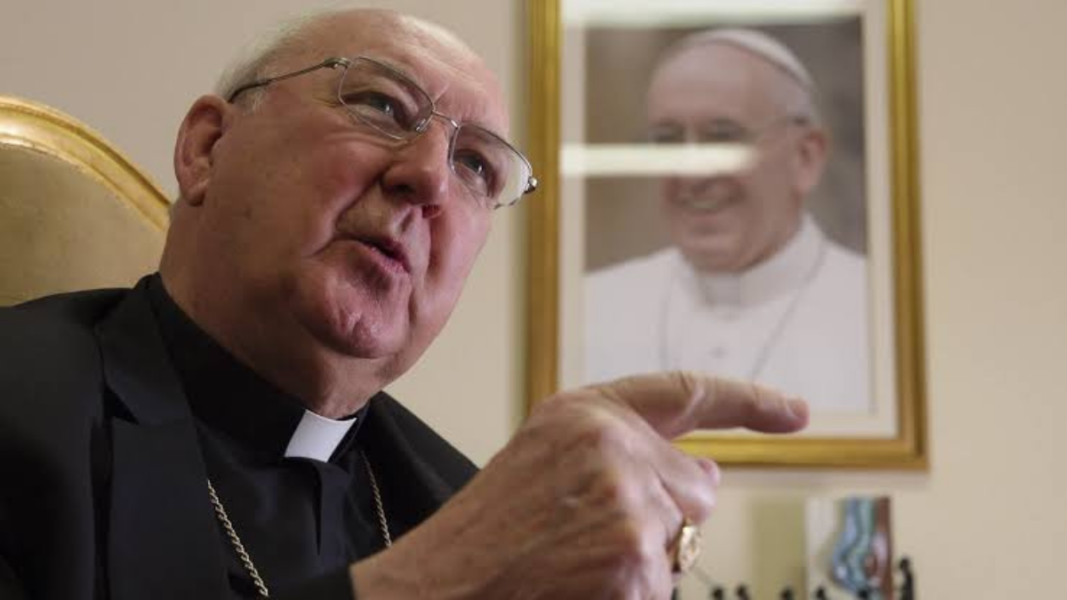
Cardinal Kevin Joseph Farrell, prefect of the Dicastery for Laity, Family and Life, highlighted the urgent need to strengthen the Christian formation of the lay faithful in the Church, reports Vatican News. The statement was made when inaugurating the Third Plenary Assembly of that dicastery, under the theme “Until Christ is formed in you”.
A Plenary Assembly Focused on Christian Initiation
From February 4 to 6, the Third Plenary Assembly of the Dicastery for Laity, Family and Life was held in Rome, an organ of the Roman Curia responsible for promoting the apostolate of the lay faithful, family pastoral care, youth, the elderly, and the defense of human life.
In the opening of the proceedings, Cardinal Farrell emphasized that Christian formation cannot be taken for granted, but rather as a pastoral priority in a time when many people lack a solid knowledge of the faith and a living relationship with Jesus Christ.
Integral Formation for Christian Life
The prefect highlighted that formation must be integral, encompassing not only doctrinal knowledge, but also prayer life, sacramental experience, reflection in the light of the Word of God, community, and charitable service. He invited each diocese and parish to offer evangelization and catechesis programs that include initial proclamation, Christian initiation, faith formation, and spiritual accompaniment for all ages.
Farrell also cited the Apostolic Letter of Leo XIV on Christian formation, which encourages a faith education that encompasses the spiritual, intellectual, affective, social, and bodily dimensions of the person.
The Role of the Family and the Laity
The cardinal’s intervention included special emphasis on the formation of families and spouses. He pointed out that it is important for pastoral care to offer accompaniment and resources to strengthen conjugal spirituality, married life, and the transmission of faith to children, and recommended that this task also be assumed by married couples, who with their witness of life can support and guide other families.
Likewise, he encouraged episcopal conferences, bishops, priests, religious, and committed laity to promote a “new work of Christian formation” that responds to the challenges of the current world.
Cultural Changes and the Mission of the Church
Farrell warned that cultural transformations—such as globalization, social mobility, and digital development—have generated new realities and challenges for the living transmission of the faith. Therefore, the Church must adapt its methods to effectively bring the Gospel to people today, without renouncing the truth or the beauty of the Christian tradition.
In this context, the dicastery is also reflecting on how the World Meetings promoted by the Church—such as World Youth Days, World Meetings of Families, and the World Day for Grandparents and the Elderly—can become profound experiences of encounter with Christ and opportunities for formation for all generations.