


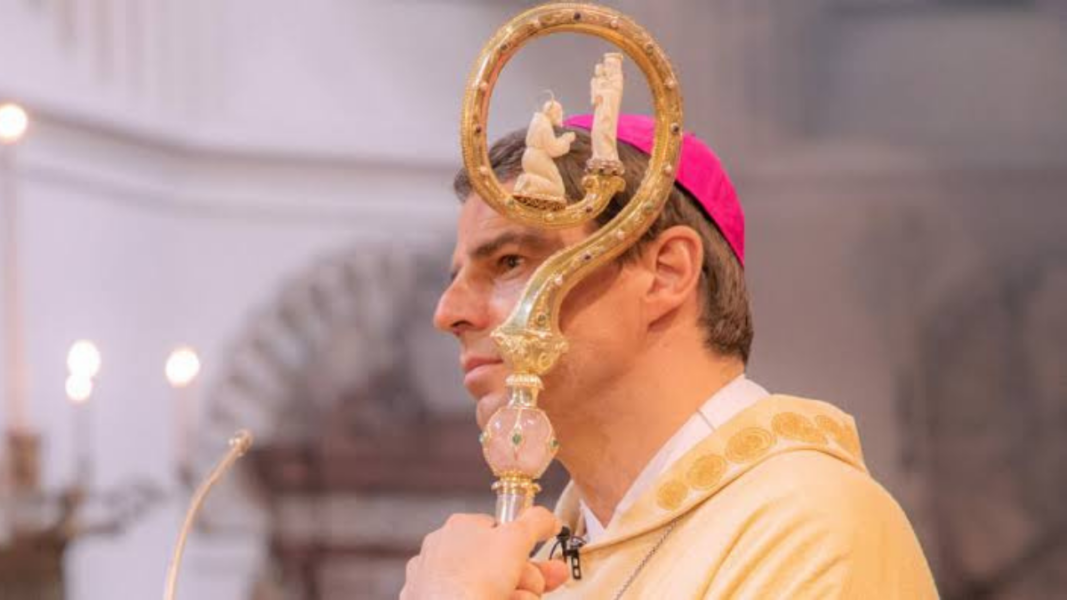
The Bishop of Passau (Germany), Monsignor Stefan Oster, has publicly expressed his rejection of applying the main resolutions of the German Synodal Way in his diocese, as well as the monitoring system planned to evaluate their implementation in the dioceses.
Criticism of the implementation of synodal decisions
In a post published this week on his personal blog, the prelate argues that the application of the reforms approved in the synodal process would accelerate the processes of internal dissolution of the Church in Germany. For this reason, he states that he cannot and does not wish to support “essential reform claims” already approved by the Synodal Way.
Oster acknowledges that he takes seriously the concerns expressed by many women and people with same-sex attraction, but he considers that the proposed responses—such as blessings of unions not in conformity with Church doctrine or the introduction of a non-sacramental female diaconate—do not adequately address the underlying issues from a theological perspective.
Doctrinal and anthropological objections
According to the bishop, these proposals stem from an insufficient understanding of Christian anthropology and the relationship between God and creation. Furthermore, he warns that they could generate new wounds and experiences of exclusion, rather than offering a truly integrative response.
He is particularly critical of the so-called “monitoring” or control system to verify the application of synodal decisions in the dioceses. In his view, this mechanism already presupposes a new sexual morality and a new anthropology, as well as the expectation of a doctrinal change under the pontificate of Pope Leo XIV.
Fidelity to the magisterium and priestly promises
Monsignor Oster states that he does not expect changes in Church doctrine and is convinced of the value and validity of the current teaching. In this context, he recalls that as a deacon, priest, and bishop, he has solemnly promised to safeguard and proclaim the Church’s doctrine, a commitment he considers incompatible with most of the demands raised in the framework of the Synodal Way monitoring.
From this perspective, he warns that the application of these demands would deepen internal divisions in the Church, especially with regard to the faithful who remain attached to the faith transmitted by tradition.
Risk of greater ecclesial polarization
The Bishop of Passau alerts that, in this process, the so-called “mainstream” within the Church is shifting further and further toward progressive positions, while the faithful who wish to live from the sacraments and remain in traditional teaching are portrayed as marginal extremists. In his opinion, this dynamic is deeply detrimental to ecclesial communion.
He also expresses reservations about the planned Synodal Conference, considering that many Catholics guided by the magisterium will once again feel insufficiently represented. In this context, he warns of a growing process of “self-secularization” within the Church in Germany.
Underlying criticism of the Synodal Way
In his analysis, Monsignor Oster argues that the Synodal Way has been oriented from its beginnings toward modifying the doctrine on human nature and the priesthood, imposing certain positions on sectors faithful to the magisterium, and not toward fostering an authentic missionary conversion.
He considers that the emphasis on reducing clerical power has been accompanied in many cases by a questioning of the sacramental character of the priesthood, and warns of the risk of replacing one form of clericalism with another, now exercised through control structures over bishops and priests.
Call for spiritual renewal
In the face of these dynamics, the Bishop of Passau points to signs of ecclesial renewal outside the Synodal Way, especially among young people seeking spiritual depth, sacramental life, and liturgical beauty. According to him, these faithful do not usually feel addressed by the dominant synodal themes.
As a positive example, he mentions the spiritual conversation encounters promoted in Rome during Pope Francis’s pontificate, characterized by a climate of discernment and far removed from political or parliamentary logic. In his view, the future of the Church does not lie in redistributions of power, but in an authentic spiritual renewal and interior conversion.