


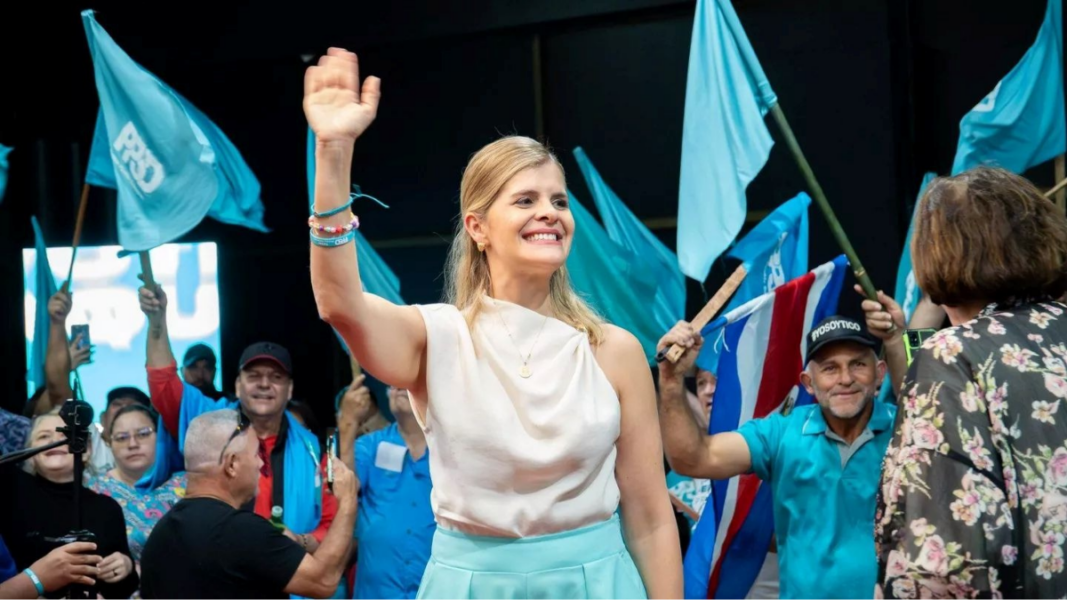
Costa Rica elected Laura Fernández Delgado as the new President of the Republic on February 1st, after clearly prevailing in the general elections and achieving victory in the first round. The candidate from the Sovereign People’s Party surpassed the threshold necessary to avoid a second electoral round, according to preliminary data from the Supreme Electoral Tribunal, thus consolidating the continuity of the political project initiated by the current president Rodrigo Chaves.
With this result, Fernández becomes the second woman to access the Costa Rican presidency and will assume office on May 8th.
Political Continuity and Experience in the Executive
Laura Fernández, a political scientist by training, was part of the core of the outgoing Executive, serving as Minister of the Presidency and previously as Minister of National Planning. During the campaign, she repeatedly emphasized her intention to continue the policies promoted by Rodrigo Chaves, presenting herself as a guarantor of stability and the deepening of the reforms undertaken in recent years.
In her first statements after the results were known, the president-elect stated that Costa Ricans had opted for “the continuity of change,” an expression that synthesizes the central message of her campaign: maintaining the political course in the face of what she described as attempts to return to previous models marked by immobility and institutional weakness.
Life, Family, and Freedom as Pillars of the Discourse
One of the most prominent elements of Fernández’s public discourse has been her insistence on defending life, family, and freedom as pillars of her political project. In her interventions following the electoral victory, the president-elect defined herself as a defender of these principles, framing them within a broad conception of democracy and respect for human dignity.
This emphasis has been particularly significant in a regional context where debates on human life, family, and cultural identity are increasingly prominent on the political agenda. Without turning these issues into ideological slogans, Fernández has integrated them as part of a broader vision of social order, national cohesion, and the State’s responsibility.
Security and the Fight Against Organized Crime
Security was another central axis of the electoral campaign. In a country that had traditionally been perceived as one of the most stable in Central America, the increase in organized crime and violence linked to drug trafficking has generated growing social concern.
Fernández capitalized on this discontent by proposing a line of firmness against crime and reinforcing the message of continuity with the security policies promoted by the Chaves government. Her victory has been interpreted by analysts as citizen support for an agenda that prioritizes public order, the strengthening of the rule of law, and the reform of the justice system.
The Message from the Episcopal Conference of Costa Rica
Following Laura Fernández’s electoral victory, the Episcopal Conference of Costa Rica issued an official statement expressing its congratulations to the president-elect and the elected deputies, underscoring the democratic nature of the process and the responsibility assumed by those who have received the popular mandate. In the text, the bishops highlighted that the new government begins a demanding task oriented toward serving the entire nation, promoting dialogue, healing divisions, and seeking the common good.
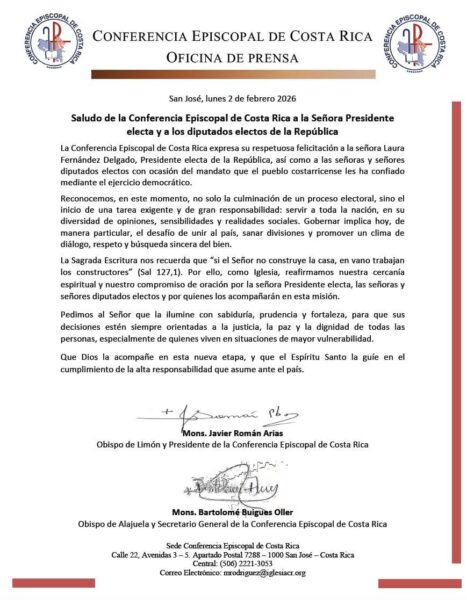
The episcopal message, dated February 2, 2026, frames this new political cycle in a spiritual key, recalling that “unless the Lord builds the house, the builders labor in vain,” and reaffirms the Church’s commitment to accompany the new authorities with prayer. Likewise, the prelates ask God to grant the president-elect wisdom, prudence, and strength, so that her decisions are oriented toward justice, peace, and the dignity of all people, with special attention to the most vulnerable.
A New Political and Institutional Scenario
In the legislative sphere, the Sovereign People’s Party achieved significant representation in the Legislative Assembly, although without reaching a sufficient majority to push through far-reaching reforms without agreements with other political forces. This scenario will oblige the future president to seek parliamentary consensus to advance her program, especially in matters of structural reforms.
The election of Laura Fernández occurs in a broader context that transcends Costa Rican national politics and refers to a fundamental issue: the need for leaders who do not hide their faith or renounce translating it into government criteria. In a time marked by moral relativism and the dissociation between public life and personal convictions, the presence of politicians who uphold life, family, and the dignity of the human person as non-negotiable principles once again places the role of Catholics in public life at the center. It is not a matter of confusing faith and power, but of remembering that politics, when authentic, must serve the common good and not stand apart from the truth about man.