


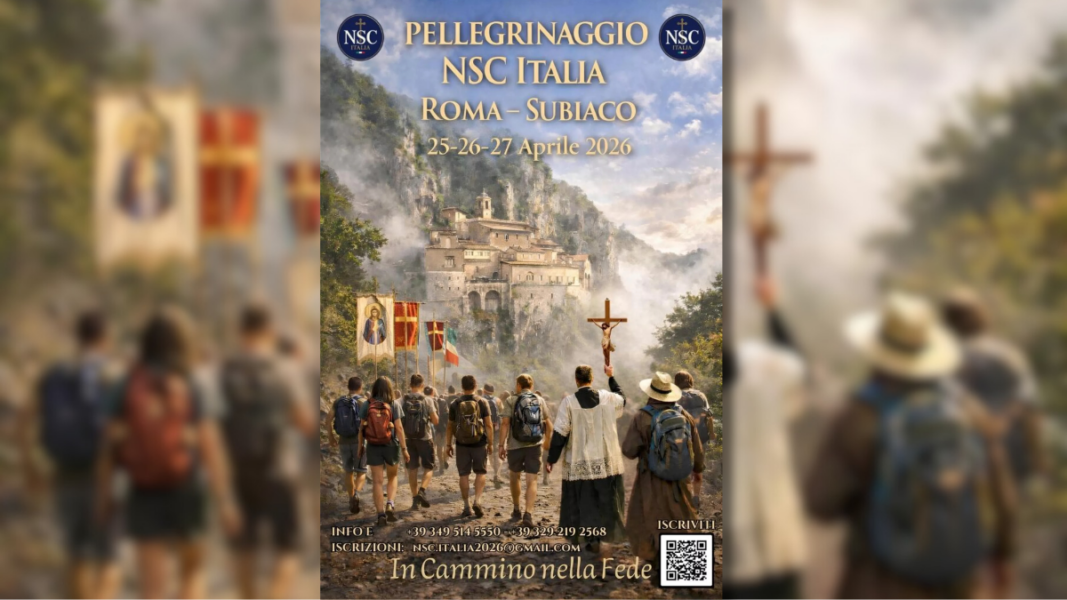
A new pilgrimage is being organized in Italy with the aim of recovering and putting into practice the spirit of the great marches of faith that have emerged in Europe in recent years, following models such as the Our Lady of Christendom pilgrimage in Chartres (France), Covadonga (Spain), Luján (Argentina), and Fátima (Portugal). The initiative, promoted by a group of young lay Catholics, will take place from April 25 to 27 and will connect the city of Rome with the Sanctuary of the Sacro Speco in Subiaco, one of the cradles of Western monasticism and an emblematic place for European Christian identity.
Read also: 16 years pilgrimaging to Luján: “Physically it’s tough and spiritually very profound”
Inspiration from the European traditionalist experience
According to El Debate, the idea for this first Italian pilgrimage arose after several of the organizers participated in the march of Our Lady of Christendom in Spain, a pilgrimage that connects Oviedo with the sanctuary of Covadonga and has gathered thousands of faithful, consolidating itself as one of the main expressions of traditional spirituality on the continent following the French model in Chartres. According to one of the promoters, Giacomo Mollo, the experience lived there motivated a group of young people to replicate a similar initiative in Italy, with the intention of “rescuing a path of faith that for millennia has transformed Catholics throughout Europe.”
Read also: Chronicle from Covadonga: a pilgrimage capable of reconquering everything
The organizers, mostly young laypeople committed to the traditional liturgy, explain that this pilgrimage is not intended to be a mere folkloric act, but a spiritual journey of growth and witness to the faith, inspired by the Via Appia Antica and the historical places that marked the expansion of Christianity in Europe.
Itinerary with historical and spiritual roots
The itinerary for this first edition will depart from the basilica of Saint Mary Major in Rome on April 25, on the feast day of Saint Mark the Evangelist. From there, the pilgrims will venture into the Via Appia Antica, a millennial path that preserves the vestiges of the first Christian itineraries and evokes the memory of Saint Paul and Saint Peter. The route continues through sites of notable spiritual and cultural significance, such as Castel Gandolfo and Genazzano, culminating in Subiaco, where the Sacro Speco is located, the place where Saint Benedict of Nursia lived as a hermit and which centuries later became the epicenter of Western monasticism.
Read also: The pilgrimage to Chartres from within: Tradition, Christendom, and Mission
Subiaco holds a central place in the monastic and Christian history of Europe, and its inclusion in the itinerary has been highlighted by the promoters as an element of cohesion between faith and the monastic tradition that has nourished the spiritual life of the continent for centuries.
A lay movement that opens new expressions of faith
The promoters of the pilgrimage describe their initiative as a spiritual response to the current cultural context, in which many young Catholics seek profound and communal experiences of faith that transcend conventional forms of religiosity. Although this Italian pilgrimage is only the first edition, its drivers conceive it as part of a broader movement of “revival of Christian identity” in Europe, rooted in tradition and in the experience of walking and praying together.