


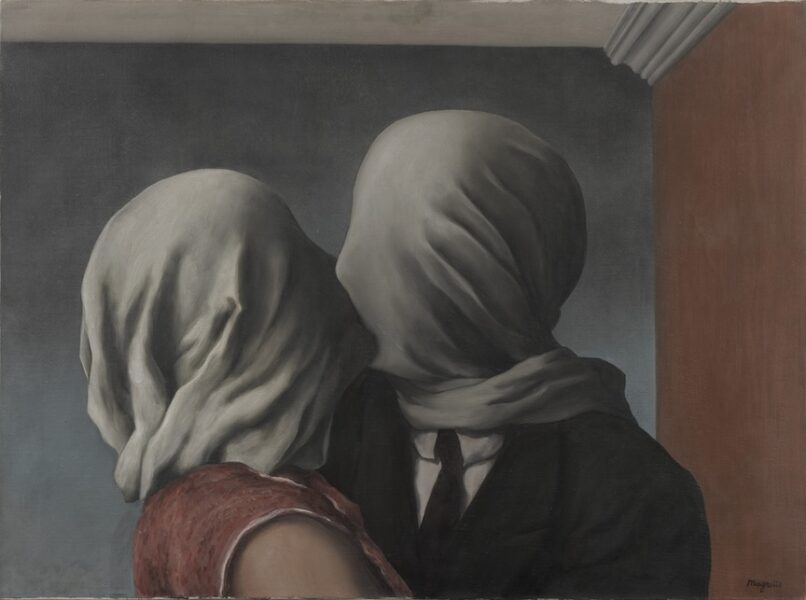
By Mary Eberstadt
In his excellent recent book Strange New World, Carl Trueman warns Christians against naive optimism in our «chaotic, unexplored, and dark era». It is a prudent observation. There is much in the current culture that can shake anyone back to sobriety, and religious believers more than anyone. At the same time, an argument can be made for «informed optimism», or rational grounds for believing that Christianity will receive a more serious hearing in the West in the coming years.
After all, for more than sixty years we have lived under the tyranny of a collective declaration that I am my own, and no one else’s; that I decide on matters of life, and on giving it, taking it away, or preventing it; that I, and no one else, have the right to do with my body whatever I deem appropriate.
And this repudiation of the truth that we are not our own can now be judged by its fruits, which are everywhere around us. The declaration that I am my own, the fundamental battle cry of the sexual revolution, has made life radically different and, in several respects, worse for us than for any other human being in history.
It is a sweeping claim. The facts confirm it.
Living according to the creed that I am my own, and no one else’s, has created massive suffering that, until recently, only believers had noticed. That deep-seated denial is changing now, and it is changing precisely because the damage out there has become impossible to avoid.
The price of the idol of autonomy is everywhere: in the current legions of deranged young people, in psychological problem rates that have been rising for decades, in academic studies on loneliness, in social unrest, in the increasingly expressed nostalgia for a world that misses its children. The verdict has been rendered.
Moreover, the declaration that I am my own when it comes to sex and sexual pleasure has given rise to the current greatest obstacle to romance, family, and marriage: the compulsive consumption of pornography by large numbers of young men, and some young women.
As therapists know, one of the results of that obsession is that people become incapacitated for real-time romance. This terrible outcome, which may be the most terrible of all the results of the revolution, turns that declaration that I am my own, and no one else’s, into an epitaph for love itself.
This leads us, paradoxically, to a first reason for hope. So patent and irrefutable is the existing damage that voices outside religious orbits have finally begun to call attention to it.
A new dose of skepticism, and new accusations against unchecked sexual autonomy, are emerging, even from writers who say they prefer not to align with traditional Christian teaching, but whom logic and evidence have nonetheless led to a nearby zone.
This turn toward revisionism is also positive. That secular voices align with the Church’s teaching on social issues, however reluctantly and regardless of whether they credit Christians or Christianity, is a clear victory for the Cause.
This points us to another source of hope. In another twist that would not have been foreseen even ten years ago, conversion and religious practice are no longer unheard of, even on the most elite and secularized campuses. In fact, they are on the rise, as liberal intellectual Mark Lilla noted last year—and with unease—in an essay for The New York Review of Books about his own campus, Columbia University.
«In the last decade», he observed, «interest in Catholic ideas and practice has been growing among right-leaning intellectual elites, and it is not uncommon to find young conservatives at Ivy League institutions who have converted or renewed their faith since arriving at university».
Columbia is not alone. Last spring I gave lectures at my own alma mater, Cornell University, long the most secular of the Ivies, whose political culture is perennially steeped in hard leftism. There, impressive signs of religious life have emerged: in COLLIS, a Catholic intellectual institute and lecture program with energetic and committed leadership; in Chesterton House, a Protestant residence and center whose programming includes Bible study, good works, communal prayer, and other forms of fraternity; and in a contagious esprit du corps across the campus among Protestants and Catholics.
Elsewhere, on other campuses, initiatives and institutions are proliferating that once again offer the traditions of faith. Thomistic Circles, which share the teachings of St. Thomas and others, attract curious students from everywhere.
At the University of St. Thomas in Houston, to cite another example, exciting new Catholic programming is developing, especially at the Nesti Center for Faith & Culture; it includes the only Master of Arts offered in the world in Catholic Studies of Women and Gender. A recent two-day winter symposium, with robust attendance, on what St. John Paul the Great called the «feminine genius», offered another measure of this eager Catholic community in action.
Reflecting on these unexpected awakenings is realizing something easy to overlook in this era rightly described as «chaotic, unexplored, and dark». After all, we have not returned from the experiment of the last sixty years empty-handed.
In a way that is not widely understood but will be, the current post-revolutionary disorder tells us something. It tells us that living as if we are not our own protects us better than living under expressive individualism. The truth of Christian teaching becomes visible in the negative record of living without it.
Someday, more souls to come will understand—and reject—the current creed of autonomy as priority. When that happens, future Christians, and others, will look back for the signs that led to that awakening. And they will discover that, in early 2026, an unforeseen and significant number of them were already flashing here and now.
About the author
Mary Eberstadt is a senior research fellow at the Faith and Reason Institute. This column is adapted from a speech delivered at the annual «Mere Anglicanism» conference in Charleston.