


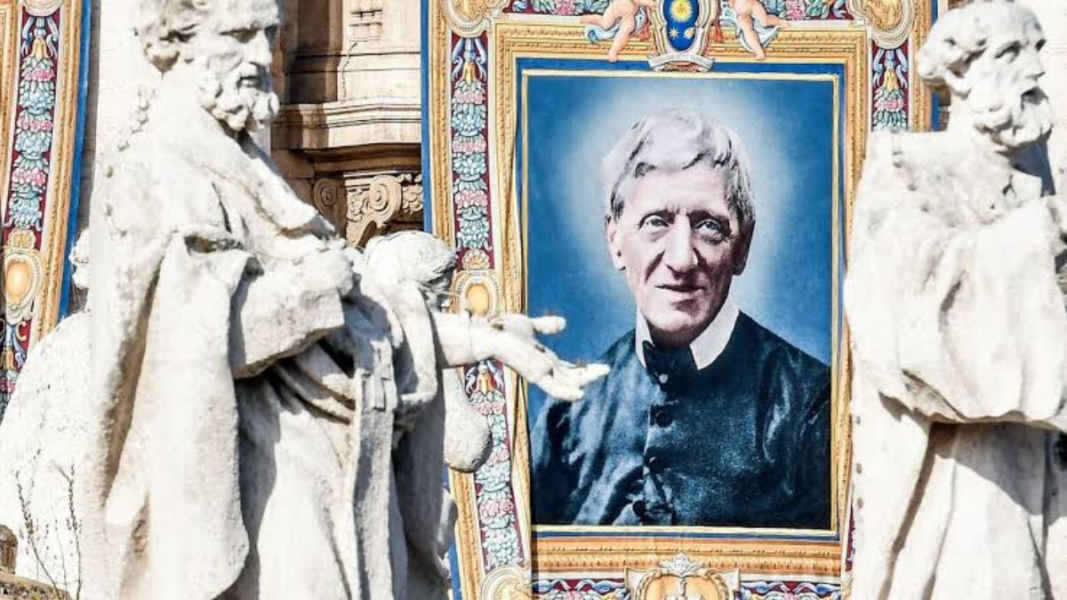
The Holy See has officially inscribed the celebration of Saint John Henry Newman, priest and Doctor of the Church, in the General Roman Calendar, establishing his optional memorial on October 9. The decision, taken by Pope Leo XIV following his recent proclamation as a Doctor of the universal Church, has been formalized through a decree from the Dicastery for Divine Worship and the Discipline of the Sacraments.
The decree, dated November 9, 2025, feast of the Dedication of the Lateran Basilica, provides that this new memorial be incorporated into all calendars and liturgical books for the celebration of the Mass and the Liturgy of the Hours, using the official texts promulgated by the Holy See and which must be translated and approved by the Episcopal Conferences.
Proclaimed Doctor of the Church by Leo XIV
The inscription in the General Roman Calendar takes place following the solemn proclamation of Saint John Henry Newman as a Doctor of the Church, carried out by Pope Leo XIV on November 1, 2025, during the celebration of the solemnity of All Saints in Saint Peter’s Square.
On that occasion, the Pontiff highlighted the figure of the English saint as a reference for the educational world, declaring him «co-patron, together with Saint Thomas Aquinas, of all those who are part of the educational process.» The Pope thus emphasized the intellectual and spiritual dimension of Newman, whose life was marked by an tireless search for truth.
A figure proposed to the universal Church
As explained by the Dicastery for Divine Worship, the inscription of Saint John Henry Newman in the General Roman Calendar aims to propose his figure to the entire Church as an eminent example of a disciple led by God’s grace toward the fullness of truth.
Converted to Catholicism after a long intellectual and spiritual journey, Newman understood his life as a concrete service within the divine plan. His motto, Cor ad cor loquitur («heart speaks to heart»), summarizes a spirituality centered on personal and prayerful dialogue with Christ, beyond mere intellectual speculation.
The “kindly light” as the key to his spirituality
In the homily of the proclamation, Leo XIV evoked one of Newman’s best-known texts, the hymn Lead, Kindly Light, to present his figure as that of a man guided by grace amid darkness. The Pope pointed out that the task of Christian education consists precisely in offering that “kindly light” to those at risk of being trapped in pessimism and fear.
This image also permeates the liturgical texts approved for his memorial, whose collect prayer presents Newman as a believer patiently led by God to full communion with the Catholic Church.
Liturgical texts and biblical readings
The liturgical texts published along with the decree include the proper prayers, the biblical readings, and the texts of the Divine Office. The first reading, taken from the book of Sirach, presents the just man filled with the spirit of understanding; the responsorial psalm expresses docility to God’s will; and the Gospel compares the disciple of the Kingdom to the head of the household who brings out of his treasure things new and old.
In the Liturgy of the Hours, the second reading of the Office of Readings proposes a passage from the Apologia pro Vita Sua, in which Newman describes his conversion to Catholicism as the arrival of a ship at port after a stormy voyage.
A living legacy for the Church
The Roman Martyrology places the eulogy of Saint John Henry Newman first among the saints remembered on October 9, underscoring his relevance for the universal Church. His theological and ecclesiological contributions, along with his poetic and devotional work, continue to illuminate the spiritual and intellectual path of the faithful.
With this inscription in the General Roman Calendar, the Church proposes Saint John Henry Newman as a privileged witness to faith lived in dialogue between reason and revelation, tradition and development, fidelity and sincere search for truth.