


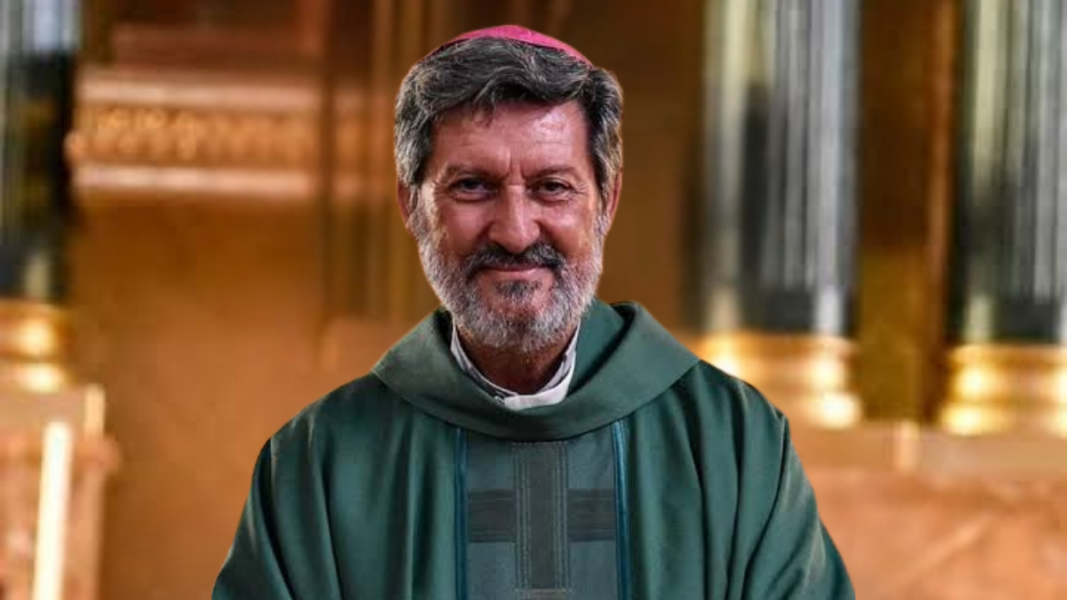
Pope Leo XIV has accepted the resignation from the pastoral governance of the Apostolic Vicariate of San José del Amazonas (Peru) presented by His Excellency Monsignor José Javier Travieso Martín, C.M.F. The news was communicated through the Holy See’s Bulletin, bringing to an end more than a decade of episcopal service in one of the most demanding and vast churches in the Peruvian Amazon.
A demanding mission in the Amazon
The Apostolic Vicariate of San José del Amazonas is an ecclesiastical circumscription of the Latin Rite Catholic Church that covers an extensive territory in the Loreto region, in the Peruvian Amazon. It spans around 150,000 square kilometers and serves a predominantly indigenous and rural population through eleven parishes distributed along rivers and deep jungle.
In this context, the apostolic vicar does not act as an ordinary diocesan bishop, but as the Pope’s direct representative in a church that has not yet been erected as a diocese. The figure of the apostolic vicar is typical of missionary territories or ecclesial structures where the Church’s presence requires close pastoral leadership adapted to diverse cultural realities.
A Spaniard appointed bishop in Peru
José Javier Travieso Martín, C.M.F., is a Claretian religious born in Don Benito, Badajoz (Spain), on February 5, 1952. He entered the Congregation of the Missionary Sons of the Immaculate Heart of Mary (Claretians), made his religious profession in 1968, and was ordained a priest in 1976.
Travieso Martín initially developed his ministry in Spain, serving as a parish assistant, school chaplain, and religion teacher. Later, he dedicated himself to theological formation, obtaining a licentiate in Youth Pastoral at the Pontifical Salesian University in Rome, and was sent to Lima, Peru, where he worked as a professor and director of studies at the Juan XXIII Institute of Theological Studies.
In Peru, he continued his educational and pastoral work, teaching theology at the Major Seminary “San Carlos y San Marcelo” and at the Catholic University of Trujillo. In 2009, he was appointed by Pope Benedict XVI as auxiliary bishop of the Archdiocese of Trujillo, and on November 1, 2014, Pope Francis designated him apostolic vicar of San José del Amazonas, a position he held from February 1, 2015, until the acceptance of his resignation in early 2026.
A missionary pastor in the midst of the Amazon
During his ministry in the Vicariate, Monsignor Travieso distinguished himself by his closeness to riverside and indigenous communities, supporting both evangelization and initiatives for pastoral and social development in one of the most challenging territories of the Church in Latin America. The vicariate, with a large proportion of Catholic faithful among its population, has traditionally been demanding terrain for evangelization and spiritual accompaniment.
In addition to his work in the apostolic jurisdiction, Monsignor Travieso has maintained ties with the Peruvian Episcopal Conference and has participated in regional encounters—such as the controversial Synod for the Amazon—.
A profile marked by the Synod for the Amazon
The episcopal ministry of Monsignor José Javier Travieso Martín has been closely linked to the pastoral approach promoted during the Synod for the Amazon held in 2019. The then apostolic vicar of San José del Amazonas was not merely a participant, but held positions of responsibility as relator for one of the so-called “minor circles” in Spanish, tasked with gathering and synthesizing proposals for the final document.
In that context, Monsignor Travieso repeatedly defended the need for a Church “with an Amazonian face,” emphasizing concepts such as the “cry of the earth and of the poor,” the denunciation of extractivism, and the call for a triple pastoral, ecological, and synodal conversion, in line with the encyclical Laudato si’. His interventions and writings adopted the characteristic language of the synodal framework, in which environmental issues and the reality of indigenous peoples occupy a central place.
Before and after the Synod, the prelate participated in encounters and forums linked to the preparation and reception of the Amazonian process, some of them in collaboration with organizations such as REPAM and entities dedicated to the defense of indigenous rights. In these spaces, he insisted on the urgency of protecting the Amazonian territory, warning about the global consequences of environmental degradation and appealing to notions such as the “care of our common home” and the call for “Good Living.”
This pastoral approach, shared by other bishops in the region, has been positively valued by those who advocate for greater Church involvement in socio-environmental causes, but it has also raised reservations in ecclesial sectors critical of a reading of the Synod that, in their view, risks diluting the explicit proclamation of the Gospel in socio-political or indigenist categories.
With the acceptance of his resignation, a stage marked by the local application of the pastoral lines emanating from the Synod for the Amazon comes to an end. The appointment of his successor will allow us to see whether the Holy See opts for a clear continuity of this approach or for a reorientation of the pastoral governance of the vicariate in a key region for the Church in Latin America.