


The Vatican has announced that Pope Leo XIV will soon address in a high-level document—possibly an encyclical—the challenges posed by artificial intelligence (AI) from the perspective of the Church’s social doctrine.
According to Il Giornale, the Pope seeks to mitigate the risks of an unchecked AI and prevent the creation of “hybrid entities” that blur the distinction between the human and the artificial, focusing on an ethical vision that preserves the dignity of the person. The topic, which has already been the subject of multiple papal speeches and Vatican doctrinal documents, will now be elevated to the level of magisterial teaching.
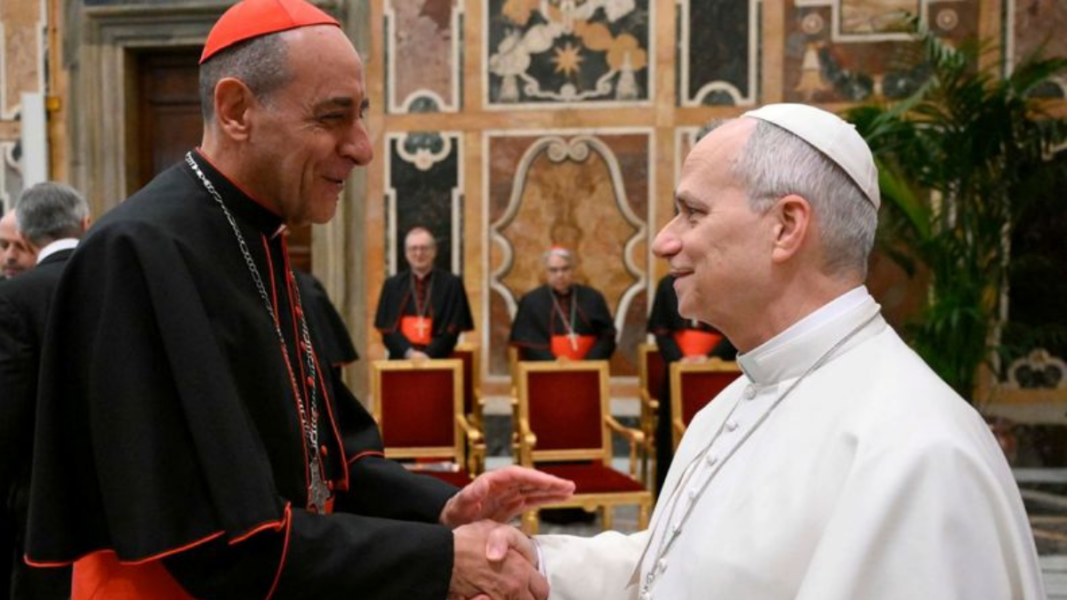
Additionally, LifeSiteNews reported that Cardinal Víctor Manuel Fernández, prefect of the Dicastery for the Doctrine of the Faith, has been tasked with coordinating the review and preparation of the document before its promulgation. The work is progressing in collaboration with other dicasteries and experts, aiming for a text that articulates clear criteria on how the Church understands the role of AI in contemporary society.
A doctrinal and ethical approach
The Vatican’s analysis starts from the fact—expressed in the doctrinal document Antiqua et Nova approved in January 2025 under the auspices of Fernández himself—that artificial intelligence is a reality that cannot be detached from its anthropological and moral impact. According to that text, “AI must be employed as a tool that complements, and does not replace, the richness of human intelligence” and always in the light of the “higher criterion of human dignity” that defines the Church’s social teaching.
The pontiff’s main concern is that technology does not substitute or erode essential human capacities—such as free reflection, creativity, or interpersonal relationships—but rather is oriented toward the good of the individual and the community, respecting truth and justice. This stance draws on elements from the Pope’s recent magisterium, who has spoken of AI as an “anthropological challenge” and warned of the risks of turning people into passive consumers of machine-generated content.
Protection of youth and education
One of the areas highlighted by Leo XIV is the effect that AI can have on younger generations. The Pope has emphasized that, although technology offers promising horizons, it can also affect the intellectual and moral formation of children and adolescents if it is not integrated with solid educational criteria. The pontiff insists that “mass access to data should not be confused with intelligence” and that young people must be accompanied so that technology strengthens their discernment, rather than weakening it.
This pastoral approach shows a shift in priority: it is not just about warning of the technical dangers of AI, but about articulating a vision that responds to the Church’s evangelizing mission in the digital age.
What will the encyclical entail?
The future encyclical or papal document on AI, which will include contributions from Cardinal Fernández, aims to offer magisterial guidance for bishops, pastoral workers, and the faithful in general. Beyond addressing specific issues—such as the ethics of algorithms, labor automation, or information manipulation—according to Il Giornale, the text is expected to place artificial intelligence within the Christian moral order and reinforce the Church’s social doctrine in the face of an ongoing technological revolution.