


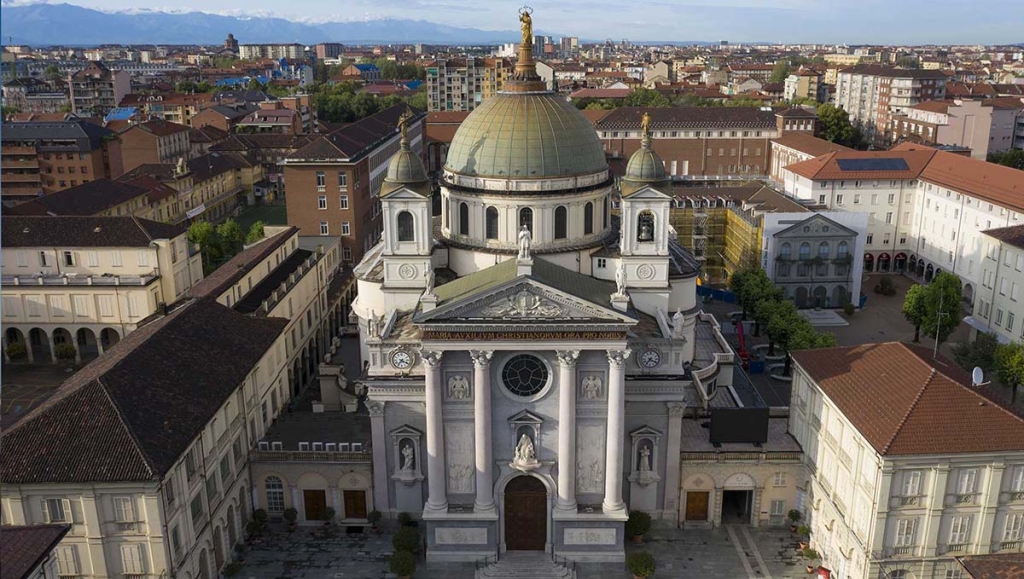
January 31, feast of Don Bosco. For those who have passed through a Salesian house, this date is not just an affectionate memory: it is also a good moment to look at the work with the thermometer of figures. In the history of the Society of St. Francis de Sales (Salesians of Don Bosco), there is a recognizable statistical cycle: sustained growth for more than a century, a perfectly dated numerical zenith, a prolonged contraction in the post-conciliar period, and finally, a recent stabilization with a notable “decoupling” between the number of religious and the volume of educational works.
From Valdocco to international expansion: first milestones with dates
The Salesian work takes root in Valdocco, in working-class Turin, when Don Bosco settles there with his boys and organizes the oratory. Salesian sources place the arrival in Valdocco on April 5, 1846 (Palm Sunday), with the rapid adaptation of the Pinardi shed as a chapel; other chronologies recall April 12, 1846, as the date of the first liturgical inauguration in that space. From that nucleus, the congregation is formally structured in 1859 and begins to open “houses” (communities-works) outside Turin and, later, outside Italy.
| Year | Expansion milestone (houses / countries) | Open source |
|---|---|---|
| 1846 | Don Bosco’s arrival in Valdocco and consolidation of the Oratory (Pinardi shed) | InfoANS | Museo Casa Don Bosco |
| 1863 | Mirabello: first Salesian house outside Turin | salesianos.edu |
| Nov 9, 1875 | Nice (France): first implantation outside Italy (first stable sending to France) | InfoANS |
| 1875 | Arrival in Argentina (first presence outside Europe, according to Salesian popular synthesis) | salesianos.edu |
| 1876–1881 | First houses outside Italy (selection): San Nicolás de los Arroyos (1876), Buenos Aires–La Boca (1877), Buenos Aires–San Carlos (1877), Villa Colón–Montevideo (1877), Las Piedras–San Isidro (1879), Rosario–Paysandú (1881) | InfoANS |
This chronological start is important because it explains the subsequent statistical profile: the congregation expands very early outside its cradle (Turin), consolidates in Europe, and deploys rapidly in Ibero-America, with a typically Salesian model of work (school, vocational training, oratory/youth center, parish, and social work).
The long curve: growth until the zenith of 1967
In terms of number of members, the 20th century was the great period of human accumulation. A historical study published on the official Salesian portal, prepared from general lists and archival sources, describes continuous development from the foundation (1859) until 1967, the year in which the maximum presence is reached. The figure is very specific: 21,614 professed and 1,196 novices in 1967. That is the numerical zenith of the entire historical series.
The same study adds a decisive nuance to understand the “after”: the maximum number of members does not necessarily coincide with the maximum institutional expansion, because houses, provinces, and countries continued to grow in the following years even when the number of religious began to decline. Simply put: there may be fewer Salesians, but more geography and more network.
Key figure (zenith): 1967 – 21,614 professed and 1,196 novices. (sdb.org)
Post-conciliar: prolonged contraction and shift in center of gravity
After the zenith, the global trend enters a phase of prolonged contraction, especially visible in Western Europe and North America, parallel to the general vocational crisis of apostolic religious life. The phenomenon is gradual (decades), not instantaneous. An intermediate snapshot, taken from 2009 data, placed the congregation at around 16,215 professed members, with 10,836 priests, reflecting a significant drop from the maximum, but still with a very high volume.
Indicative figure (2009 cut): 16,215 professed members; 10,836 priests. (Catholic World Report)
Meanwhile, the vocational weight and vitality of new incorporations shift more strongly toward Africa and Asia (and, to a lesser extent, toward some areas of Ibero-America), which helps sustain the global volume and avoid a free fall in the most recent stage.
The present: stabilization around 14–15 thousand members (depending on the cut) and strong network of presences
In the official data published by the congregation based on “Yearbook 2021 – Statistical Data 2020”, the total worldwide figure rises to 14,114 members including novices, with internal breakdown: 9,509 presbyters, 1,488 coadjutors (lay brothers), 2,680 seminarians, and 443 novices. The same statistical table counts 118 Salesian bishops/prelates and sets institutional implantation in 134 countries, 90 provinces, 1,728 erected houses, and 148 “other presences”.
| Indicator (2020 cut) | Figure | Open source |
|---|---|---|
| Worldwide total (includes novices) | 14,114 | sdb.org (EN) | sdb.org (ES) |
| Presbyters | 9,509 | sdb.org |
| Coadjutors | 1,488 | sdb.org |
| Seminarians | 2,680 | sdb.org |
| Novices | 443 | sdb.org |
| Bishops + prelate | 118 | sdb.org |
| Countries | 134 | sdb.org |
| Provinces | 90 | sdb.org |
| Erected houses | 1,728 | sdb.org |
| Other presences | 148 | sdb.org |
In parallel, the congregation’s general statistical portal publishes another figure of “order of magnitude” (with bishops and novices): 14,476, with presence in 133 countries, which confirms that the oscillation depends on the year and the computation criterion, but moves in a stable range (approx. 14–15 thousand). (sdb.org)
A modern paradox: fewer religious, but a gigantic educational network
The current snapshot is better understood if the number of members is contrasted with the size of the global educational network. An institutional brochure from “Don Bosco Global Education” offers an inventory of magnitudes: 3,646 schools, 826 vocational training centers and professional schools, 62 higher education institutions, and 252 degree colleges, in addition to thousands of youth centers and other works. These figures help explain the typical phenomenon of the recent stage: although there are fewer Salesians than in the 20th century, the institutional and educational presence continues to be enormous, sustained largely by educational communities with strong lay participation.
Global educational network (magnitudes): 3,646 schools; 826 vocational training centers; 62 higher education institutions; 252 degree colleges. (Don Bosco Global Education)
A complementary note, also from a Salesian source, quantifies worldwide vocational training on a similar scale: 830 FP centers, 200,300 students, and 15,000 teachers/trainers. (InfoANS)
Spain as a datum within the global map
In Spain, the network maintains a particularly high density in relation to the number of religious. An InfoANS information sheet quantifies 137 schools with 92,694 students and 6,507 educators; 62 vocational training centers with 16,371 students and 1,350 educators; 139 youth centers; 58 parishes with about 3,000 animators; and social platforms that serve 55,029 recipients with 2,592 educators. It is a useful snapshot because it allows seeing the “decoupling” we talked about: even with vocational contraction in Europe, the network of works is sustained by its structure and lay co-responsibility.
Spain (magnitudes): 137 schools, 92,694 students, 6,507 educators; 62 FP centers, 16,371 students, 1,350 educators; 139 youth centers; 58 parishes; social platforms with 55,029 recipients. (InfoANS)
Final reading: historical contraction, recent stability
If the comparison is made with the 1967 zenith, the congregation is in contraction: it has gone from more than 21,600 professed (plus novices) to a contemporary range around 14–15 thousand members depending on the cut. But if the comparison is made with the last years, the curve seems to have approached a plateau: a statistical “floor” sustained by the geographical redistribution of vocations and by an organization capable of maintaining a broad presence (134 countries, 1,728 erected houses) with fewer personnel than in the golden age of the 20th century.
On a January 31 like today, the numbers do not replace the memory of the playground, the workshop, or the oratory; they place it in perspective. Don Bosco’s great work has gone from a century of growth to a stage of consolidation and rebalancing: less quantity, more need for fidelity to the charism, and an educational footprint that—by scale—remains one of the largest in the Church.
Open sources consulted: sdb.org (world statistics and historical study with the 1967 peak), InfoANS (first houses outside Italy, 1875 Nice chronology, Spain data, FP data), Don Bosco Global Education (educational magnitudes brochure), Catholic World Report (2009 cut). Links incorporated in the body of the article.