


By Steven Jonathan Rummelsburg
If you send your children to a Catholic school, you should ask the principal or a teacher if they can answer two questions: «What is a human person?» and «What is the purpose of education?»
You are most likely to hear talk of «21st-century skills,» «socialization,» or «preparing students for jobs that don’t yet exist.» Thus, despite the crucifixes on the walls and religion classes, your principals and teachers generally cannot tell you what a student is or what education ultimately serves for.
This is not an individual failure. It is the inevitable result of what is correctly called the Great Abdication: the systematic elimination of the formal and final causes from the theoretical framework of modern education.
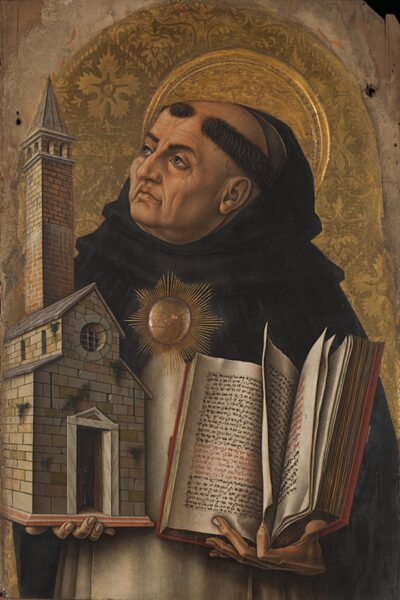
Following a schema that dates back to Aristotle and was adopted by St. Thomas Aquinas, the Catholic intellectual tradition has recognized four explanatory factors or principles necessary to fully understand anything:
Material cause: What is a thing made of?
Efficient cause: How is it made?
Formal cause: What is it? (What is its nature?)
Final cause: What is it for? (What is its ultimate end or perfection?)
Modern education has eliminated the last two in schools and universities. It denies a fixed human nature (without a formal cause) and refuses to name a transcendent purpose (without a final cause). This makes authentic Catholic education impossible.
Without a formal cause, Catholic schools cannot articulate—and therefore do not even know—what their students are. Instead of affirming that each child is a rational soul created in the image of God (Genesis 1:27), such institutions have been conditioned to treat children as if they were self-creating beings whose self-esteem is of utmost importance.
St. Augustine wrote: «You have made us for yourself, O Lord, and our heart is restless until it rests in you.» An education that ignores this primary orientation toward God as our final cause cannot form human persons; it can only deform them. Public schools aim at secular metrics like grades, college access, and career goals. Sadly, most Catholic schools do the same. As St. Paul warned, we have «conformed ourselves to this world» (Romans 12:2).
A Catholic school must recognize the crucial truth that all human beings have a soul that survives bodily death. An eternal soul requires eternal ends. Without true final causes, both natural and supernatural, Catholic schools cannot answer a simple question: «What is the purpose of Catholic education?»
The natural ends of a Catholic education are to acquire intellectual and moral virtues. The ultimate end (as Josef Pieper reminds us, and as found in St. Thomas Aquinas) is the state in which «our powers are fully realized and fully at rest face to face with God for all eternity.»
It may seem impossibly abstract, but authentic Catholic education aims at the Beatific Vision.
Pope Pius XI wrote in Divini Illius Magistri that Christian education must form «the true and perfect Christian… the supernatural man who thinks, judges, and acts constantly in accordance with right reason illuminated by the supernatural light of Christ.»
Can a school form the «true Christian» if it does not define what a human person is or what human perfection means? Although some Catholic schools are recovering the classical tradition, the vast majority has succumbed to the Great Abdication promoted by secular humanistic education.
You don’t need a degree in philosophy to see this abdication. Enter any Catholic school and observe: when a student misbehaves, do teachers correct the objective disorder in the child’s will and guide him toward virtue? (Proverbs 22:6) Or do they practice «behavior management» based on operant conditioning, reducing moral life to a series of neurological impulses and responses?
In teaching literature, do teachers help students apprehend truth, goodness, and beauty in great texts? Or do they «facilitate personal responses,» where all interpretations are equally valid?
The difference is as practical as it is metaphysical. One approach assumes that students have a human nature that must ultimately be perfected toward a transcendent end. The other denies both nature and end, leaving only techniques, feelings, and preferences.
Nowhere is this abdication more visible than in the current crisis of gender ideology. When a student claims to «identify» as the opposite sex, a school operating within the framework of the Four Causes has a clear response: the student possesses a fixed nature, objectively male or female. Catholics cannot concede that «identity» is merely a construction of human desire. Sex is a given of our nature, an integral part of the body-soul unity. As the Catechism teaches, we do not invent our sex; we «recognize and accept» it (CCC 2333).
But Catholic schools formed in secular educational theories cannot respond clearly to the gender fad. They have been implicitly taught that students «construct» their own identities, that subjective experience prevails over objective reality. Thus, they waver, compromise, and adopt policies indistinguishable from those of public schools.
This is not primarily a failure of courage, but of formation. We teachers and administrators were mostly formed in secular universities where the Four Causes were never taught. We absorbed educational frameworks that make coherent Catholic responses impossible. This did not happen out of malice. We were formed in a system that had already abdicated these truths and cannot transmit what it does not possess.
If you have children in Catholic schools, ask those two diagnostic questions at your next meeting with teachers. Then observe what happens. If your principal and teachers cannot answer clearly, if you hear therapeutic jargon or vague appeals to «values,» your school has succumbed to the Great Abdication. Then ask yourself: «Am I paying tuition for secular humanism with a crucifix on the wall?»
The problem is already quite visible. Now we must act: recover what was abdicated and put Christ, the Logos, back at the center of Catholic education.
About the author
Steven Jonathan Rummelsburg directs City of Truth Educational Consulting for the Diocese of Charleston and writes St. Isidore’s Artisan Academy, a newsletter that recovers authentic Catholic education through the wisdom of the Church’s 2,500-year intellectual tradition.