


The mass regularization of illegal immigrants approved by Royal Decree raises serious problems both in its content and in the way it has been adopted. We are not facing a simple administrative adjustment, but a structural decision imposed without parliamentary debate, without voting, and without the minimum respect for ordinary channels. When an issue of this magnitude is resolved by decree, what is being said is that deliberation is a hindrance and that Parliament can be set aside if the end is presented as “good.”
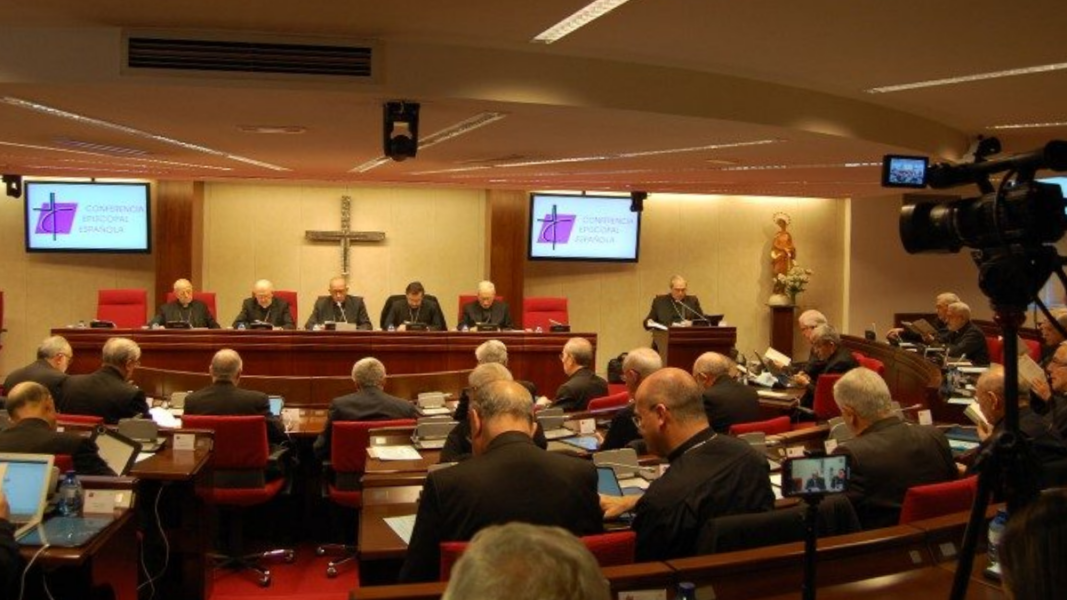
That the Spanish bishops have backed this measure is, for that reason, doubly questionable. Not only because of the substance of the migration policy they endorse, but because of the way they accept that it has been imposed. Episcopal support does not distinguish, does not nuance, does not warn of the abuse of executive power, nor does it introduce a minimum reservation regarding the use of the Royal Decree as a substitute for the legislator. The regularization is taken as good, and the procedure is taken as good. Both things. And that combination is not innocent: it turns moral superiority into permission to bypass limits.
From a Catholic perspective, this is difficult to justify. The Church has never taught that a cause, especially if it is debatable, exempts one from respecting the legal order. It has insisted, precisely, on the opposite: that authority is subject to the law, that arbitrariness is unjust even if it is dressed in compassion, and that the common good requires prudence, not sentimental impulses turned into state policy. The Royal Decree is intended for exceptional emergency situations, not for redesigning the country’s migration policy by the fast track. Using it in this way is not a necessity. It is a way of governing.
By accepting this mode of proceeding without objections, the bishops end up endorsing a logic typical of woke authoritarianism: when a measure is declared morally unquestionable, checks and balances are superfluous. Parliament becomes an obstacle, debate a nuisance, and disagreement a lack of humanity. The law ceases to be a limit and becomes a dispensable formality. In this way, a power is consolidated that does not discuss, does not convince, and does not render accounts: it decrees and moralizes.
It is also significant that this support is granted without raising a single question about the real social backing for the measure. If mass regularization were so evident and so widely shared, there would be no reason to avoid Congress. But deliberation is uncomfortable when there is a risk of rejection. And the people, rhetorically invoked, cease to be useful when they do not guarantee the desired response.
And there is one more element, which aggravates the picture and explains the enthusiasm for the decree. This type of decision usually functions as a convenient smokescreen. While public emotion is mobilized with a “great measure” morally shielded, what truly sustains common life continues to be dismantled, without noise and without debate: infrastructure falling to pieces, basic services in retreat, degraded public management, abandoned neighborhoods, security and justice increasingly fragile. It is the pattern of a State that is beginning to resemble a failed state too closely: incapable of guaranteeing the essentials, but perfectly capable of producing moral propaganda in the form of a decree.
The problem, therefore, is not just a specific policy, but the precedent that is legitimized. Today it is about illegal immigration; tomorrow it will be another cause elevated to unquestionable dogma. When bishops back debatable decisions in substance and arbitrary in form, they do not exercise a prophetic or pastoral function: they contribute to normalizing a model of power that sets aside the law when it gets in the way, turns sentimentalism into an alibi, and uses moral superiority as a license to rule without limits. And that is not the Church’s social doctrine, but its emptying.