


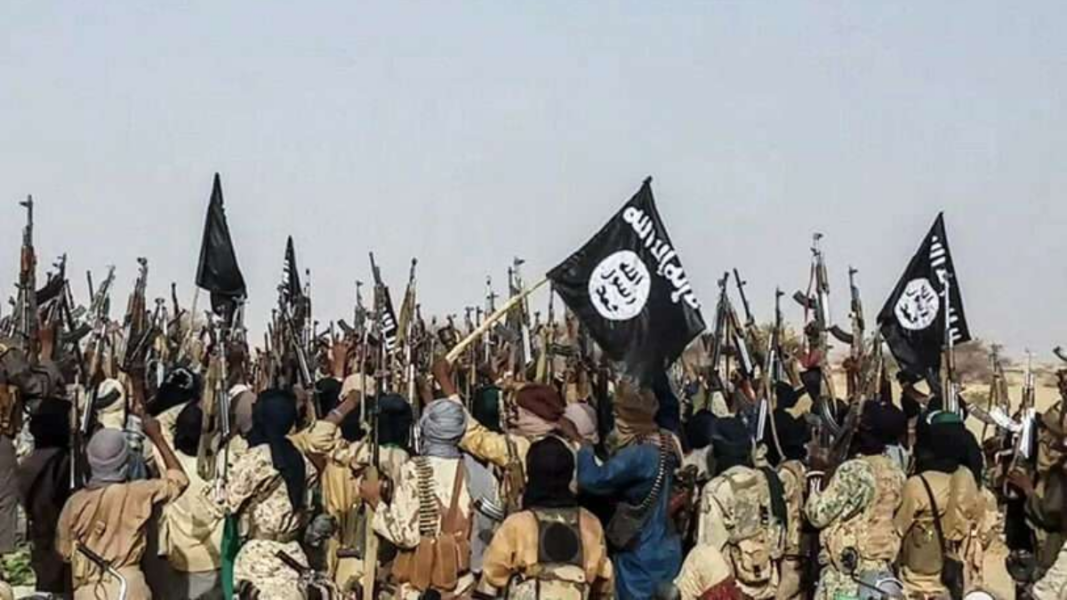
The recent US airstrikes against Islamic State targets in Nigeria have reopened the debate among Catholic leaders in the African country about their real impact on the security of Christians and the political implications ahead of the 2027 presidential elections, in a context marked by persistent violence and accusations of passivity—even complicity—on the part of the State.
Read also: Trump orders attacks in Nigeria in a context of violence against Christians
According to The Catholic World Report, the bombings took place on December 25, 2025, in Sokoto State, in the northwest of the country, and were presented by US President Donald Trump as a direct response to attacks and murders of Christians carried out by jihadist groups linked to ISIS. The Pentagon confirmed that several terrorists were killed, although few concrete details have emerged about the scope of the operation.
Opposing readings of its impact
One month after the attacks, two prominent Catholic figures in Nigeria offered divergent interpretations of their effects.
Father Patrick Alumuku, director of Catholic Television of Nigeria, described the US intervention as a “providential turning point” and directly linked it to an improvement in security: for the first time in fifteen years, he stated, no church was attacked during Christmas 2025.
In contrast, Emeka Umeagbalasi, director of the Catholic NGO Intersociety, argued that the changes are merely apparent and that international pressure has forced the Nigerian Government into a “camouflage” response, without altering the underlying dynamics. In his view, the Islamization of the country and the persecution of Christians continue to intensify.
The political backdrop: the 2027 elections
The debate extends to the political arena, especially in relation to the 2027 presidential elections. Both leaders agreed that the current administration, led by President Bola Tinubu and his Vice President Kashim Shettima, both Muslims, has exacerbated religious tensions.
For Father Alumuku, the controversial “Muslim-Muslim ticket” has highlighted the current leadership’s inability to ensure national unity and security, and could open the door to change, such as the election of a Christian vice president from the Middle Belt.
Umeagbalasi, however, rejects that reading and argues that the current formula responds to a deliberate project of Islamizing the State, initiated during the presidency of Muhammadu Buhari. In his opinion, any attempt to balance the electoral ticket would be merely tactical and would not represent real change as long as the structures and militias responsible for the violence remain intact.
Persistent persecution and alarming figures
Both agree that a simple modification of the presidential duo will not suffice to guarantee the security of Christians, and emphasize that the key lies in the political will of the State. Umeagbalasi directly accuses the authorities of protecting the aggressors and systematically denying the gravity of the facts.
The figures support the seriousness of the situation. According to data cited by Release International and Intersociety, more than 7,000 Christians were killed in Nigeria in 2025, and since 2010 religious violence would have caused at least 185,000 deaths, of which 125,000 would be Christians. In addition, more than 19,000 churches have been destroyed and millions of people displaced.
In this context, international organizations warn that, without a firm response from the international community and Nigerian authorities, the persecution could intensify even further in the coming years.
For many Nigerian Christians, the underlying issue goes beyond an electoral event: it is, they assert, about stopping a systematic process that threatens their very survival as a religious community in the country.