


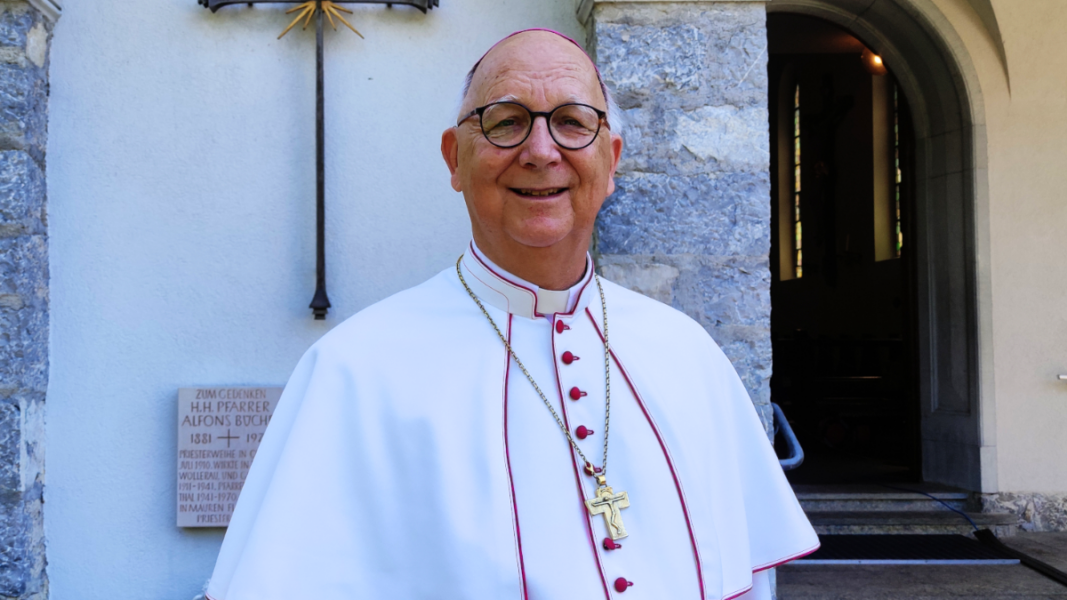
The liturgical reform following the Second Vatican Council and, in particular, the origin and development of the so-called Novus Ordo Missae must be addressed with historical honesty by the College of Cardinals in the face of the evident loss of sacrality and centrality of God in contemporary liturgy, argues Swiss bishop Marian Eleganti in a recent reflection disseminated by LifeSiteNews.
The prelate takes up statements by Bishop Athanasius Schneider, made in an interview granted on January 20 to journalist Diane Montagna, in which a series of historical facts frequently ignored or forgotten by bishops and cardinals in relation to the reform of the Roman rite after the Council are highlighted.
Read also: Msgr. Schneider accuses Roche of distorting history to justify Traditionis custodes
Schneider recalls that the constitution Sacrosanctum concilium, promulgated on December 4, 1963, established theological and pastoral principles for a prudent reform of the liturgy, but did not define in detail the content of the new rite. The practical application was left in the hands of the Consilium ad exsequendam Constitutionem de Sacra Liturgia.
In January 1965, a revised Ordo Missae was published, which introduced limited changes compared to the 1962 Missal and was celebrated by the conciliar fathers themselves without arousing significant opposition. However, in October 1967, an experimental “Missa normativa” was presented in Rome, which represented a much deeper break with the traditional rite.
A rejected project that proceeded anyway
That experimental project was submitted to the first Synod of Bishops after the Council and received a clearly divided response: 71 favorable votes, 43 against, and 62 who considered it only a basis for discussion. In practical terms, the majority of the synodal fathers did not grant a clear mandate for its adoption.
Despite this, the process did not stop. The work continued in the following years, with substantial revisions in texts and structure, until on April 3, 1969, Paul VI promulgated the new missal through the apostolic constitution Missale Romanum, which came into effect on the first Sunday of Advent of that year. That missal is the one known today as the Mass according to Paul VI, commonly called the Novus Ordo Missae.
Schneider emphasizes that this 1969 missal differs considerably from the 1965 Ordo, and that elements now widespread—such as the celebration versus populum or the altar separated from the tabernacle—were not foreseen by the Council.
Break with tradition, not organic development
In support of this analysis, the bishop cites a well-known letter from Joseph Ratzinger, written in 1976, in which the then-theologian warned that the new missal broke with the organic development of the Roman liturgy and gave rise to a completely new book, accompanied moreover by a practice of marginalization of the previous rite unprecedented in the liturgical history of the Church.
Ratzinger also recalled that Sacrosanctum concilium clearly established that innovations should not be introduced without a real need and that new forms must grow organically from the existing ones.
Loss of sacrality and pending diagnosis
Bishop Eleganti argues that these historical issues should be addressed seriously at the next consistory of cardinals, scheduled for June, especially in the face of the liturgical crisis visible in many dioceses: loss of the vertical dimension of worship, centrality of the assembly over God, banalization of sacred space, displacement of the tabernacle, and a unilateral insistence on the character of “meal” of the Mass.
Quoting writer Martin Mosebach, there is even talk of a “heresy of formlessness” in contemporary liturgical practice, perceptible—according to the prelate—in thematic, improvised celebrations centered on man more than on Christ.
In this context, Eleganti considers that Pope Leo XIV would do well to ensure that the cardinals have a rigorous historical knowledge before addressing the liturgical issue, including the role of Annibale Bugnini and the Protestant influence in the redesign of the Novus Ordo for ecumenical purposes.
The conciliar constitution, Schneider finally recalls, explicitly affirmed the equality and dignity of all legitimate rites of the Church, calling for their preservation and promotion.
The hope expressed by the bishop is clear: without an honest diagnosis, there can be no healing, and without historical truth, the liturgical reform will remain an unresolved matter in the heart of the Church.