


It is not a feeling. It is not a diffuse discomfort amplified by social networks. It is a real, deep, and increasingly obscene fracture: the one that separates a good part of the Spanish episcopate from the faithful people it claims to shepherd.
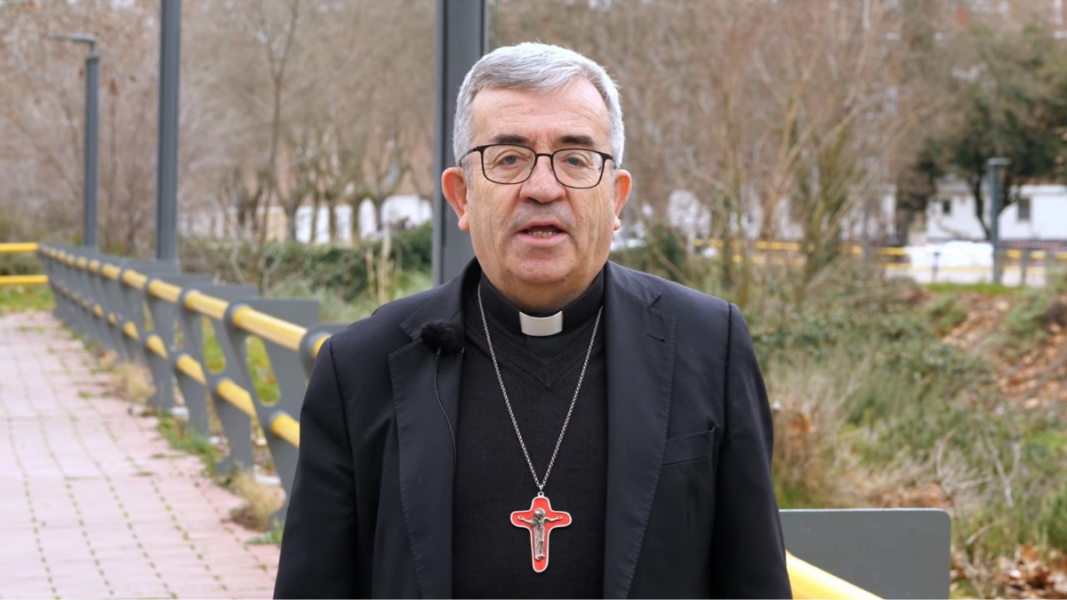
The latest episode has once again put everything in evidence. The president of the Spanish Episcopal Conference, Msgr. Luis Argüello, appears to celebrate the Government’s Royal Decree on the extraordinary regularization of illegal immigrants, and he does so in language straight out of the Executive’s political playbook: “democratic health,” “political opportunity,” “organized society,” “common good,” “subsidiarity.” No explicit reference to moral law, no warning about the objective disorder that massive uncontrolled immigration entails, no reminder of the State’s duties regarding borders, security, and justice. Just applause.
This is not just another prudential opinion within the legitimate Catholic pluralism. It is something much more serious: the public identification of the ecclesiastical hierarchy with a political power that systematically legislates against Catholic doctrine on essential matters. A government that promotes abortion as a right, normalizes euthanasia, destroys the family, indoctrinates in gender ideology, and persecutes conscientious objection. And before that government, the president of the CEE does not raise his voice to correct, but smiles to accompany.
Meanwhile, on the other side, the faithful people are boiling. Parish priests, religious, committed laity, families who continue to go to Mass, who educate their children in the faith, who financially sustain the Church, no longer recognize in their pastors the language or priorities of the Gospel. They see a hierarchy more concerned with not bothering those in power than with confirming their own in the faith.
The reaction on social networks is neither casual nor marginal. It is the expression of accumulated weariness. When Catholic faithful speak of scandal, they do not do so in a metaphorical sense. The scandal is real: seeing bishops speak like spokespersons for ideologized NGOs while remaining silent before gravely unjust laws. Seeing them align with the Agenda 2030 while churches empty. Seeing them invoke an abstract mercy that is never accompanied by truth.
Because mercy without prudence and without discernment is not a Christian virtue. It is sentimentalism. And sentimentalism, when it becomes ecclesial policy, ends up being cruel: with the ignored faithful, with de-structured nations, with the weakest used as a moral alibi.
The Spanish episcopate seems not to understand—or not to want to understand—that its authority does not come from its closeness to power, but from its fidelity to Christ. And that when that fidelity is diluted in institutional statements perfectly compatible with the BOE, what breaks is not only the credibility of the hierarchy, but communion itself.
Today the gap is evident: an episcopate surrendered to governmental applause and a faithful people scandalized, tired, and increasingly unwilling to remain silent. Denying it will not close it. Continuing to deepen it, will not either.