


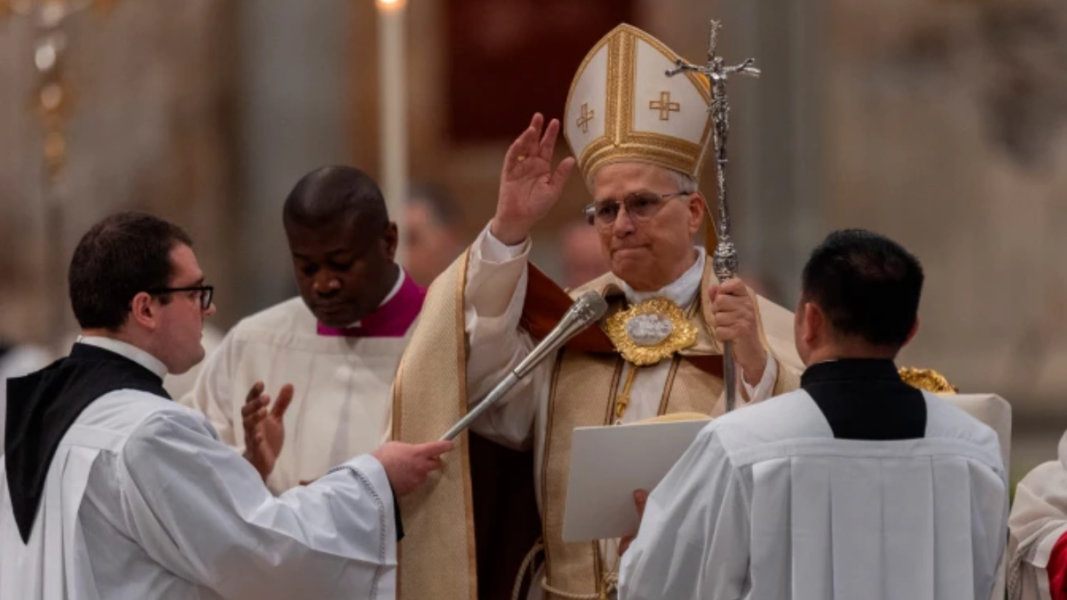
On January 25, 2026, at San Paolo fuori le Mura, Leo XIV concluded the 59th Week of Prayer for Christian Unity with a homily centered on Saint Paul and the urgency of visible unity. The Pope spoke of conversion as a transformative encounter with Christ, acknowledged that divisions “darken” the face with which the Church must reflect the light of Christ, and issued a call to deepen an “ecumenical and synodal” path, with an eye toward 2033. The problem is not the desire for unity—an evangelical mandate—but the conceptual framework that is imposed: when “synodality” becomes the privileged instrument of unity, the risk is that the method ends up dictating the content.
Synodality as a “bridge”
Leo XIV takes up a thesis from Francis: “the synodal path… must be ecumenical, just as the ecumenical path is synodal.” In other words, it proposes synodality as a common platform for walking together. But this proposal needs an elementary warning: synodality cannot become a substitute for doctrine or a shortcut to relativize the deposit of faith.
In the name of “processes,” “listening,” and “discernment,” doors have been opened to debates that, in reality, were closed by the constant teaching of the Church. A dynamic has been generated where media pressure and local consensuses seek to rewrite what the Church has always taught about the priesthood, sexual morality, the nature of marriage, or the authority of the Magisterium. If that same logic is exported to the ecumenical field, the result can be an engineering ecumenism: harmonizing structures and languages without resolving the doctrinal core.
Christian unity is not built with a methodology, but with the integral confession of the faith. Synodality can be useful as a form of consultation and practical charity; but when it is absolutized, it transforms into a “framework” that demands its own loyalty, sometimes above dogmatic clarity.
“Healing the memory” without rewriting history
The Pope cites the need for “healing of the memory,” evoking Saint Nerses Shnorhali and Saint John Paul II. Well understood, it is just: charity demands purifying resentments, recognizing sins, avoiding caricatures. But “healing” cannot become doctrinal amnesty or sentimental rereading of real ruptures.
Mature ecumenism does not fear naming differences. It assumes them with respect, precisely to not turn dialogue into propaganda. When “one voice” is requested to communicate the faith to the world, the question is inevitable: one voice in what terms? Under what authority? With what definition of faith? If the answer is “with a synodal consensus,” then Christianity is reduced to an ethical and cultural platform, and the Gospel becomes a message of coexistence.
Toward 2033: the danger of a calendar ecumenism
The reference to 2033 (bimillennium of the Passion, Death, and Resurrection) can incentivize valuable initiatives. But it can also fuel an event-based ecumenism: joint celebrations, declarations, symbolic gestures. All that is positive if it expresses truth; it is harmful if it substitutes it.
Unity is not decreed by anniversaries. It is born of conversion—the central theme of the homily—but conversion means returning to the whole Christ, not a negotiated Christ. Saint Paul did not “reconcile” with error: he surrendered to the Truth.
Praying for unity is a duty. But an ecumenism without truth produces an apparent peace; and a synodality without limits becomes a method that ends up governing the faith. The Church does not need a new ecclesial engineering. It needs, as the Pope himself recalled before the Apostle’s tomb, to return to the only starting point that transforms everything: the real encounter with Jesus Christ.
We leave below the complete homily of Leo XIV:
Dear brothers and sisters:
In one of the biblical passages we have just heard, the Apostle Paul defines himself as “the least of the Apostles” (1 Co 15,9). He considers himself unworthy of this title, because in the past he was a persecutor of the Church of God. However, he is not a prisoner of that past, but rather “a prisoner for the Lord” (Eph 4,1). By the grace of God, in fact, he knew the Risen Lord Jesus, who revealed himself to Peter, then to the Apostles and to hundreds of other followers of the Way, and finally also to him, a persecutor (cf. 1 Co 15,3-8). His encounter with the Risen One determines the conversion that we commemorate today.
The scope of this conversion is reflected in the change of his name, from Saul to Paul. By the grace of God, the one who once persecuted Jesus was completely transformed and became his witness. The one who once fought ferociously against the name of Christ now preaches his love with ardent zeal, as the hymn we sang at the beginning of this celebration vividly expresses (cf. Excelsam Pauli gloriam, v. 2). As we gather before the mortal remains of the Apostle to the Gentiles, we are reminded that his mission is also the mission of all Christians today: to announce Christ and invite all to trust in Him. Every true encounter with the Lord is, in fact, a transformative moment, which grants a new vision and a new direction to carry out the task of building the Body of Christ (cf. Eph 4,12).
The Second Vatican Council, at the beginning of the Constitution on the Church, declared the ardent desire to announce the Gospel to every creature (cf. Mk 16,15) and thus “to illuminate all men with the clarity of Christ, which shines on the face of the Church” (Dogmatic Const. Lumen gentium, 1). It is the common task of all Christians to say to the world, with humility and joy: “Look at Christ! Draw near to Him! Welcome his Word that illuminates and consoles!” (Homily at the Beginning of the Petrine Ministry of the Bishop of Rome Leo XIV, May 18, 2025). Dear brothers, the Week of Prayer for Christian Unity calls us each year to renew our common commitment to this great mission, aware that the divisions among us, while they do not prevent the light of Christ from shining, do, however, make more opaque that face which must reflect it upon the world.
Last year we celebrated the 1700th anniversary of the Council of Nicaea. His Holiness Bartholomew, Ecumenical Patriarch, invited to celebrate this anniversary in İznik, and I thank God for the fact that so many Christian traditions were represented in that commemoration, two months ago. Reciting the Nicene Creed together in the same place where it was drafted was a valuable and unforgettable witness to our unity in Christ. That moment of fraternity also allowed us to praise the Lord for what he worked in the Fathers of Nicaea, helping them to express clearly the truth of a God who has drawn near to us by meeting us in Jesus Christ. May the Holy Spirit also today find in us a docile intelligence to communicate with one voice the faith to the men and women of our time!
In the passage from the Letter to the Ephesians chosen as the theme for this year’s Week of Prayer, we hear repeatedly the qualifier “one”: one body, one Spirit, one hope, one Lord, one faith, one baptism, one God (cf. Eph 4,4-6). Dear brothers and sisters, how could these inspired words not move us deeply? How can our heart not burn before their impact? Yes, “we do in fact share the faith in the one and only God, Father of all men, we confess together the one Lord and true Son of God Jesus Christ and the one Holy Spirit, who inspires us and impels us to full unity and common witness to the Gospel” (Apostolic Letter In unitate fidei, 12). We are one! We already are! Let us recognize it, experience it, manifest it!
My dear predecessor, Pope Francis, observed that the synodal path of the Catholic Church “is and must be ecumenical, just as the ecumenical path is synodal” (Address to H.H. Mar Awa III, November 19, 2022). This was reflected in the two Assemblies of the Synod of Bishops in 2023 and 2024, characterized by a profound ecumenical zeal and enriched by the participation of numerous fraternal delegates. I believe this is a path to grow together in mutual knowledge of our respective synodal structures and traditions. As we look toward the bimillennium of the Passion, Death, and Resurrection of the Lord Jesus in 2033, let us commit to developing even further ecumenical synodal practices and to communicating to each other what we are, what we do, and what we teach (cf. For a Synodal Church, 137-138).
Dear brothers: At the conclusion of the Week of Prayer for Christian Unity, I extend my cordial greeting to Cardinal Kurt Koch, to the members, consultants, and staff of the Dicastery for Promoting Christian Unity, as well as to the participants in the theological dialogues and other initiatives promoted by the Dicastery. I thank for their presence in this liturgy numerous leaders and representatives of the various Churches and Christian Communions of the world, in particular Metropolitan Polykarpos, for the Ecumenical Patriarchate; Archbishop Khajag Barsamian, for the Armenian Apostolic Church; and Bishop Anthony Ball, for the Anglican Communion. I also greet the scholarship students of the Committee for Cultural Collaboration with the Orthodox Churches and Oriental Orthodox Churches of the Dicastery for Promoting Christian Unity, the students of the Ecumenical Institute of Bossey of the World Council of Churches, the ecumenical groups, and the pilgrims participating in this celebration.
The materials for this year’s Week of Prayer for Christian Unity were prepared by the Churches of Armenia. With profound gratitude, we recall the courageous Christian witness of the Armenian people throughout history, a history in which martyrdom has been a constant. At the end of this Week of Prayer, we remember the saint Catholicos Saint Nerses Shnorhali, “the Grace-filled,” who worked for the unity of the Church in the 12th century. He was ahead of his time in understanding that the search for unity is a task that falls to all the faithful and requires the healing of the memory. Saint Nerses can also teach us the attitude we must adopt in our ecumenical path, as my venerable predecessor Saint John Paul II recalled: “Christians must have a deep inner conviction that unity is essential not for a strategic advantage or political benefit, but for the good of preaching the Gospel” (Homily at the Ecumenical Celebration, Yerevan, September 26, 2001).
Tradition transmits to us the witness of Armenia as the first Christian nation, with the baptism of King Tiridates in the year 301 by Saint Gregory the Illuminator. Let us give thanks for how, thanks to the work of intrepid announcers of the saving Word, the peoples of Eastern and Western Europe received the faith in Jesus Christ; and let us pray that the seeds of the Gospel continue to produce in this continent fruits of unity, justice, and holiness, also for the benefit of peace among the peoples and nations of the whole world.