


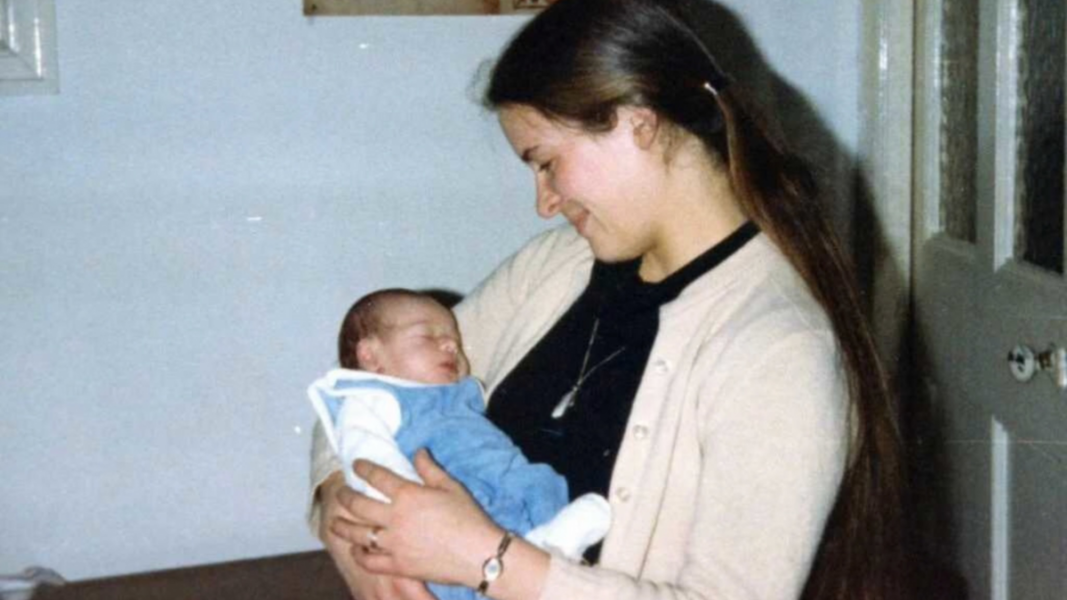
By Michael Pakaluk
When I taught catechism (CCD), I used to tell my students: «If everyone else is doing it, it’s probably wrong». «The Christian life is difficult. The truth is difficult». That’s what Kelley (as we can call her) said when I interviewed her in January 1999, a few months after the death of my late wife, Ruth.
I interviewed seven of Ruth’s closest friends at the time, housewives who used to gather every week to pray the Rosary. In those years, I was busy writing books and articles to obtain academic tenure. I had my professional contacts. But what was Ruth’s circle like? Men, generally, do not have access to that world. I wanted to learn, to record it.
And so I did. But I immediately put away the tapes and transcripts without looking at them again.
If anyone asked why, I would show them the interview with Alice Bernard, a palliative care nurse who considered herself fortunate because, without planning it, she found herself at Ruth’s bedside in her final hours. Alice’s powerful testimony is almost overwhelming for me even now.
But I felt compelled to return to these interviews after the Vatican Dicastery for the Causes of Saints declared last September that Ruth can be considered a Servant of God.
Let’s go back to what Kelley said. I asked her: but why should the truth be difficult? She replied: «I wonder about that all the time». And what do you find?
It is not the Church’s task to make your life easy. At least life in this world. The Church’s task is to lead you to Heaven. And if going to Heaven means that you have to be spiritual, that implies that you must be willing to see everything from a point of view that is not of this world: you have to see everything under a spiritual light.
«For example —she said—, what are the reasons why people use contraceptives? Most of them are very worldly reasons. They say: “I can’t afford another child right now”. Or “The house is too small for another child”, or “We have a strong and uncontrollable sexual drive”, which is also a worldly reason. Or they say: “I don’t have enough love”, but of course you don’t have enough love if you understand love as constantly giving material things. It follows that if the Church’s task is to lead you to Heaven, then the Church would err gravely if it allowed you to think in such a worldly way».
But what is spiritual about having sexual relations and having many children? «I suppose that having sexual relations is not spiritual —she said—. But neither was the death on the Cross —in a very bloody and human way— “spiritual” in that sense. The sweat, the blood and the bodily functions, or the mucus or whatever, are definitely not “spiritual”. It is what grows from that and springs from it that is spiritual».
But why should things be that way? Kelley said: «The spiritual must be human and “worldly” because of Original Sin. This is what mothers do, for example, when they clean a child’s bottom. They take something very smelly, very unpleasant and very human, and turn it into something beautiful and something spiritual. That’s what it’s all about, without a doubt».
Kelley said that she never wanted to go to college, but simply to be a mother. The fact that Ruth lived in a modest house, on the poorer side of town, «showed me from the beginning that Ruth had no ambition to be rich or to pretend to be». Kelley felt comfortable: «You would go to her house and, somehow, she always managed to have freshly baked things, apple pie and great coffee».
But wasn’t the Harvard diploma that Ruth hung in the kitchen a bit intimidating? Kelley responded with a story: «One day the topic of her education came up. I said: “Well, I saved a lot of money because I didn’t go to college, and I’m doing the same things as you!”. Ruth laughed and said: “Yes, but I wouldn’t have met Michael if I hadn’t gone to Harvard”». Kelley smiled at me: «So there you have it. That’s the only reason she could think of for having gone to college!».
In college, Ruth had sung Beethoven’s Ninth and Stravinsky’s Symphony of Psalms with the Boston Symphony Orchestra. She played the oboe, the piano, the violin and the flute, learning musical instruments at will.
Kelley also shared music with Ruth: «We liked, for example, Metallica. I used to tell her that I wished we had met without abortion being the glue, or whatever, that brought us together, because I knew that Ruth and I would have had a great time, like at a rock concert».
She added: «Ruth once told me that she loved The Beatles‘ Abbey Road. She remembered herself as a teenager, her and her friend, walking down the street, shouting: “Oh! Darling”. Walking down the street, just shouting! I often wish I had known her in those days. Because I can see myself walking with Ruth, shouting “Oh! Darling”, without a care in the world».
There are enough wonders in the lives of Christian mothers. But the interviews also recount strange events, if that matters, like the one about the woman from Boston who sat up in bed and told her husband that she had to go see Ruth, who had appeared to her in a dream. She arranged a babysitter and drove to Worcester, just in time to pray at Ruth’s bedside before she died.
The best story, perhaps, is that of a friend who confided to Ruth that she believed her young son, who died of a bone marrow disease, had secretly received God’s option to be healed, but instead chose to give his life back to God. Ruth was silent for a minute, then looked up, smiled gently and said: «Well, wouldn’t you choose the same?». To which the friend replied: «Yes, I would choose it».
About the author
Michael Pakaluk, scholar of Aristotle and ordinary of the Pontifical Academy of St. Thomas Aquinas, is Professor of Political Economy at the Busch School of Business at The Catholic University of America. He lives in Hyattsville, Maryland, with his wife Catherine, also a professor at the Busch School, and their children. His collection of essays, The Shock of Holiness (Ignatius Press), is now available. His book on Christian friendship, The Company We Keep, is available from Scepter Press. He contributed to Natural Law: Five Views, published by Zondervan last May, and his most recent evangelical book appeared with Regnery Gateway in March, Be Good Bankers: The Economic Interpretation of Matthew’s Gospel. You can follow him on Substack at Michael Pakaluk.