


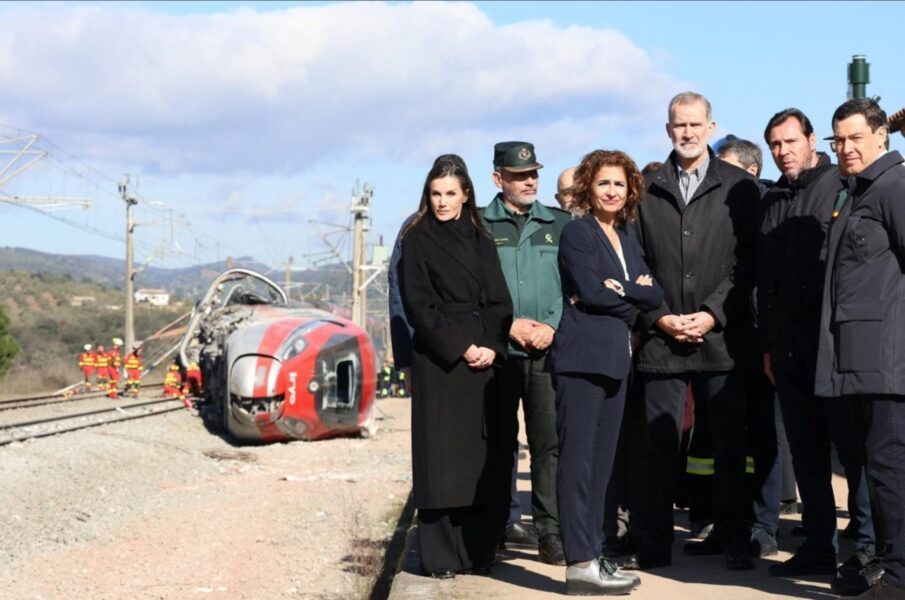
The Government of Pedro Sánchez has been forced to suspend the state homage of a secular nature that it intended to hold in Huelva in memory of the victims of the tragic Adamuz railway accident. The decision comes after the explicit rejection by the majority of the families, especially those residing in the Huelva province, where 27 of the 45 deceased lived. The lack of support from the relatives has rendered senseless an event that the Executive had promoted behind the backs of the majority sentiment of those affected.
According to official sources, both La Moncloa and the Junta de Andalucía admit that the homage, scheduled for Saturday, January 31, is being postponed after confirming that there was not sufficient confirmation of attendance from the families. The discomfort had been brewing for days prior, especially in Huelva, a land deeply marked by Christian faith, where the intention to organize a ceremony without religious reference was perceived as an ideological imposition alien to the real pain of the victims.
The wrecked Alvia train was headed to Huelva, and towns like Punta Umbría, Bollullos Par del Condado, Gibraleón, or Aljaraque remain immersed in mourning while demanding clear explanations and accountability for what happened. In this context, the announcement of a secular funeral promoted by the central Executive was received with incomprehension and rejection, as it was understood as a political gesture rather than a true act of accompaniment for the families.
The ceremony that the Government intended to organize expressly excluded any presence of religious authority, with the stated objective of avoiding a confessional character. However, that decision has clashed head-on with the social and spiritual reality of the province, where virtually all of the deceased are being farewelled in Catholic funerals. For many families, a homage without God is not only insufficient but deeply offensive at a time of extreme pain.
The president of the Junta de Andalucía, Juanma Moreno, has confirmed his attendance at the Catholic funeral to be held in Huelva, while it remains unknown whether the President of the Government, Pedro Sánchez, the main promoter of the now-suspended secular event, will attend. The absence of a clear gesture of closeness from the central Executive has only increased the sense of abandonment among the families.
Meanwhile, the pain of the families mixes with growing indignation toward authorities whom they perceive as more concerned with imposing an ideological narrative than with respecting the faith and traditions of those who have lost their loved ones. “In Huelva, you can’t have a secular funeral. Here, the sick are in the hands of the Virgin,” stated the sister of one of the victims in a television interview this week, reflecting a widely shared sentiment. In even clearer words, “a secular funeral in Huelva doesn’t fit; a Christian funeral does.”
The atmosphere in the province is one of contained tension, but the testimonies gathered by the media point to patience running out. The Government’s attempt to turn the mourning into a symbolic act of its secularist agenda has ended in failure, once again exposing the distance between political power and the real Spain that continues to bury its dead looking to the sky.
It remains to be seen what the attitude of the Royal House will be, which in recent times has been very comfortable participating in or sponsoring ceremonies with a secular aesthetic and symbolic nods typical of a militant secularization that many Spaniards already identify without ambiguity with Masonic rituals of power. The suspension of the governmental homage places the Crown in an uncomfortable dilemma: to persist in a neutrality that, in practice, is perceived as alignment with the ideological agenda of the Executive, or to listen to a people that, in the midst of pain, continues to express clearly that its consolation and hope cannot be understood without faith.