


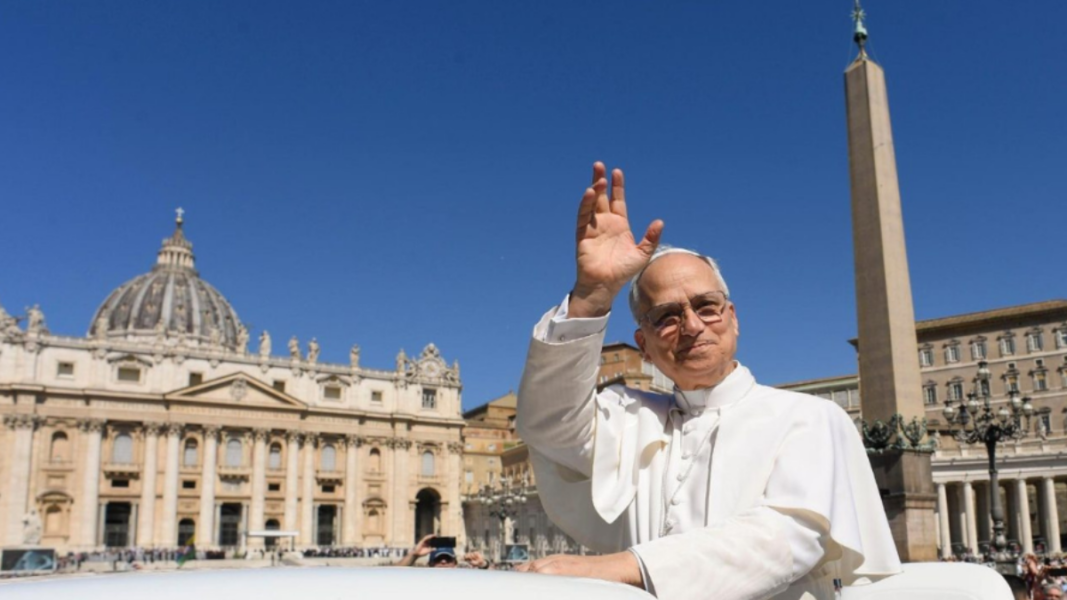
In his message for the 100th World Mission Day (January 25, 2026), the Pope asks the entire Church to resume the evangelizing impulse after the Jubilee with reconciled hearts, communities that overcome polarizations and distrusts, and a “choral” missionary collaboration—priests, consecrated persons, and laity—that announces Christ and not personal projects. Unity, he insists, is not uniformity: it is the convergence of charisms toward a single goal, sustained by the Word, the sacraments, and a spirituality of communion. And he emphasizes that the mission, in its essence, is a mission of love: bringing to the world the Gospel of God’s faithful love incarnated in Jesus Christ, with witness, prayer, and concrete help to missionaries.
We leave below the complete message of Leo XIV:
One in Christ, united in the mission
Dear brothers and sisters:
For the 2026 World Mission Day, which marks the centenary of this celebration, instituted by Pius XI and so dear to the Church, I have chosen the theme “One in Christ, united in the mission.” After the Jubilee Year, I wish to exhort the entire Church to continue with joy and zeal in the Holy Spirit the missionary path, which requires hearts unified in Christ, reconciled communities, and, in all, availability to collaborate with generosity and trust.
Reflecting on our being one in Christ and being united in the mission, let us allow ourselves to be guided and inspired by divine grace, to “renew in us the fire of the missionary vocation” and advance together in the commitment to evangelization, in “a new missionary era” in the history of the Church (Homily at the Mass for the Jubilee of the Missionary World and Migrants, October 5, 2025).
1. One in Christ. Missionary disciples united in Him and with brothers and sisters
At the center of the mission is the mystery of union with Christ. Before his Passion, Jesus prayed to the Father: “That they may all be one: as you, Father, are in me and I in you, that they also may be in us, so that the world may believe that you sent me” (Jn 17:21). In these words, the deepest desire of the Lord Jesus is revealed and, at the same time, the identity of the Church, community of his disciples: to be a communion that is born of the Trinity and lives from and in the Trinity, at the service of fraternity among all human beings and harmony with all creatures.
Being Christians is not primarily a set of practices or ideas; it is a life in union with Christ, in which we participate in the filial relationship that He lives with the Father in the Holy Spirit. It means remaining in Christ as the branches in the vine (cf. Jn 15:4), immersed in Trinitarian life. From this union springs the reciprocal communion among believers and all missionary fruitfulness is born. Yes, “communion represents both the source and the fruit of the mission,” as Saint John Paul II taught (cf. Ap. Exh. Christifideles laici, 32).
For this reason, the Church’s first missionary responsibility is to renew and keep alive the spiritual and fraternal unity among its members. In many situations, we witness conflicts, polarizations, misunderstandings, mutual distrust. When this occurs in our communities as well, their witness is weakened. The evangelizing mission, which Christ entrusted to his disciples, requires above all reconciled hearts and a desire for communion. In this perspective, it will be important to intensify ecumenical commitment with all Christian Churches, also taking advantage of the opportunities offered by the joint celebration of the 1700th anniversary of the Council of Nicaea.
Finally—but no less important—being “one in Christ” calls us to always keep our gaze fixed on the Lord, so that He may truly be the center of our personal and community life, of every word, action, and interpersonal relationship, so that we may say with amazement: “It is no longer I who live, but Christ who lives in me” (Ga 2:20). This will be possible in the constant listening to his Word and in the grace of the sacraments, to be living stones of the Church, called today to gather the fundamental instances of the Second Vatican Council and the subsequent pontifical Magisterium, in particular, of Pope Francis. In fact, as Saint Paul affirms, “we do not preach ourselves, but Christ Jesus as Lord” (2Co 4:5). I therefore reiterate the words of Saint Paul VI: “There is no true evangelization if the name, the doctrine, the life, the promises, the Kingdom, the mystery of Jesus of Nazareth, Son of God, are not proclaimed” (Ap. Exh. Evangelii nuntiandi, 22). This process of authentic evangelization begins in the heart of each Christian to extend to all humanity.
Therefore, the more united we are in Christ, the more we will be able to fulfill together the mission that He entrusts to us.
2. United in the mission. So that the world may believe in Christ the Lord
The unity of the disciples is not an end in itself: it is ordered to the mission. Jesus affirms it clearly: “So that the world may believe that you sent me” (Jn 17:21). It is in the witness of a reconciled, fraternal, and supportive community that the proclamation of the Gospel finds all its communicative force.
In this perspective, it is worth recalling the motto of the blessed Paolo Manna: “The whole Church for the conversion of the whole world.” This expresses synthetically the ideal that animated the foundation, in 1916, of the Pontifical Missionary Union. To it, on its 110th anniversary, I express my recognition and my blessing for its commitment to animating and forming the missionary spirit of priests, consecrated persons, and lay faithful, fostering the union of all evangelizing forces. In fact, no baptized person is foreign or indifferent to the mission; all, each according to their vocation and condition of life, participate in the great work that Christ entrusts to his Church. As Pope Francis has recalled on several occasions, the proclamation of the Gospel is always a choral, community, synodal action.
For this reason, being united in the mission means safeguarding and nurturing the spirituality of communion and missionary collaboration. By growing each day in this attitude, with divine grace we learn to look more and more at our brothers and sisters with eyes of faith, to recognize with joy the good that the Spirit arouses in each one, to welcome diversity as richness, to bear one another’s burdens, and to always seek the unity that comes from on High. In fact, we all together have a single mission received from “one Lord, one faith, one baptism […] one God and Father of all, who is over all and through all and in all” (Ef 4:5-6). This spirituality constitutes the everyday form of missionary discipleship. It helps us to recover a universal vision of the Church’s evangelizing mission, overcoming the fragmentation of efforts and factional divisions—“of Paul,” “of Apollos”—among the followers of the one Lord (cf. 1 Co 1:10-12).
Missionary unity, obviously, should not be understood as uniformity, but as the convergence of different charisms toward the same goal: making Christ’s love visible and inviting all to encounter Him. Evangelization takes place when local communities collaborate with one another and when cultural, spiritual, and liturgical differences are fully and harmoniously expressed in the same faith. Therefore, I encourage ecclesial institutions and realities to strengthen the sense of ecclesial missionary communion and to develop with creativity concrete forms of collaboration among them, for and in the mission.
In this regard, I thank the Pontifical Mission Societies for their service to missionary cooperation, which I experienced with gratitude during my ministry in Peru. These Works—Propagation of the Faith, Missionary Childhood, St. Peter the Apostle, and Missionary Union—continue to nourish and form the missionary conscience of the faithful, from the smallest to the greatest, and promoting a network of prayer and charity that connects communities around the world. It is significant that the founder of the Society for the Propagation of the Faith, the blessed Pauline Marie Jaricot, devised two hundred years ago the Living Rosary, which still today gathers numerous faithful in distant groups to pray for all spiritual and missionary needs. It should be remembered that, precisely at the proposal of the Society for the Propagation of the Faith, Pius XI instituted in 1926 the celebration of World Mission Day, whose annual collections are distributed by it, in the name of the Pope, for the various needs of the Church’s mission. The four Works, as a whole and each in its specificity, continue to play a valuable role for the entire Church. They are a living sign of ecclesial missionary unity and communion. I invite all to collaborate with them in a spirit of gratitude.
3. Mission of love. Proclaiming, living, and sharing God’s faithful love
If unity is the condition of the mission, love is its essence. The Good News that we are sent to proclaim to the world is not an abstract ideal; it is the Gospel of God’s faithful love, incarnated in the face and life of Jesus Christ.
The mission of the disciples and of the entire Church is the prolongation, in the Holy Spirit, of Christ’s mission; a mission that is born of love, lived in love, and leads to love. So much so that the Lord himself, in his great prayer to the Father before the passion, after invoking the unity of the disciples, concludes in this way: “That the love with which you loved me may be in them, and I in them” (Jn 17:26). The apostles evangelized driven by the love of Christ and by Christ (cf. 2 Co 5:14). In the same way, over the centuries, multitudes of Christians, martyrs, confessors, missionaries have given their lives to make this divine love known to the world. Thus, the Church’s evangelizing mission continues under the guidance of the Holy Spirit, Spirit of love, until the end of time.
For this reason, I wish to especially thank today’s ad gentes missionaries; people who, like Saint Francis Xavier, have left their land, their family, and all security to proclaim the Gospel, bringing Christ and his love to often difficult, poor places marked by conflicts or culturally distant. They continue to give themselves with joy despite adversities and human limitations, because they know that Christ himself, with his Gospel, is the greatest wealth that can be shared. With their perseverance, they show that God’s love is stronger than any barrier. The world continues to need these courageous witnesses of Christ, and ecclesial communities continue to need new missionary vocations, which we must always keep in our hearts and for which we must continually beg the Father. May He grant us the gift of young people and adults willing to leave everything to follow Christ on the path of evangelization to the ends of the earth.
In admiring the missionaries, I make a special appeal to the entire Church: let us all unite with them in the evangelizing mission through the witness of life in Christ, prayer, and contribution to the missions. Often, as we know, “Love is not loved,” as Saint Francis of Assisi said, whom we look to in a special way eight hundred years after his passing to heaven. Let us allow ourselves to be infected by his desire to live in the Lord’s love and to transmit it to those near and far, because, as he affirmed: “the love of Him who loved us so much must be loved much” (St. Bonaventure of Bagnoregio, Major Legend, chap. IX, 1; Franciscan Sources, 1161). Let us also feel stimulated by the zeal of Saint Thérèse of the Child Jesus, who set out to continue her mission even after death, declaring: “In heaven I shall desire the same as I do now on earth: to love Jesus and make Him loved” (Letter to Abbot M. Bellière, February 24, 1897).
Inspired by these testimonies, let us all commit to contributing, each according to their vocation and the gifts received, to the great evangelizing mission, which is always a work of love. Your prayers and your concrete support, especially on the occasion of World Mission Day, will be of great help in bringing God’s Gospel of love to all, especially to the poorest and most needy. Every gift, however small, becomes a significant act of missionary communion. For this reason, I renew my sincere gratitude “for all that you will do to help me support the missionaries everywhere” (Videomessage for World Mission Day 2025). And to foster spiritual communion, I leave you, along with my blessing, this simple prayer:
Holy Father, grant us to be one in Christ, rooted in his love that unites and renews. Make all members of the Church united in the mission, docile to the Holy Spirit, courageous in giving witness to the Gospel, proclaiming and incarnating every day your faithful love for every creature.
Bless the missionaries, support them in their effort, preserve them in hope.
Mary, Queen of Missions, accompany our evangelizing work in every corner of the earth; make us instruments of peace and may the whole world recognize in Christ the light that saves. Amen.
Vatican City, January 25, 2026, III Sunday of Ordinary Time, feast of the Conversion of the Apostle Saint Paul.
LEÓN PP. XIV