


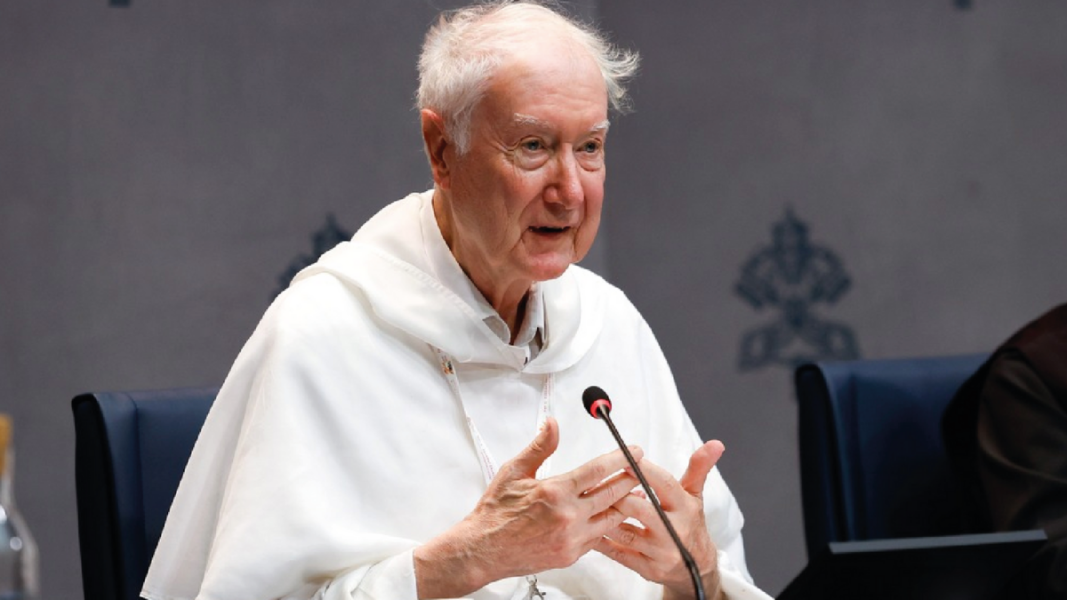
Timothy Radcliffe explains to us that we must teach the faith with compassion. Or, put another way: not teach it, but do so with a lot of feeling. The Dominican cardinal invites us to inhabit a “space” that is ethereal, vaporous, undefined, situated between the anvil and the hammer, between dogma and life, between the Ark of the Covenant and an empty tomb, between heaven and earth, between the question and the question… but curiously never between truth and error, because that would already be too concrete.
Teaching —they tell us— does not consist in giving answers, but in embracing questions. Even better: in making others’ questions our own, praying them, chewing them over, and sitting at the table with those who believe nothing, sharing bread, doubts, and, if the occasion arises, a good existential perplexity. Teaching is no longer affirming, but accompanying; it is not transmitting the creed, but experiencing the tension; it is not saying “this is how it is,” but “I understand that you feel that way.”
Radcliffe insists that the center of Christian teaching is a question. Not an answer, not a revealed truth, not a “I am the way, the truth, and the life,” but a question. Conveniently isolated, of course, from the rest of the Gospel, which might turn out to be excessively affirmative.
The result is an admirably sterile pedagogy: the teacher does not teach, the student does not learn, but everyone feels deeply understood. The faith is not proposed, it is shared as a state of mind. Dogma is not explained, it is skirted around. Doctrine is not proclaimed, it is suspended in the air, like Christ between heaven and earth, but without the cross, which is uncomfortable.
Saint Thomas appears only to be posthumously scolded: what a scandal that is, offering answers! Much better the permanent doubt, the endless question, the Church as a workshop of accompanied uncertainty. Because, apparently, teaching something with clarity could prevent us from “recognizing the presence of God in our daily struggles.” God, it seems, flees in terror as soon as someone affirms something with precision.
Everything culminates in the great slogan: compassion. Teaching with compassion means not demanding, not correcting, not delimiting, not distinguishing. Loving the interlocutor so much that one renounces telling him the truth, lest he feel violated by it. Spiritual mercy no longer consists in teaching the one who does not know, but in confirming the one who doubts… in his doubt.
So now you know: if someone asks what the Church believes, don’t answer him. Hug him. If someone wants to know if something is true or false, pray with him his bewilderment. And if someone asks for doctrine, explain to him that doctrine is a form of lack of compassion.
Teaching the faith with compassion: talk a lot, say nothing, and call it Ordinary Magisterium.