


In Chile, the president-elect José Antonio Kast, a Catholic lawyer from the Republican Party, has been organizing his upcoming cabinet of ministers, and among the nominations, the appointment of Judith Marín (Evangelical from the Social Christian Party) as future Minister of Women and Gender Equity (that is the full name of the ministry) sparked this Friday a political and cultural controversy about the role of religion in public life and the limits between legitimate criticism and discrimination based on beliefs, upon learning that Marín defends pro-life positions: from conception to natural death.
The debate erupted in the last few hours, stemming from questions from ideological left-wing sectors that have warned that Marín’s evangelical faith and her value-based positions could condition public policies linked to rights, in a particularly sensitive ministry subject to high media exposure. From the environment of the incoming government and from her party, on the other hand, they maintain that part of those criticisms are not directed at her management capacity, but at her religious identity.
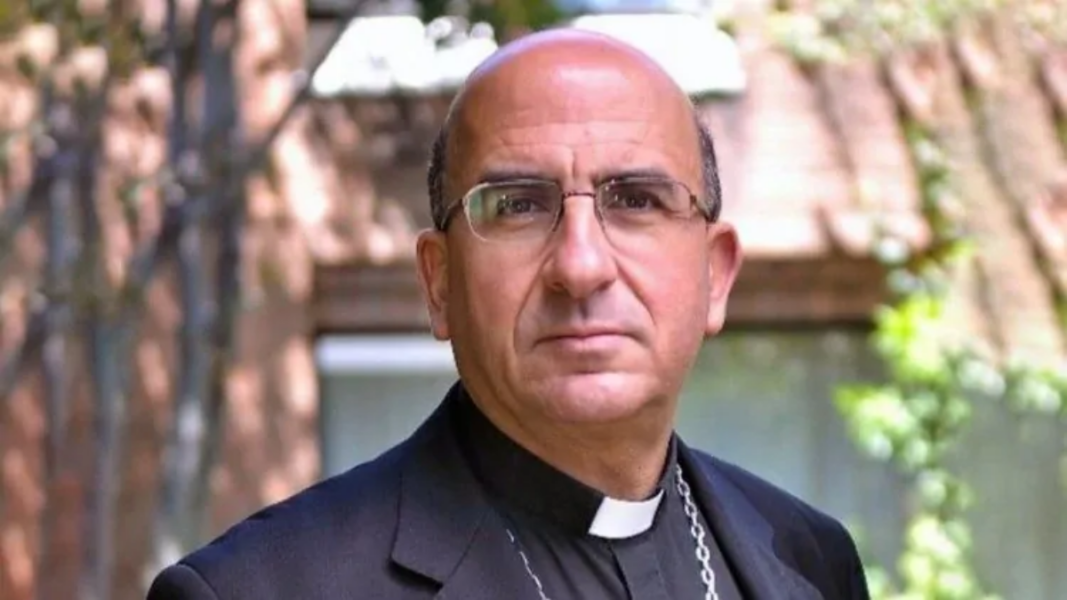
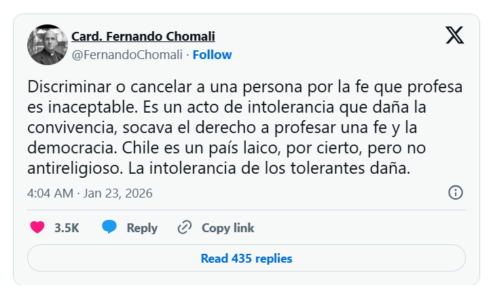
In that context, the cardinal and archbishop of Santiago, Fernando Chomali, intervened publicly in the early morning through his X account to reject what he described as a “cancellation” for religious reasons. “Discriminating or canceling a person for the faith they profess is unacceptable”, he wrote, adding that it is an act of intolerance that affects coexistence and the right to profess a faith in democracy. Chomali emphasized that Chile is a secular country, “but not anti-religious”.
The controversy had previously been pushed by the Christian Democratic deputy Héctor Barría, who denounced an alleged “canutophobia” against the future minister, alluding to prejudices against evangelicals. The discussion, moreover, projected itself within the bloc that will support Kast, after the founder and former president of Evópoli, Hernán Larraín Matte, questioned the appointment, describing it as an “error” and a “provocation” due to Marín’s conservative positions.
From the Social Christian Party, its president Sara Concha responded with a call for unity in the future government coalition and defended the appointee. In interviews, she denied that Marín seeks “to roll back rights” and maintained that the future minister will prioritize issues such as female employability and social policies, in contrast to the ideological approach that, in her opinion, marked the outgoing government.
The controversy occurs a few weeks before the change of command on March 11, in a climate where cabinet appointments have become political signals about the cultural direction of the next Executive.
If politics enters the logic of vetoing someone for their faith, religious freedom is reduced to a slogan useful only when convenient. In that sense, the words of Cardinal Chomali point to the heart of the problem: canceling for religious reasons is intolerance, and intolerance—wherever it comes from, especially from those who profess it as a banner—deteriorates coexistence and public life.