


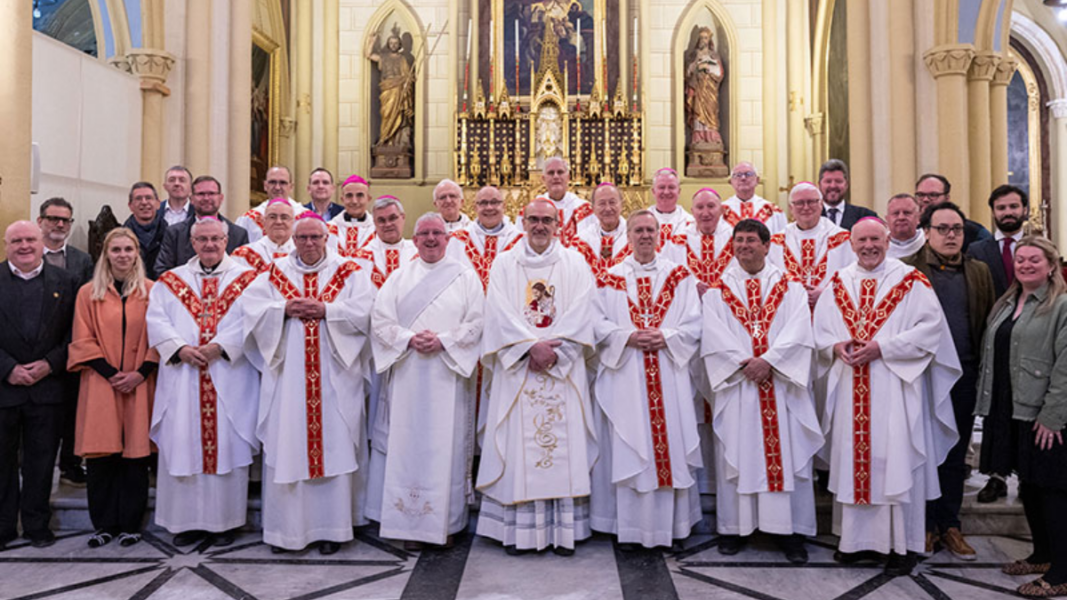
A delegation of bishops from various episcopal conferences has returned from Jerusalem after participating in the Holy Land Coordination 2026, held from January 17 to 22. This is an annual meeting that seeks to maintain a constant ecclesial presence in the region and to learn firsthand about the situation of Christian communities. Representing Spain was Mons. Joan Enric Vives Sicilia, emeritus archbishop bishop of Urgell.
The final communiqué published by the Spanish Episcopal Conference (CEE) presents a harsh snapshot of the situation on the ground. The bishops describe a Holy Land marked by trauma and a growing sense of suffocation in areas of the West Bank. Their first stop was with Bedouin communities who live, according to the text, in conditions of social marginalization and with severely restricted movements, surrounded by expanding settlements. During that visit, the signatories convey a phrase that summarizes the tone of the document. No one sees us.
West Bank under pressure and Christians pushed to emigrate
The bishops, the communiqué states, heard accounts of attacks and intimidation by Israeli settlers, theft of livestock, and demolitions of properties. The immediate effect, they note, is constant fear and the erosion of daily life, to the point of preventing many families from sleeping due to the possibility of new aggressions.
The document links that situation to the reality of Palestinian Christian communities. The bishops celebrated Mass in the only completely Christian city in Palestine and state that there too they heard denunciations of harassment and violence, including attacks by extremist settlers, uprooting of olive trees, and confiscation of lands. The communiqué interprets that this pressure ultimately fuels massive emigration, precisely at a time when the local Christian presence is already fragile.
Gaza as a humanitarian catastrophe and civilian voices threatened
The text describes Gaza as an ongoing humanitarian catastrophe. At the same time, it states that in the West Bank they perceive demoralization and fear. It is noteworthy the emphasis on a point less common in this type of statement. The bishops warn that Israeli voices defending human and civil rights are also increasingly threatened, and that solidarity with the marginalized is becoming costly. They fear that those voices may be silenced.
Security for Israel and demand for equality for all
In the political section, the bishops uphold two statements that seek balance. They recognize Israel’s right to exist and to live in peace and security. At the same time, they ask that those same rights be respected for all peoples rooted in the region. From there, they demand no more terrorism or war and call for the resumption of meaningful negotiations toward a two-state solution, presented as a path to security and benefit for all.
In that vein, the communiqué includes a direct call to governments. It asks them to exert pressure on Israel to respect an international order based on norms and for the political process to get back on track.
Support for local Christians and call to pilgrimage
Beyond the diplomatic sphere, the bishops insist on the faith and steadfastness of local Christians and other religious people who work to sustain the hope of their communities. It also highlights the witness of those who, despite having suffered direct losses, continue to bet on forgiveness and reconciliation.
The bishops ask Catholics to accompany with prayer and support the peoples of the Holy Land and to heed the call of Cardinal Pierbattista Pizzaballa, Latin Patriarch of Jerusalem, to come on pilgrimage as a visible sign of closeness and solidarity.
Read also: Ramzi Ghattas: «The Holy Land is the fifth Gospel. It is not visited, it is lived»
Finally, the communiqué concludes with a Marian invocation. Our Lady, Queen of Palestine and of all the Holy Land, pray for us.