


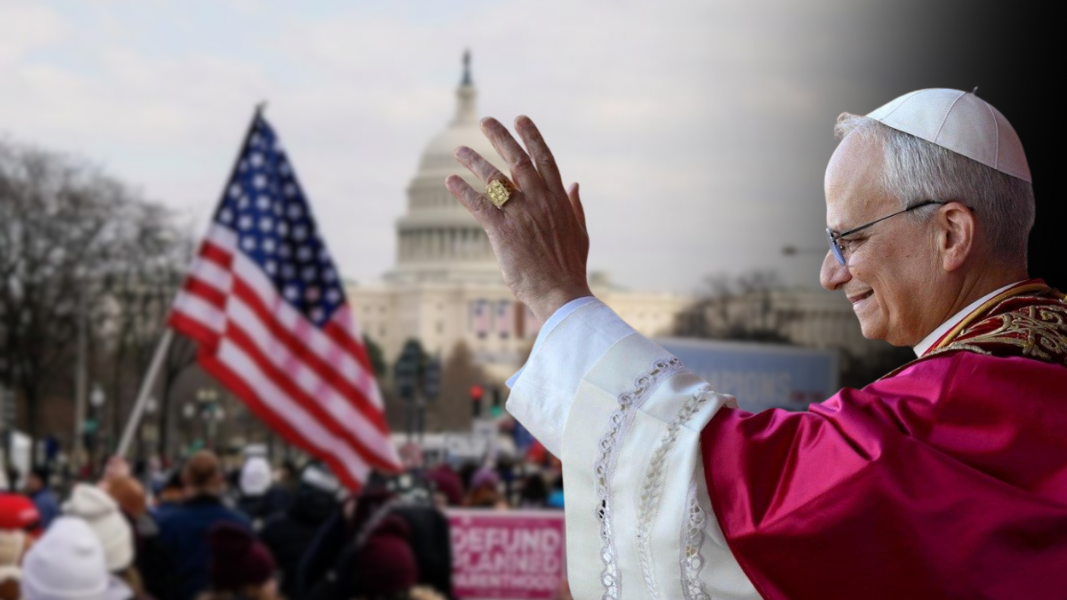
Pope Leo XIV has sent a message to the participants of the March for Life 2026 in Washington, encouraging them to maintain a public witness that is “courageous and peaceful” in defense of the unborn and reminding them that without the right to life, no other human right can be sustained.
The U.S. national march is held this Friday, January 23, 2026, in the federal capital and once again places at the forefront a debate that, despite recent legislative changes in the country, has not lost intensity: that of the culture of life versus the culture of discard.
Without life, there are no rights
The core of the pontifical message is clear: human life is not a sectoral issue, nor a partisan flag, but the real foundation of the civil edifice. Leo XIV recovers a formulation that he had already emphasized before the diplomatic corps accredited to the Holy See on January 9, 2026, when he warned that the protection of the right to life constitutes the “indispensable foundation” of any other right.
It is not a rhetorical declaration. In practice, it implies that any policy that presents itself as “social” or “humanitarian” is morally unfounded if it tolerates—or promotes—the elimination of the most vulnerable human being before birth.
Youth, politics, and public responsibility
The Pope places particular emphasis on young people and asks them to continue working so that life is respected “in all its stages,” also through dialogue with civil and political leaders.
Leo XIV does not limit the defense of life to the devotional sphere or to symbolic mobilization. He links it to public life, to the formation of conscience, and to the responsibility of those who legislate. It is a timely reminder in a Western context where faith—and natural morality—is often sought to be confined to the private sphere.
A “peaceful” witness, but without complexes
The message insists on the “peaceful” nature of the march and on the value of a public witness that does not seek permission from political correctness. In times when the defense of the unborn is often portrayed as an ideological eccentricity, the Pope places it at the center of justice: serving “the smallest ones” is not an optional gesture, but a moral imperative for the Christian.
Under the protection of the Immaculate
Leo XIV concludes by entrusting the participants to the intercession of the Immaculate Mary, patroness of the United States, and imparting his apostolic blessing. The framing is no small matter: the defense of life is not reduced to strategy, but is also sustained by prayer, sacrifice, and sacramental life.
We leave the full message from Leo XIV:
To the participants in the March for Life 2026
I send a cordial greeting to all those participating in the March for Life 2026. Likewise, I express my sincere gratitude and assure you of my spiritual closeness as you gather to give this eloquent public witness, in order to affirm that “the protection of the right to life constitutes the indispensable foundation of every other human right” (Address to the members of the Diplomatic Corps accredited to the Holy See, January 9, 2026).
Indeed, *a society is healthy and truly progresses only when it safeguards the sacredness of human life and works actively to promote it (ibid.). In this sense, I wish to encourage you, especially the young people, to continue striving to ensure that life is respected in all its stages, through appropriate efforts at all levels of society, including dialogue with civil and political leaders.
May Jesus, who promised to be always with us (cf. Mt 28:20), accompany you today as you march courageously and peacefully in favor of unborn children. In defending them, know that you are fulfilling the Lord’s command to serve Him in the smallest of our brothers and sisters (cf. Mt 25:31-46).
With these sentiments, I entrust all of you, as well as those who support you with their prayers and sacrifices, to the intercession of the Immaculate Mary, Patroness of the United States of America, and with pleasure I impart my Apostolic Blessing as a pledge of abundant heavenly graces.
From the Vatican, January 17, 2026
LEO PP. XIV