


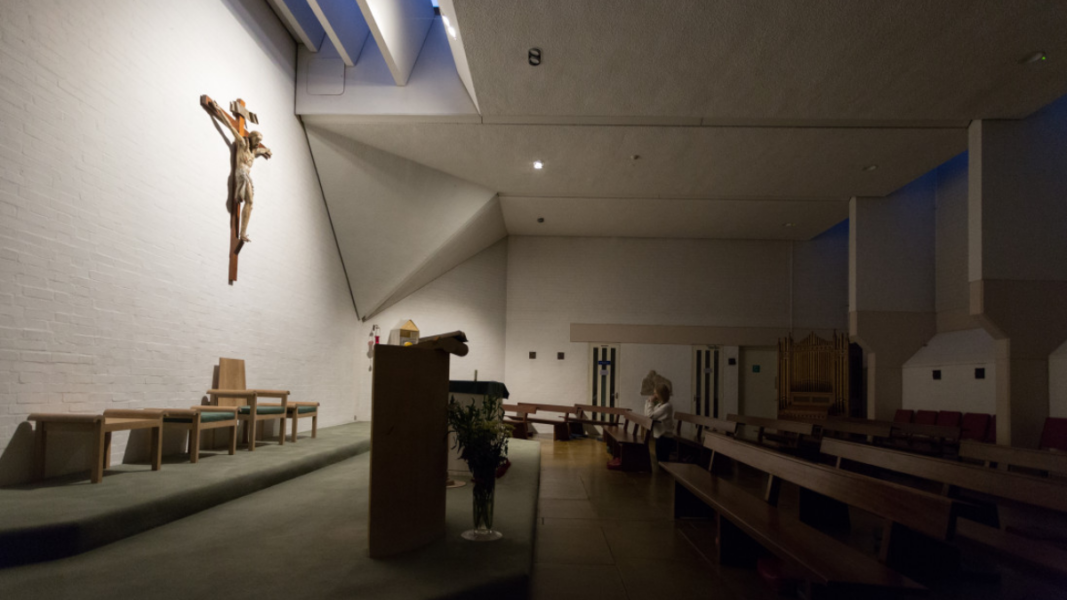
The English student medium Cherwell reports that Father Damian Howard, until then senior chaplain of the Oxford University Catholic Chaplaincy, was required to leave the position last August following a student’s complaint of alleged sexual abuse. According to the investigation, the Society of Jesus in Great Britain, responsible for the appointment, would have substantially misrepresented the nature of the complaint in subsequent communications.
The starting point is a formal complaint submitted in early August to the Jesuits in Great Britain. In it, the complainant states that Howard initiated sexual contacts on several occasions during the summer, in a context in which the student claims to have been under the effects of alcohol. The relationship would have arisen within the framework of the pastoral direction proper to the chaplaincy and would have increasingly taken on a more personal tone.
A relationship of dependency in a pastoral context
The student claims that the chaplain intervened in relevant matters of his academic and personal life, including support for a funding application, invitations to trips and dinners, and the suggestion of staying in chaplaincy accommodations during the term. In that context, the complainant states that a possessive and controlling dynamic occurred, with episodes of intimacy that, according to his account, were not initiated by him.
The central element of the case, as presented by Cherwell, is not only improper conduct, but the possible exploitation of a situation of vulnerability. The complainant links his emotional dependency to grief over the death of a friend and mental health issues. He claims to have felt trapped and to have been asked to remain silent to avoid consequences for the chaplain.
The Jesuits speak of improper conduct and an ongoing investigation
Jesuits in Britain confirmed that Howard was removed for professional misconduct following a complaint that was investigated and deemed founded. They added that an independent review is underway by the Catholic Safeguarding Standards Agency and that the matter was reported to the Charity Commission and the police.
Campion Hall, an institution linked to the University of Oxford and run by Jesuits, also ended its relationship with Howard as an honorary fellow when informed of the reason for his departure from the chaplaincy.
The most delicate accusation points to how the complaint was handled
Cherwell claims that internal documents show that safeguarding personnel from the Jesuits sent a report to the Archdiocese of Birmingham with statements that the student denies. Among them, that he would have withdrawn his allegation of abuse of power, that the relationship was consensual, and that he would deny the abuse if questioned by authorities. The complainant, according to the medium, obtained that report through a data access request and claims that the version sent to the archdiocese was not corrected for months.
That alleged distortion of the complaint’s content is now a determining factor. Not only for its legal and reputational implications, but because it touches a critical point for any institution that claims to take the protection of vulnerable people seriously. The credibility of a safeguarding system is at stake precisely in the accuracy with which it conveys the complaint and in the transparency with which it responds when contradictions arise.
A case that once again demands clear standards
The University of Oxford declined to comment, and the CSSA confirmed to the medium that it is investigating the allegations. In the meantime, it is worth asking how an effective and verifiable response is guaranteed when the accused holds a position of pastoral trust and when the institution that must investigate is at the same time the one that appointed him.