


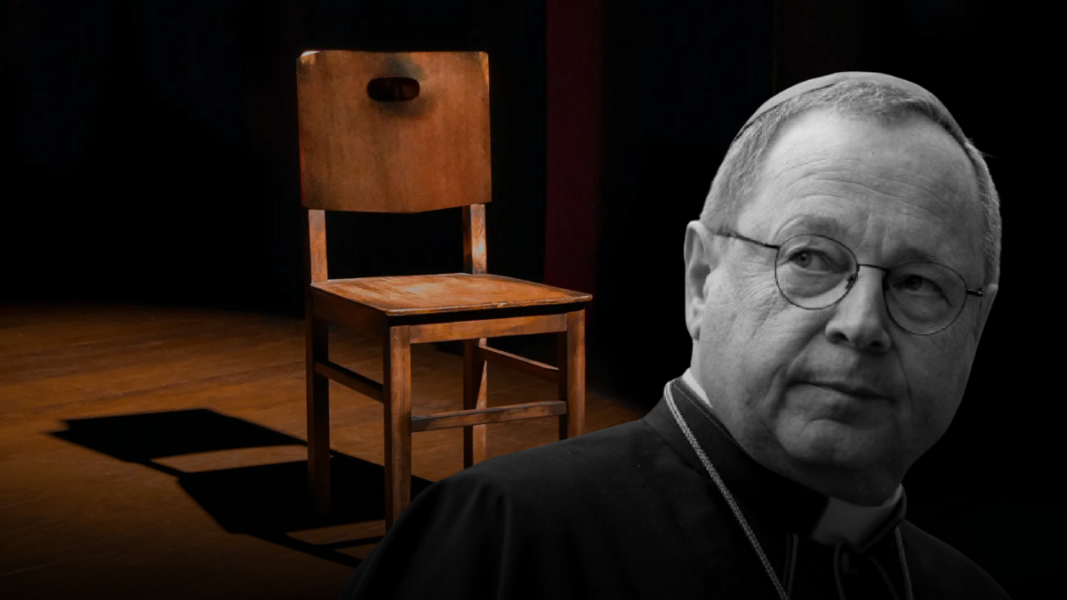
After learning of Georg Bätzing’s resignation from seeking re-election as president of the German Episcopal Conference, a dispute opens that Rome will follow closely. Who will take the baton of the controversial German synodal path? It’s not just about an internal handover, but about deciding whether the German episcopate corrects course after years of clashes with the Holy See.
Read also: Bätzing resigns from re-election and opens the succession in the German episcopate
An end to a stage that is not neutral
Bätzing leaves the position after six years in which the “synodal way” has marked the agenda and deepened divisions among bishops. What started as a response to the abuse crisis ended up becoming a project of far-reaching reforms, with constant frictions with Rome and a debate that is no longer just pastoral, but fundamental: what can be changed in the German Church without breaking communion with the universal Church.
The election of a new president will serve to gauge whether Germany seeks a real correction or simply a change of style to sustain the same orientation.
Why Rome is watching everything
The president of the German episcopal conference is, de facto, the public face of the episcopate and the main interlocutor with the Holy See. In a context of accumulated tensions, the name that emerges from Würzburg at the end of February will be read as a signal: continuity or rectification.
Moreover, the decision is not minor because in the coming months the idea of institutionalizing the “synodal way” through a permanent structure could return to the table. If that type of body is consolidated, the conflict with Rome would cease to be a point of controversy and become a structural problem of ecclesial governance.
The favorite of the German press: Bentz
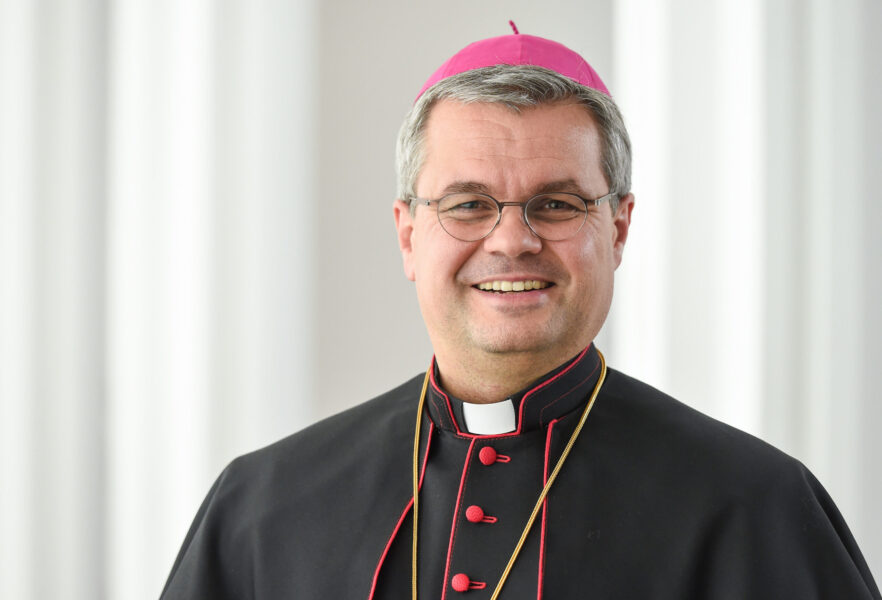
The German press, according to the panorama gathered by The Pillar, strikingly agrees on one candidate: Udo Markus Bentz, archbishop of Paderborn, 58 years old. He is presented as a profile capable of lowering internal tension, with a conciliatory discourse and certain closeness to political and ecclesial decision-making centers.
Read also: German bishop considers that criticizing abortion «sharpens social tensions»
His possible rise would bet on a “moderator” who maintains stability without blowing up the process. The question is whether that moderation means a real brake or simply a tactic. Advance without noise, avoiding a frontal clash with the Holy See.
The other names and the real dilemma
Alongside the favorite, other profiles are considered. From bishops fully identified with the synodal project to more critical voices. But the underlying dilemma is simple: maintain continuity with a president who sustains the “synodal way” as the central axis and works to make it permanent, albeit with more prudent language; or a correction, with a president who, without denying the need for purification and reforms, assumes clear limits and bets on rebuilding ecclesial life from the essentials: faith, liturgy, vocations, discipline, and mission.
Germany’s problem is not about committees
The German Church is not just playing for an organigram. It is playing for its credibility and its future. In a country marked by secularization, the decline in practice, and the collapse of vocations, there is the temptation to believe that the remedy is structural: more bodies, more processes, more “participation”. But when everything is reduced to internal politics, the Church becomes bureaucratic and loses its ability to convert.
What happens in Würzburg will not resolve that crisis by itself, but it will show whether the German episcopate has understood the lesson. It is clear that Catholic renewal does not arise from an ecclesial parliament, but from Christ, the truth of the faith, and sacramental life.