


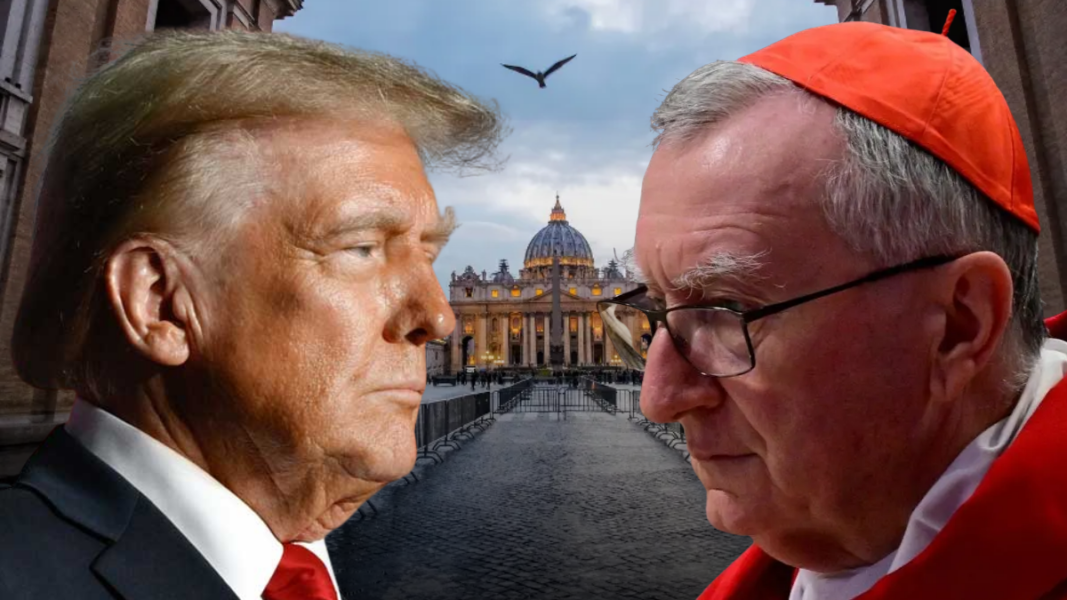
The Holy See is studying how to respond to the invitation from the President of the United States, Donald Trump, to join an organization called “Board of Peace” focused on Gaza, as reported by the Catholic News Agency. The Secretary of State, Cardinal Pietro Parolin, confirmed on January 21 that the Pope has received the proposal and that the Vatican is evaluating it “thoroughly,” ruling out any financial contribution from the outset. The caution comes at a time when Rome seeks to maintain diplomatic maneuverability in an increasingly polarized international scenario.
An entity outside the UN with “permanent seats”
According to what has been known in international media, the “Board of Peace” would be presented as an initiative independent of the United Nations, with a participation scheme that would include permanent seats and contributions from the countries that join. Parolin made it clear that the Holy See is not in a position to participate financially and that, if it does, it would be from a position different from that of other States.
The cardinal added that other countries are also evaluating their response, citing the case of Italy, and warned about the climate of tensions between the United States and Europe, which—he said—“is not healthy” for an already serious international situation.
The “Vatican mode”
The reserve with which Rome moves regarding Trump’s proposal fits with the tone set by Leo XIV in his recent speech to the diplomatic corps: criticism of “force-based diplomacy,” defense of dialogue, and reminder of the centrality of the right to life, along with religious freedom and respect for international law.
A recent example: Venezuela and mediation to avoid a military intervention
That attempt to keep negotiation channels open—even when the situation slides toward fait accompli—was seen a few days ago in Venezuela. Parolin confirmed that the Holy See tried to mediate to avoid a U.S. military intervention, exploring an exit that would prevent bloodshed, even seeking a possible agreement with Nicolás Maduro and other regime actors, although without success.
Read also: Parolin sought a negotiated way out for Maduro before the U.S. intervention.
After Maduro’s capture on January 3, the Secretary of State admitted that the Vatican now faces a “de facto” situation and expressed the desire for the country to move toward stability, economic recovery, and democratization.
Leo XIV has also publicly addressed the Venezuelan crisis and received opposition leader María Corina Machado in audience on January 12, reinforcing the reading of a Holy See that wants to maintain an active role—and not merely symbolic—in the main fronts where Washington is involved.