


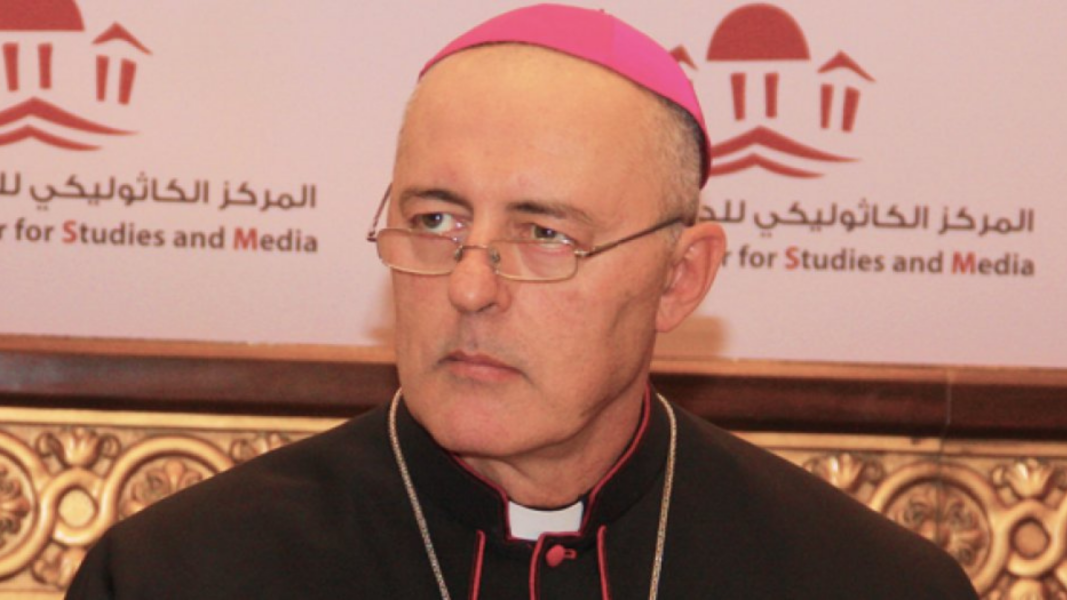
Pope Leo XIV has accepted, “due to age limits,” the resignation of Archbishop Adolfo Tito Yllana and has appointed Archbishop Giorgio Lingua in his place as Apostolic Nuncio in Israel and Apostolic Delegate in Jerusalem and Palestine, according to the official statement released by the Vatican.
A Diplomatic Changeover on a Particularly Sensitive Chessboard
The change arrives in one of the most delicate positions of papal diplomacy. The nuncio in Israel and the delegate in Jerusalem and Palestine not only represent the Pope before civil authorities: in practice, they maintain a permanent channel to protect the Christian presence, religious freedom, and access to holy sites in a scenario where every gesture is read politically.
The formula used—resignation due to age and immediate appointment—points to an orderly transition, without gaps, in a representation where Rome seeks continuity and experience.
Who is Giorgio Lingua
Lingua, titular archbishop of Tuscania, arrives from the nunciature in Croatia. But his diplomatic career is broader and includes postings with geopolitical pressure: he was nuncio in Iraq and Jordan and subsequently in Cuba, before taking up Croatia.
Yllana Steps Down: A Resignation Due to Age in Full Public Exposure
The Holy See has accepted the resignation of Adolfo Tito Yllana upon reaching the expected age. Yllana had been in a position marked by recurrent friction regarding holy sites, permits, and treatment of Christian communities for years. Therefore, his departure is not a simple rotation; it closes one stage and opens another with a different profile, but with the same underlying challenge.
What Can Change (and What Cannot)
In this type of appointment, the Vatican does not seek to “change course” every few years, but to ensure a solid presence. The changeover does not alter the doctrinal or diplomatic position of the Holy See on Jerusalem and the protection of Christians, but it can influence the style of dialogue and the capacity for everyday negotiation with diverse actors.
With Lingua, Rome places a career diplomat to sustain a representation that, more than ever today, navigates between international pressure, security, and the real—and fragile—life of local Christian communities.