


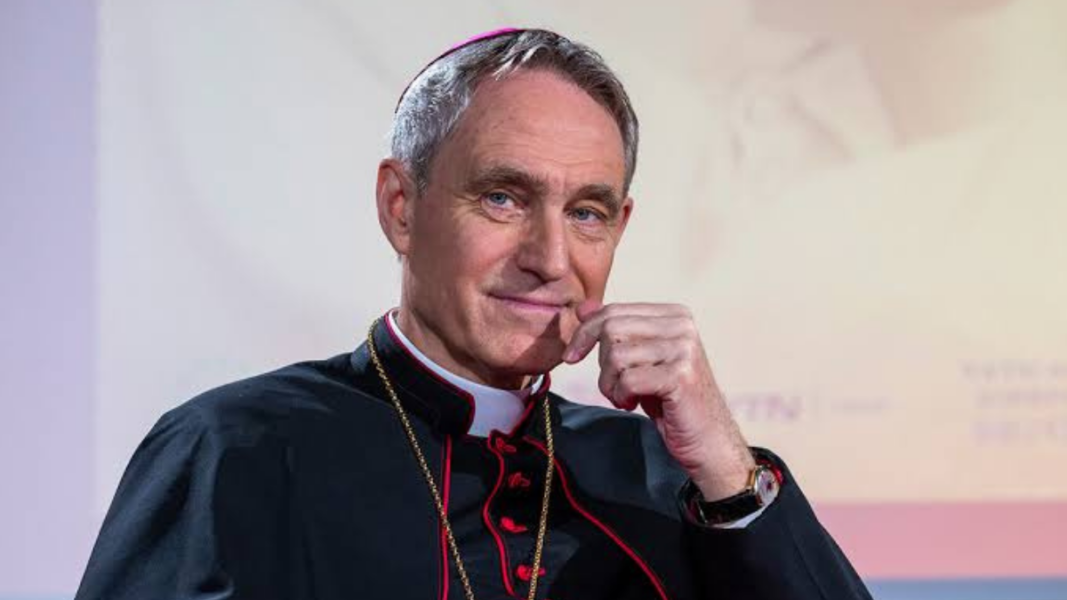
Archbishop Georg Gänswein, apostolic nuncio in Lithuania, Latvia, and Estonia, assures that with the pontificate of Leo XIV “normality is slowly returning” and that “a change in atmosphere for the better” is perceived, according to statements in an interview with EWTN.
A phrase loaded with intention
In Gänswein’s mouth, the word “normality” is not an innocent adjective. His biography in recent years—first as prefect of the Pontifical Household and, above all, as secretary to Benedict XVI—turns any assessment of his into something more than a personal opinion. When he states that the change of pontificate has had “a new positive repercussion” in the difficulties that existed, he is suggesting that the problem was not only one of management, but of ecclesial atmosphere: the way of governing, the internal treatment, and the manner of presenting essential Catholic emphases.
From marginalization to diplomacy: the background of the testimony
Gänswein’s intervention gains prominence because his relationship with the previous pontificate was, at minimum, rough. He was removed from his position in the Pontifical Household and, after Benedict XVI’s death, was sent to Germany without a specific assignment. Over time, the Holy See assigned him to the Baltic as nuncio. From that position, his reading of the new Pope has the value—and also the weight—of someone who has known the recent tensions from the inside and now observes a transition of style.
“Emphases” recovered: what had been left “under the table”
Gänswein maintains that Leo XIV has marked “some emphases” that are not novel, but that in recent years “had been completely left under the table.” The statement points to a widespread perception in broad sectors of the Church: that, more than a debate on contents, a stage was lived in which certain traditional priorities—doctrinal clarity, centrality of the liturgy, less political theological language—were relegated by a more pragmatic and fluctuating approach.
A Pope with a clear line and catechetical tone
Beyond the environmental impression, Gänswein underscores a fundamental trait: a “clear line” in preaching. He states that in Leo XIV’s catecheses and homilies, a man who lives and announces from the “Augustinian spirit” is perceived. The nuncio also highlights the frequent use of St. Augustine, presented not as scholarly adornment, but as the key to a pastoral style centered on the Gospel, on conversion, and on the integral transmission of the faith.
A comment that Rome will not ignore
That a nuncio—and precisely Gänswein—speaks of “normality” and improvement in the climate is not a simple sympathetic headline. It is a message that will be read as an internal thermometer, a confirmation that Leo XIV is reordering forms, language, and priorities without the need to invent anything new, precisely by returning to what the Church has always upheld. In a time of weariness, that “normality” can be, for many Catholics—like Gänswein—the best news.