


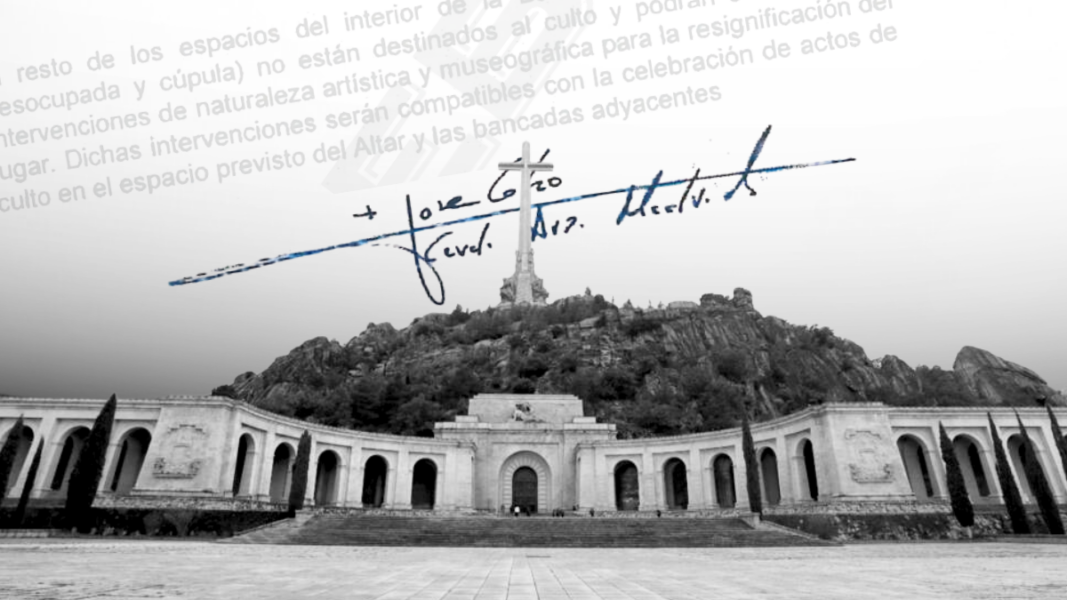
There comes a point where patience stops being a virtue and starts to look like resignation. And there is a moment—very specific—in which silence is no longer prudence, but abandonment. Many faithful in Madrid have reached that point.
Because when an archbishop signs documents about a sacred place over which he acknowledges having no jurisdiction, when he de facto hands over a basilica to a hostile civil power, when he publicly contradicts his own actions, and when no one from above seems to put a stop to it, the question becomes unbearable: who protects the faithful people?
The problem is not just Cobo
The scandal is not solely the action of a specific archbishop. The scandal is the structural defenselessness. The feeling that, no matter what a bishop does, says, or signs, there is no real and accessible mechanism for the faithful to protect themselves from abuses of authority, overreaches, or gravely harmful decisions.
In theory, the Church has Canon Law. It has procedures. It has Rome. In practice, when episcopal power is exercised without restraint, the faithful are reduced to impotent spectators.
When Canon Law Stops Protecting
The Catholic tradition was never naive about power. That is why, for centuries, theologians have asked what happens when authority stops acting as legitimate authority and starts behaving like an arbitrary power. Not for pleasure, but out of necessity.
From this arises—in classical moral theology—the doctrine of tyrannicide. Not as an apology for violence, but as a theoretical last resort to answer an anguishing question: what happens when power becomes unjust and there is no ordinary way of correction?
The great doctors did not speak of emotions; they spoke of limits. Of the fact that authority is not absolute. Of the fact that it exists to serve the common good and the truth, and that when it is perverted, it ceases to be fully legitimate.
Today there are no tyrants… but there is defenselessness
No one is talking about violence today. No one is asking for it. No one is justifying it. But we are seeing something disturbingly similar to the underlying question: what can the faithful people do when their shepherd acts against the good he is supposed to safeguard and there is no effective correction?
When Rome is silent. When the dicasteries look the other way. When the communiqués do not arrive. When the bishop protects himself, but does not protect his faithful.
That is where the modern Church shows its fragility: it has eliminated the moral checks and balances, but has put nothing in their place.
A Church without defense for the faithful
The result is devastating. The faithful watch as documents are signed that compromise temples, as concessions are made to hostile governments, as entire religious communities are ignored, and as everything is wrapped in a fog of diffuse competencies and evaporated responsibilities.
And meanwhile, they are asked for obedience. Patience. Silence.
Classical doctrine at least had one virtue: it recognized that power can become corrupted and that authority is not a blank check. Today, the problem is not even acknowledged.
The final scandal
The greatest scandal is not that an archbishop acts wrongly. The greatest scandal is that, when he does, the faithful people discover that they have no one to turn to.
And that, more than any signature, more than any public contradiction, is what is breaking the trust of many Catholics: the feeling that they are alone in the face of decisions that affect the most sacred things.
A Church that does not protect its faithful from the abuse of power becomes a fragile Church. And an authority that does not accept limits ends up losing legitimacy, even if it retains the office.
History and theology teach this harshly. Ignoring it has never come free.