


By Carrie Gress
In P. G. Wodehouse’s Jeeves & Wooster, Lady Glossip, mother of a marriageable daughter, asks Bertie Wooster how he would support a wife. His response: «Well, I suppose it depends on whose wife it was. A little gentle pressure under the elbow when crossing a crowded street is usually enough.»
Wayward youth is nothing new, as Wodehouse well knew in 1923. His Aunt Agatha’s reproach resonates strongly with many men today: «Cursed with too much money, you fritter away in idle selfishness a life that might have been useful, helpful, and profitable. You do nothing but waste your time on frivolous pleasures.»
Bertie Wooster and men like him emerged in the world after the French Revolution, which left men adrift, deprived of purpose and authority. The Godless egalitarianism that ignited the transformation in France in 1789 has not slowed down over the centuries. It has beheaded every structure of authority in its path, particularly those with a patriarchal aroma, beginning with La Révolution and The Terror.
It is no small coincidence that, while the reckless Jacobins cut the authority of the Church at the head in favor of their own (supposedly) more rational heads, they were also beheading tens of thousands of French citizens.
A century later, Cardinal James Gibbons (1834–1921), Archbishop of Baltimore, watched closely as the Revolution gave way to toxic descendants: socialism, communism, and feminism. All of them rejected moral authority and hierarchy in favor of egalitarianism.
«There is a tendency —wrote the second cardinal of the United States— in our nature to be impatient under authority. Thomas Paine published a well-known work on The Rights of Man. He had nothing to say about the rights of God and the duties of man.»
Cardinal Gibbons cited a similar theme pointed out by a cleric who «wrote a volume some years ago on The Rights of the Clergy. From beginning to end of the work he said nothing about the duties and obligations of the clergy. The majority of mankind is so focused on their rights that they have no consideration for their responsibilities.» The antidote to the growing list of rights, the cardinal explained, is «a profound sense of our sacred duties.» With them, «we will not fail to attain our rights.»
The problem, of course, as we have witnessed recently in the woke movement, is that it is impossible to make everything and everyone equal. This impulse, the cardinal explains, is fueled by envy, not by God:
[F]rom the order of nature to the order of grace, we know that there is not only variety, but also degrees of distinction among the angels in Heaven. The angelic hierarchy consists of nine distinct choirs… One order of angels excels in the sublimity of intelligence, or in the intensity of love, or in the dignity of the mission assigned to them.
This ordering, arranged by God, may not always seem fair to us, but as the cardinal notes: «If you complain about God’s discrimination, Christ will answer you: ‘My friend, I do you no wrong… What right do you have to claim my justice? Is not everything you possess, whether of nature or of grace, a free gift of my goodness?'»
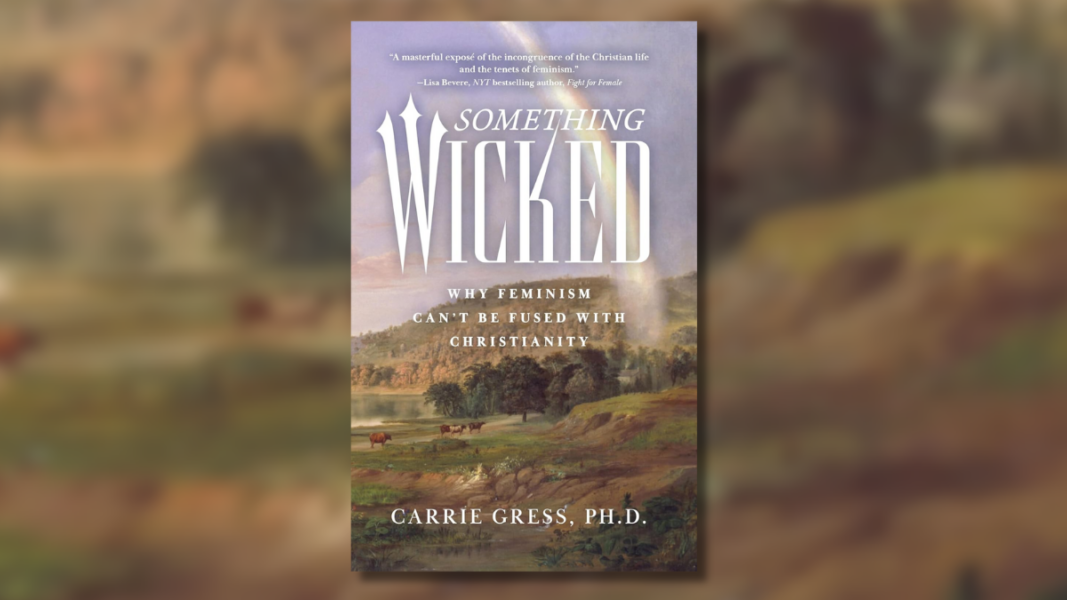
In my book Something Wicked, which comes out this week, I explain how Cardinal Gibbons also saw that the undermined authority of the Church was dramatically affecting women. In 1902, in Ladies Home Journal, he wrote an article titled «The Restless Woman,» in which he stated:
I consider… the leaders of the new school of feminine progress to be the worst enemies of the female sex. They teach that which deprives woman of everything that is kind and delicate, tender and attractive, and give her nothing in return but masculine boldness and brazen shamelessness. They constantly preach about women’s rights and prerogatives, but have not a word to say about her duties and responsibilities. They divert her from those sacred obligations that properly belong to her sex.

The shibboleth of feminism, the cardinal concluded, is that «masculinity is superior to motherhood.»
After decades of believing that women are better off imitating men’s morally corrupt traits, while expecting men to behave more like women or remain silent, many are reaching conclusions like these. Ordered motherhood and fatherhood have been ridiculed and denigrated so deeply that we finally see the fruits of the effort: the wolf is no longer at the door, but well inside the home. The door was left wide open by the very men and women charged with protecting and caring for the vulnerable.
What has been missing is «the head» of the civilizational order: not the head of modern rationalism or Enlightenment dogmas, but «the head» of Christ and ordered male authority. It is so eroded that we can hardly utter the word patriarchy without the howls of those who believe that male authority implies female slavery, rather than healthy complementarity.
Many young people today rebel against what they perceive as passivity in their fathers and grandfathers. The culture rarely tells them they are good and necessary. The recent development of the manosphere reveals men who yearn for masculinity, but not in an ordered way, because they lack healthy formation and mentors.
The manosphere reflects the contempt that feminism has had toward men for decades. Both groups feed on anger, pride, and denigration, while finding justification for bad behavior in a status of victimhood. As in the expulsion from the Garden of Eden, Eve and Adam remain naked, ashamed, and blaming each other.
What neither group understands is the futility of their efforts. The restoration they seek, as Cardinal Gibbons recognized more than a century ago, will only come with the recovery of our responsibilities and sacred duties; things like protecting, providing, raising children, and sacrificing for them. From there spring identity, purpose, character development, and deep and lasting loyalty and love.
Although young people do not always look in the right places, they are looking. What they want, consciously or unconsciously, is order, tradition, and authentic authority. They want the head to return to the body. Let us pray —and perhaps even help them— to find it.
About the author
Carrie Gress holds a doctorate in philosophy from the Catholic University of America. She is editor-in-chief of Theology of Home and author of several books, including The Marian Option, The Anti-Mary Exposed, and coauthor of Theology of Home. She is also a homeschooling mother of five and homemaker. Her new book is The End of Woman: How Smashing the Patriarchy Has Destroyed Us.