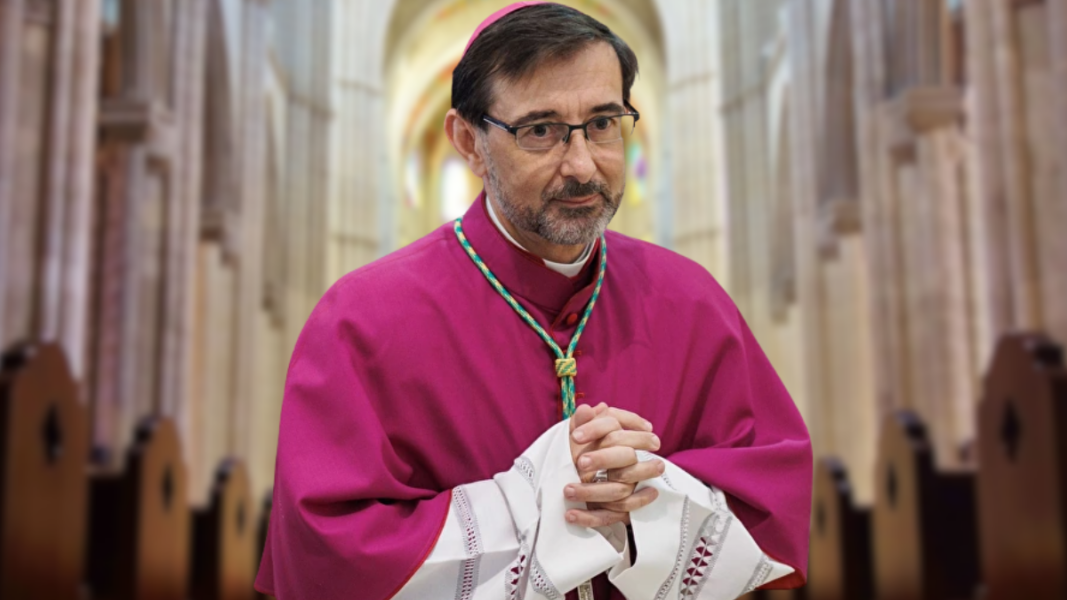
Cardinal José Cobo has taken another step in replacing sacramental life with synodal activism. And he has done so in writing, without ambiguities and leaving documentary evidence: he explicitly asks priests not to celebrate Mass in their parishes so they can attend the presbyteral meeting Convivium, even if that means leaving the faithful without Eucharist —after all, the laity can take care of doing a Liturgy of the Word—.
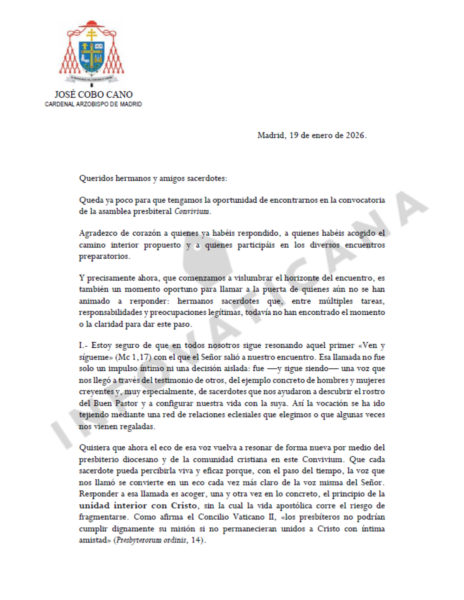
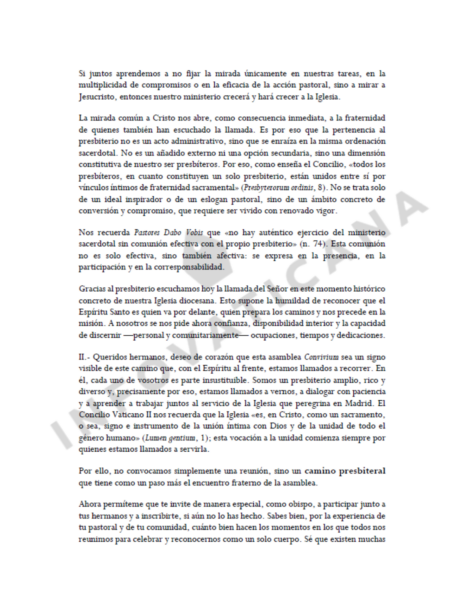
The letter, dated January 19, 2026, and addressed to all priests of the Archdiocese of Madrid, is not limited to a fraternal or spiritual invitation. In the missive, it acknowledges that on that day “the people of God need pastoral attention,” but immediately establishes an unequivocal hierarchy: the priority is not the parish Mass, but the synodal assembly of the clergy.
The mandate is literal:
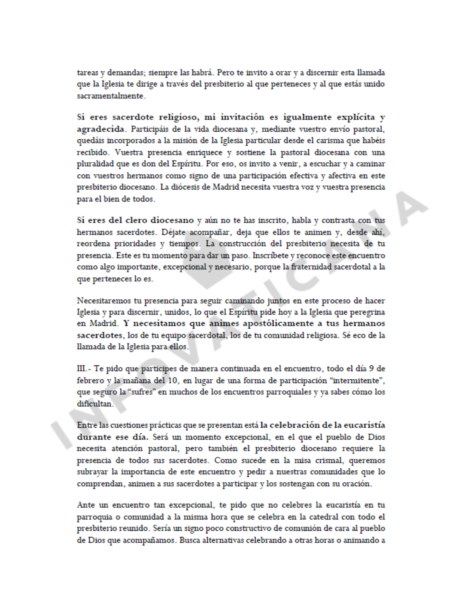
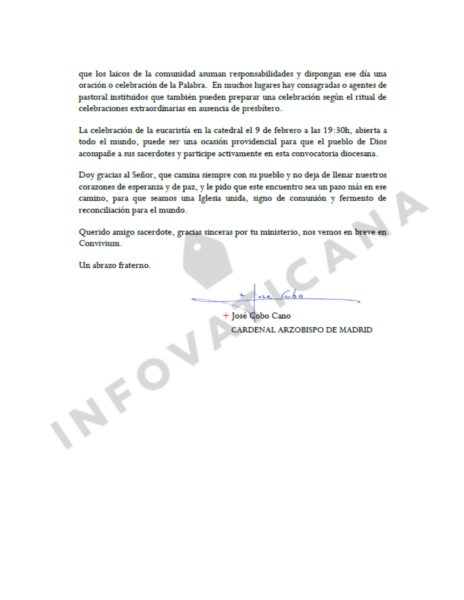
«In the face of such an exceptional meeting, I ask you not to celebrate the Eucharist in your parish or community at the same time as it is celebrated in the cathedral with the entire presbytery gathered. It would be a sign that is not very constructive of communion in the face of the people of God whom we accompany.
Look for alternatives by celebrating at other times or encouraging the laity of the community to assume responsibilities and arrange a prayer or Word celebration that day. In many places there are consecrated women or instituted pastoral agents who can also prepare a celebration according to the ritual of extraordinary celebrations in the absence of a presbyter.»
Celebrating Mass for one’s own faithful —the essential task of the priest— becomes “a sign that is not very constructive of communion.” In other words: giving Mass to the parishioners becomes, according to the archbishop, a problematic gesture, «a sign that is not very constructive of communion.»
The alternative? Replace the Eucharist with Word celebrations led by laity, consecrated women, or “instituted pastoral agents,” appealing to the ritual of extraordinary celebrations in the absence of a presbyter. However, the extraordinary is beginning to take on traits of normality: Mass disappears, the priest is absent, and the community “understands.”
«It will be an exceptional moment, in which the people of God need pastoral attention, but the diocesan presbytery also requires the presence of all its priests. As happens in the Chrism Mass, we want to emphasize the importance of this meeting and ask our communities to understand it, encourage their priests to participate, and support them with their prayer.»
The parallelism with the Chrism Mass —used by Cobo to justify the measure— is forced and, at bottom, theologically tricky. The Chrism Mass is a strictly sacramental act, annual, linked to the bishop and the mystery of the priesthood. Convivium is an organizational-pastoral meeting with a marked synodal tone. Equating them only serves to sacralize an agenda.
The result is unequivocal:
The priest leaves his parish.
The faithful are left without Mass.
The Eucharist is subordinated to an event.
The “communion” is redefined as logistical obedience.
This is not a misunderstanding or a malicious reading. It is written in black and white. For the “process,” Mass is sacrificed. For the “path,” the people are left without Bread. And all of it wrapped in sweetened language that speaks of fraternity, discernment, and Spirit… while sacrificing precisely that which is the center of priestly and Christian life: the Eucharist.