


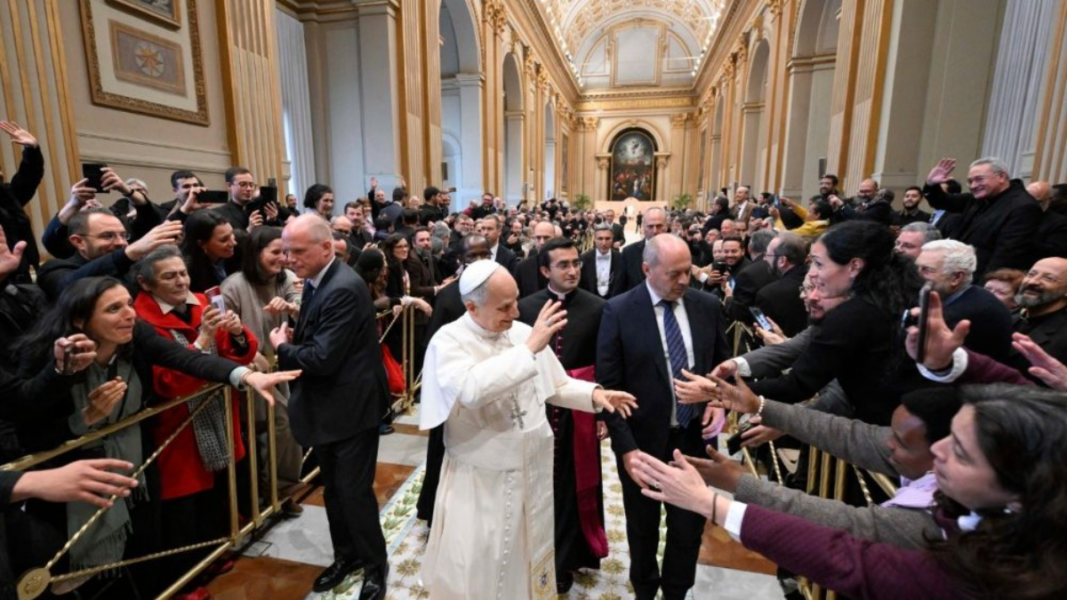
In an audience held this January 19, 2026, in the Apostolic Palace, Pope Leo XIV received the leaders of the Neocatechumenal Way. In his speech, he praised their missionary impulse, «their charism and the works of evangelization and catechesis that represent a valuable contribution to the life of the Church,» but focused a good part of his message on two demands: ecclesial unity—without isolations or attitudes of superiority—and respect for freedom of conscience, avoiding any form of coercion, rigidity, or moralism in catechesis and pastoral action.
“We Are Church”: the Pope insists on unity and the “common good”
Leo XIV recalled that Baptism incorporates the faithful into Christ and the Church, and emphasized that charisms cannot be lived as separate realities. Quoting St. Paul, he stated that particular manifestations of the Spirit are granted “for the common good,” and asked that the gifts of the Way always be at the service of the Kingdom of God and the one Church of Christ.
In that context, he warned that no ministry should become a reason to feel “better” than others or to exclude those who think differently. The Pope asked the Way to be “witnesses of unity” and emphasized that their mission is particular, but not exclusive, and that their charism bears fruit in communion with the other gifts present in the Church.
Integration into ordinary pastoral care and communion with bishops and priests
Explicitly, Leo XIV exhorted the leaders of the Way to live their spirituality “without separating from the rest of the ecclesial body,” as a living part of the ordinary pastoral care of the parishes. He underlined the need for concrete communion with brothers and, in a special way, with priests and bishops. He encouraged them to advance “in joy and with humility,” “without closures,” as builders of communion.
Respect for freedom: without coercion, rigidity, or “moralisms”
The Pope also warned about interior freedom. He recalled that “where the Spirit of the Lord is, there is freedom,” and warned that the proclamation of the Gospel, catechesis, and the various forms of pastoral action must remain free from coercions, rigidity, and moralisms, to avoid producing “guilts and fears” instead of true interior liberation.
In that same line, he pointed out that the good that the Way accomplishes has as its purpose to help people know Christ, “always respecting the life journey and the conscience of each one”.
Mission and gratitude: recognition to families in mission
Leo XIV thanked the work of the Way in evangelization, with particular recognition to the families who leave their ordinary life to set out on mission, even to “distant and difficult” places. «You have kindled the fire of the Gospel where it seemed to be extinguished and accompanied many people and Christian communities, awakening them to the joy of faith, helping them rediscover the beauty of knowing Jesus and fostering their spiritual growth and commitment to witness.»
The Pontiff concluded with words of encouragement, imparted his blessing, and invoked the intercession of the Virgin Mary.
We leave below the full speech of Leo XIV:
In the name of the Father, the Son, and the Holy Spirit.
Peace be with you!
Dear brothers and sisters,
Dear brothers and sisters, good morning and welcome!
I am pleased to meet so many of you. I greet the members of the International Team of the Neocatechumenal Way, Kiko Argüello, María Ascensión Romero, and Fr. Mario Pezzi, as well as the bishops and priests who accompany you.
A special thought goes to the families present here, an expression of your missionary longing and of that desire that must always animate the entire Church: to proclaim the Gospel to the whole world, so that all may know Christ.
Precisely this desire has always animated and continues to nourish the life of the Neocatechumenal Way, its charism, and the works of evangelization and catechesis that represent a valuable contribution to the life of the Church. To all, especially to those who have departed or to those whose faith has faded, you offer the possibility of a spiritual journey through which to rediscover the meaning of Baptism, so that they may recognize the gift of the grace received and, therefore, the call to be disciples of the Lord and his witnesses in the world.
Animated by this spirit, you have kindled the fire of the Gospel where it seemed to be extinguished and accompanied many people and Christian communities, awakening them to the joy of faith, helping them rediscover the beauty of knowing Jesus and fostering their spiritual growth and commitment to witness.
In particular, in addition to the formators and catechists, I would like to express my gratitude to the families, who, welcoming the interior impulse of the Spirit, leave the certainties of ordinary life and go on mission, even in distant and difficult territories, with the sole desire to proclaim the Gospel and be witnesses of God’s love. In this way, the itinerant teams composed of families, catechists, and priests participate in the evangelizing mission of the entire Church and, as Pope Francis expressed it, contribute to “awakening” the faith of “non-Christians who have never heard of Jesus Christ,” but also of many baptized who, despite being Christians, “have forgotten […] who Jesus Christ is” (Address to the adherents of the Neocatechumenal Way, March 6).
Living the experience of the Neocatechumenal Way and carrying out the mission also requires, on your part, an interior vigilance and a wise critical capacity to discern some risks that are always lurking in spiritual and ecclesial life.
You propose to all a journey of rediscovery of Baptism, and this Sacrament, as we know, by uniting us to Christ, makes us become living members of his body, his one people, his one family. We must always remember that we are Church and that, if the Spirit grants each one a particular manifestation, it is given—as the Apostle Paul reminds us—“for the common good” (1 Cor 12:7) and therefore for the very mission of the Church. Charisms must always be placed at the service of the kingdom of God and of the one Church of Christ, in which no gift of God is more important than the others, except charity, which perfects and harmonizes them all, and no ministry should become a reason to feel better than brothers and sisters and exclude those who think differently.
Therefore, I also invite you, who have encountered the Lord and live your following in the Neocatechumenal Way, to be witnesses of this unity. Your mission is particular, but not exclusive; your charism is specific, but it bears fruit in communion with the other gifts present in the life of the Church; the good you do is so much, but its aim is to enable people to know Christ, always respecting the path of life and the conscience of each one.
As guardians of this unity in the Spirit, I urge you to live your spirituality without ever separating from the rest of the ecclesial body, as a living part of the ordinary pastoral care of the parishes and their different realities, in full communion with your brothers and sisters and in particular with priests and bishops. Advance in joy and with humility, without closures, as builders and witnesses of communion.
The Church accompanies you, sustains you, thanks you for what you do. At the same time, she reminds everyone that “where the Spirit of the Lord is, there is freedom” (2 Corinthians 3:17). Therefore, the proclamation of the Gospel, catechesis, and the various forms of pastoral action must always be free from forms of restriction, rigidity, and moralism, so that it does not happen that they may awaken guilt and fears instead of interior liberation.
Dear friends, I thank you for your commitment, your joyful witness, for the service you have rendered to the Church and to the world. I encourage you to remain with enthusiasm and I bless you, while I invoke the intercession of the Virgin Mary so that she may accompany you and sustain you. Thank you!