


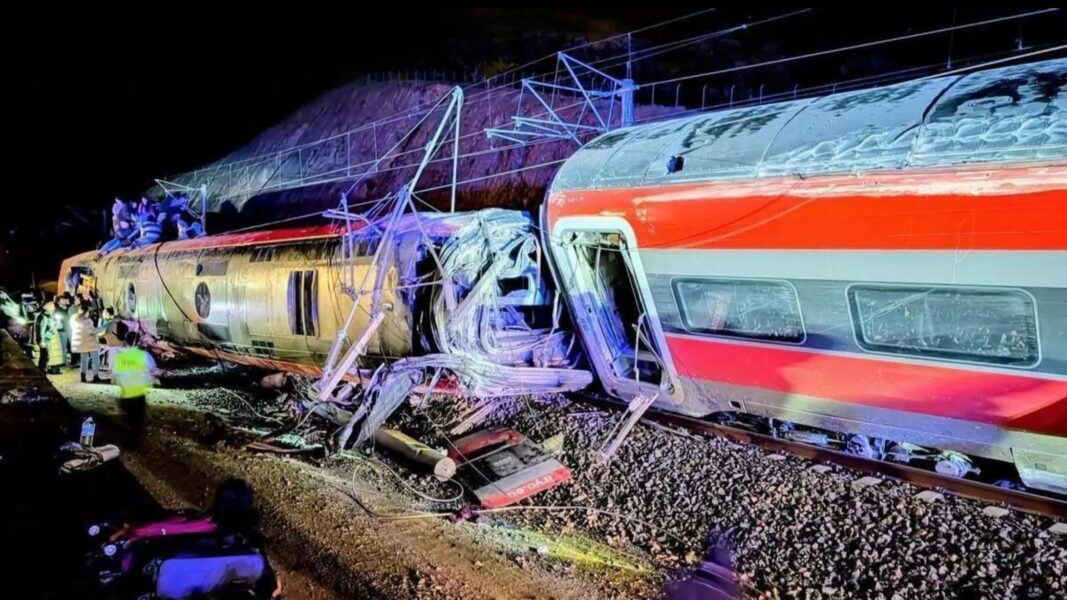
The Church’s response, through the Diocese of Córdoba, following the serious railway accident in Adamuz has been swift and visible on the institutional and assistance levels. The bishop, Msgr. Jesús Fernández, has publicly expressed his condolences and closeness to the families of the deceased and to the injured persons, and the Parish of San Andrés has kept its doors open to welcome those affected. Support spaces have been set up, provisions have been allocated for immediate needs, and numerous neighbors and parishioners have rallied during the night to prepare the reception, light stoves, and organize help from the parish and municipal facilities.
All of this is positive and necessary, and shows a Church close to the territory. However, in a tragedy with seriously injured and deceased, it is inevitable to point out a significant shortcoming at least in the communication—and perhaps also in the planning—of spiritual and sacramental care. The disseminated information has focused on material reception, but so far it has not specified in its official channels, explicitly and verifiably, the mobilization of available priests, reinforced presence in hospitals, and access to the sacraments for those who request it.
While church-owned media like COPE have highlighted the spontaneous mobilization of psychologists to accompany victims and families, it is not clear whether the local parish priests have been mobilized in a coordinated manner, whether the presence of priests in the hospitals receiving the injured has been reinforced, or whether there is a specific and permanent phone number to request spiritual and sacramental care. It is reasonable to think that this service is being provided, but in an emergency of this magnitude, assuming it is not enough: it is advisable to communicate it clearly, organized, and accessibly.
For many injured and families, spiritual care is an urgent need, especially when the prognosis is serious or even there are victims trapped at the accident site. Just as medical shifts are reinforced or psychological teams are activated, it should also be explained precisely that there are priests available to accompany, administer the sacraments, and spiritually support those who request it, with full coordination with official devices.
From a proactive point of view, and valuing the quick reaction of the parish and volunteers, the diocese’s response could be strengthened with concrete and communicable measures: explicitly announcing the mobilization of the clergy in the affected area, informing about the reinforcement of hospital chaplaincy in the centers receiving the injured, and facilitating clear contact channels for immediate spiritual care. It is not about detracting from material help, but about remembering that the Church’s specific mission, in a tragedy like this, is above all sacramental.