


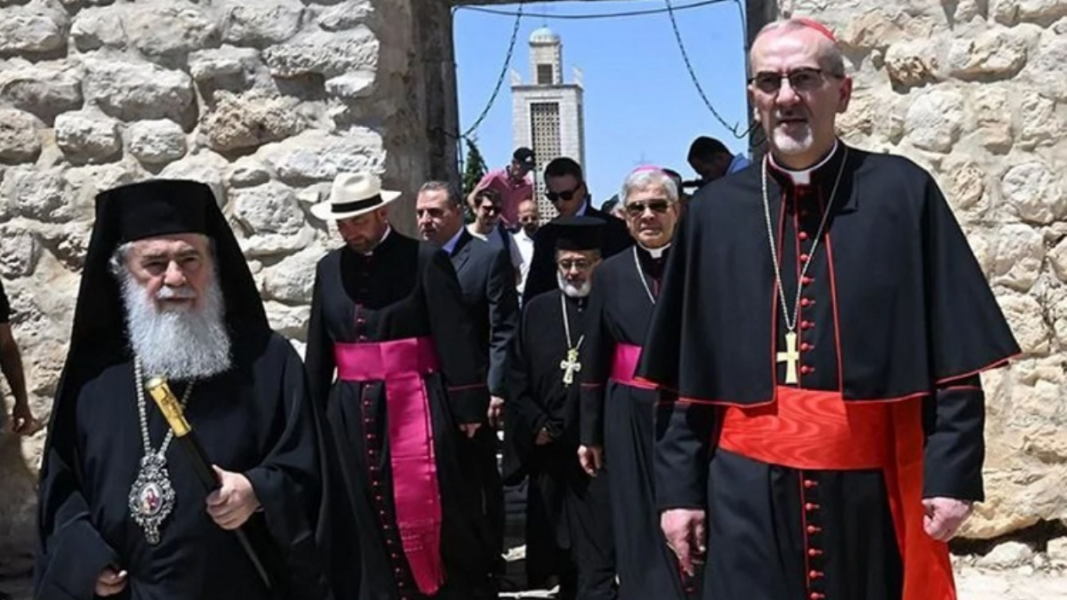
The Patriarchs and Heads of the Churches in Jerusalem issued a statement (January 17, 2026) in which they denounce certain local initiatives, associated with “harmful ideologies” such as Christian Zionism, which “deceive the public,” sow confusion, and damage the unity of the flock. The signatories also warn of a possible political instrumentalization that could harm the Christian presence in the Holy Land and throughout the Middle East.
A direct warning: “harmful ideologies” that divide and confuse
In their statement, the Patriarchs and Heads of the Churches in Jerusalem affirm that the Christian community in the Holy Land is entrusted to the apostolic Churches, which have sustained their ministry “through the centuries.” In that context, they denounce recent activities by local individuals promoting “harmful ideologies, such as Christian Zionism,” which would be causing public confusion and weakening the unity of the faithful.
The declaration holds that these initiatives not only fracture internally but also favor a political reading of Christianity in a region where the Christian presence is already fragile.
What is “Christian Zionism”?
The text expressly mentions Christian Zionism. In general terms, it is a current—very present in certain evangelical and Protestant sectors—that interprets support for the State of Israel and the Zionist project as part of the fulfillment of biblical prophecies, and therefore promotes political and cultural backing for that agenda.
From that perspective, the Holy Land ceases to be primarily a place of faith and Christian custody, to become an ideological and geopolitical chessboard. It is precisely that shift—from faith to political activism—that concerns Jerusalem’s leaders.
“Authority outside the communion”: the Patriarchs recall who represents the local Christians
The signatories cite Romans 12:5 (“one body in Christ”) to emphasize that claiming authority outside the ecclesial communion wounds unity and burdens the pastoral mission of the historic Churches: the same ones that safeguard Christian life in the places linked to the life, death, and resurrection of Christ.
Even more: they express concern because these persons would have been welcomed “at official levels” both locally and internationally, something they describe as a interference in the internal life of the Churches and a disregard for the pastoral responsibility of the Patriarchs and Heads of the Churches in Jerusalem.
“Only we represent our Churches”: message to governments and international actors
The declaration includes a particularly forceful point: the Patriarchs and Heads of the Churches reiterate that only they represent the Churches and their faithful in matters relating to the religious, communal, and pastoral life of Christians in the Holy Land.
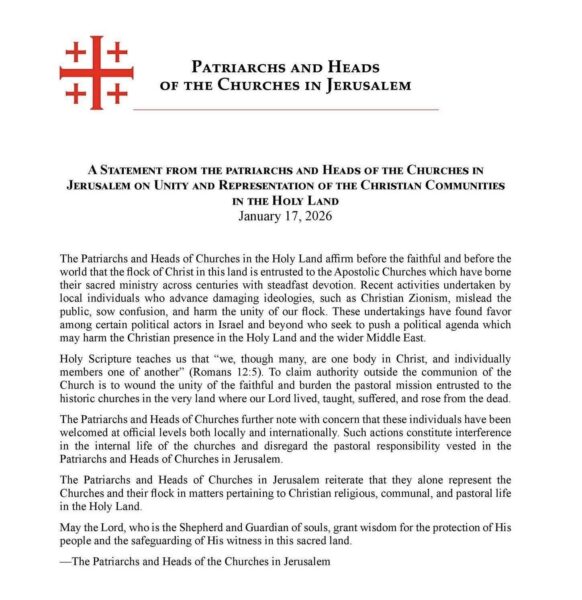
Translation to English:
The Patriarchs and Heads of Churches in the Holy Land affirm before the faithful and before the world that the flock of Christ in this land is entrusted to the apostolic Churches, which have carried out their sacred ministry through the centuries with steadfast devotion. Recent activities undertaken by local individuals who promote harmful ideologies, such as Christian Zionism, deceive the public, sow confusion, and damage the unity of our flock. These initiatives have found favor among certain political actors in Israel and beyond, who seek to advance a political agenda that may harm the Christian presence in the Holy Land and in the broader Middle East.
Sacred Scripture teaches us that “we, though many, are one body in Christ, and individually members of one another” (Romans 12:5). Claiming authority outside the communion of the Church wounds the unity of the faithful and burdens the pastoral mission entrusted to the historic Churches in the very land where our Lord lived, taught, suffered, and rose from the dead.
The Patriarchs and Heads of Churches also point out with concern that these individuals have been welcomed at official levels both locally and internationally. Such actions constitute an interference in the internal life of the Churches and a disregard for the pastoral responsibility conferred upon the Patriarchs and Heads of Churches in Jerusalem.
The Patriarchs and Heads of Churches in Jerusalem reiterate that only they represent the Churches and their flock in matters relating to the religious, communal, and pastoral Christian life in the Holy Land.
May the Lord, who is the Shepherd and Guardian of souls, grant wisdom for the protection of his people and the safeguarding of his witness in this holy land.