


According to the World Watch List 2026 by Open Doors, Nigeria is once again placed at the most critical point of violent persecution against Christians. The report counts 4,849 Christians killed for their faith worldwide during the analyzed period, of which 3,490 died in Nigeria, a proportion that rounds to 72% of the total.
This data is integrated into a broader trend that Open Doors presents as a global worsening. The same document states that the number of Christians suffering high levels of persecution and discrimination would have increased to reach 388 million, with a notable increase compared to the previous period.
The Nigerian case
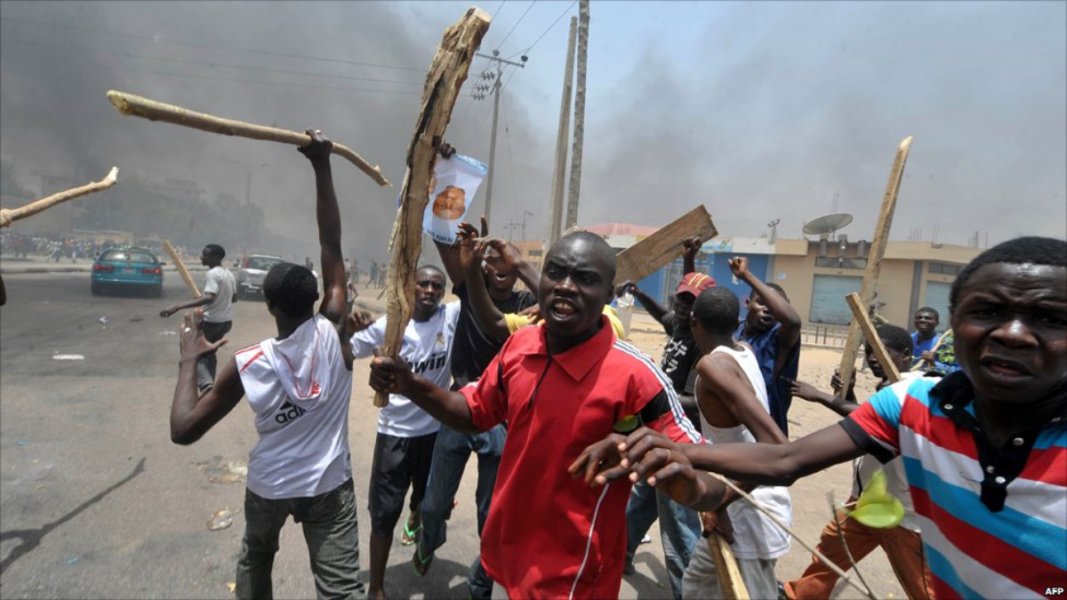
In the Nigerian case, the report and the associated testimonies insist that it is not a uniform phenomenon. In different regions, different actors and dynamics coincide. On one hand, the threat from jihadist groups such as Boko Haram and ISWAP persists, with an openly ideological discourse. On the other, episodes of violence are described in the so-called Middle Belt that combine land and resource tensions with an identity component that recurrently affects Christian communities.
Part of the international focus has shifted toward the violence attributed to Fulani militants in the central belt, where friction between herders and farmers has become a scenario of attacks, kidnappings, and murders. Organizations such as the Observatory for Religious Freedom in Africa (ORFA) have pointed out that Christians appear more frequently among the victims in that area, something that, according to the text, is also related to the logic of kidnapping and ransoms.
A tense environment
The report arrives, moreover, at a time of renewed political attention on Nigeria. In recent months, the issue has generated statements in the United States and public pressure on the Nigerian government for its inability to protect the civilian population. In Rome, there was also a pronouncement. In November 2025, Pope Leo XIV referred to the crisis, acknowledged that both Christians and Muslims have been killed, and asked the government to promote genuine religious freedom.
Overall, the picture left by the ranking is uncomfortable due to its crudeness and continuity. It is not about isolated episodes or a marginal problem, but a persistent violence that has become entrenched in entire regions. And, according to Open Doors, Nigeria remains the place where that persecution is expressed with the greatest lethality.