


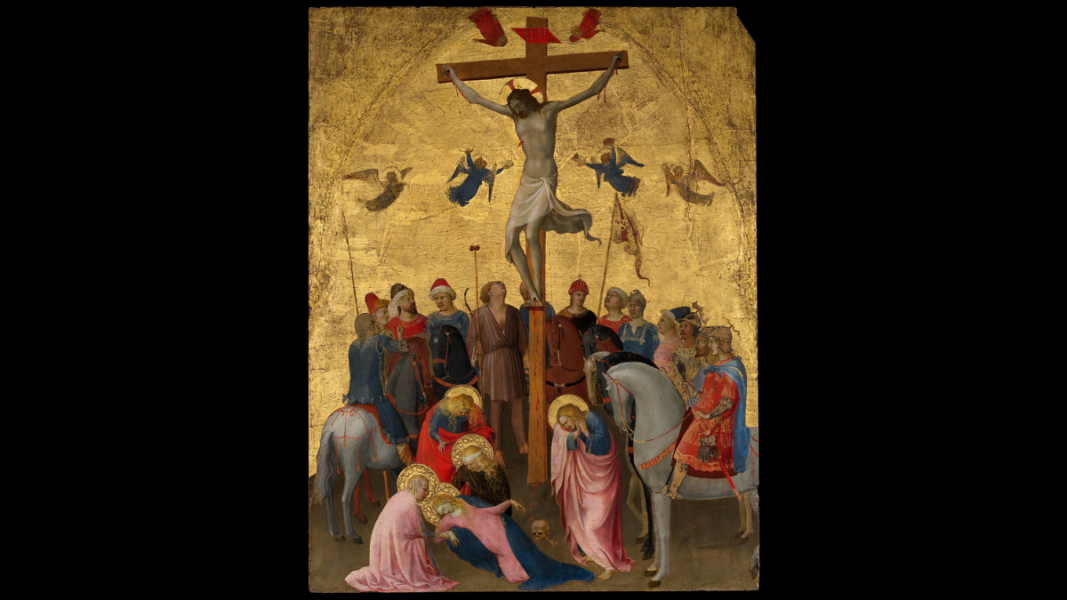
By Brad Miner
In The Cost of Discipleship (1937), Dietrich Bonhoeffer writes that Christ invited Saint Peter «to the supreme following of martyrdom for the Lord he had denied… thus forgiving him all his sins. In Peter’s life, grace and discipleship are inseparable» (p. 49).
In Bonhoeffer’s famous formulation, this was a case of costly grace, as opposed to cheap grace. Bonhoeffer, of course, would come to embody the former. On his way to being executed by the Nazis at the Flossenbürg concentration camp in 1945, Bonhoeffer said to a fellow prisoner: «This is the end—for me, the beginning of life».
That is the attitude of all true martyrs when their hour comes.
Bonhoeffer was hanged. The deaths of the original Twelve Apostles were often more atrocious.
So: how, when, and where did the Twelve meet their deaths? And how have artists imagined each one’s martyrdom?
To begin with, we know that Christ’s betrayer died by his own hand (cf. Matthew 27:3-5 and Acts 1:18-19). Judas was a suicide, not a martyr.
We also know that John (December 27 is his feast day) was not martyred. And, according to tradition, he is the only one who was not killed for preaching the Gospel.

Scripture (Acts 12:1-2) tells us that John’s brother, James the Greater (feast on July 25), was the first apostolic martyr, around the year 44. He was «put to the sword», presumably in Jerusalem. Luke, author of Acts, may have gotten the account from John himself, and the facts are corroborated by Irenaeus (c. 125–202), who knew Polycarp (c. 60–155), who knew John, whom we believe died as late as the end of the first century. Luke introduces his account of James’s death by noting that it was King Herod Agrippa who gave the order, using the same method his uncle Antipas had chosen to murder John the Baptist. It is said that James’s body now resides in the Cathedral of Santiago de Compostela.

The order of the subsequent martyrdoms is largely unknown, but all (except John, of course) had probably died by the year 80. What we know comes from early Church historians (Eusebius, Tertullian, the aforementioned Irenaeus and Polycarp, and others, including St. Jerome), from some «apocryphal» gospels, and from a scattered set of ancient local traditions. Many of them were collected in the thirteenth century in Jacobus de Voragine’s Golden Legend. The dates given here are approximate, debatable, and by no means certain. As for the place, I have simply chosen the city that claims to be the site of the martyrdom. (And I have included in parentheses, as with John and James above, the feast day of each saint.) I also indicate where it is claimed that the relics rest. Relics were often divided for use in other altars. It is still done today.
Between the years 60 and 70:
Andrew (November 30) was crucified on an X-shaped cross, called a saltire (or crux decussata), in Patras, Greece. He was executed for the number of Greeks he converted, including the wife of the pagan governor. It took him three days to die, and he never stopped preaching. It is said that Andrew’s remains are in the Cattedrale di Sant’Andrea in Amalfi.

Bartholomew [Nathanael] (August 24) was flayed alive and beheaded in Albanopolis, Armenia. Hence a macabre association: he is the patron of tanners. And, again, his murder was the result of the conversion of the local Roman satrap. His relics are in the Basilica di San Bartolomeo all’Isola, on Rome’s Tiber Island.

James the Less, known to the early Church as «the Just» (May 11), was thrown from a height, then stoned and (perhaps) finished off with blows in Jerusalem. He was condemned by the Sanhedrin and thrown from the pinnacle of the Temple; he survived and began to pray for his attackers. The coup de grâce was delivered by a fuller with his club for beating clothes. It is said that his relics are in Santi Apostoli, in Rome. Unless, as some maintain, they are in the Cathedral of St. James in Jerusalem. Perhaps they are in both places.

Matthew brought the Good News to North Africa and was martyred in Ethiopia. His preaching converted Efigenia, daughter of King Egipo; but when he died and was succeeded by Hirtacus, the new king attended a Mass at Matthew’s invitation and then ordered the Apostle’s beheading. It is said that his remains rest in the Cathedral of Salerno.

Simon (the Zealot) and Thaddeus (Jude) (both on October 28), who evangelized together, are believed to have been martyred in what is now Iran. In the image below, Thaddeus (in green) is about to be beaten, while Simon is being sawed in two. It is said that their relics are under an altar in St. Peter’s Basilica.

Peter and Paul died sometime after the year 60 A.D., but more on them below.
After the year 70:
Philip (May 3) traveled and evangelized with Bartholomew, though at some point they went their separate ways, and Philip met his end in Hierapolis, in Turkey. One aspect of his story is the suggestion that he was accompanied by Mary Magdalene. Tradition holds that Philip was crucified upside down, perhaps at his own request, because he knew Peter had died that way. It is believed that Philip’s relics are with those of James the Less in Santi Apostoli.

Matthias (May 14). There is a marker in the Gonio fortress, in the nation of Georgia, claiming that Matthias is buried there, killed for preaching the Gospel. As for the manner of his death… well, the Lochner painting below suggests the popular claim: an axe to the head, though it is usually said «beheaded». It is said that his relics (or part of them) were transferred to the Abbey of St. Matthias in Trier, Germany. The Gonio fortress is near the Black Sea coast, and relics often travel far, so…

Thomas (July 3) was martyred in India. His case was—like that of many other Apostles (if not, indeed, most of them)—that of converting a king’s family, Misdeus (so named in the apocryphal Acts of Thomas), who ordered Thomas to be run through with a spear. Caesar famously divided Gaul into three parts, and Thomas may have been as well: his relics are claimed in India (Basilica of St. Thomas in Chennai), in Turkey (perhaps only as a transit point), and in Italy (Basilica of St. Thomas the Apostle, Ortona).

And finally, the fates of Peter and Paul (June 29). We celebrate the feast of Saints Peter and Paul on the same day because there is a tradition that they were martyred at the same time, though in different places. They certainly died in Rome: Peter crucified upside down, and Paul beheaded. And we have the authority of St. Jerome in De viris illustribus, in his sketch of Paul, when he states that «in the fourteenth year of Nero, on the same day as Peter, he was beheaded in Rome for the sake of Christ and buried on the Ostian Way, in the twenty-seventh year after the passion of our Lord». That would place the event in the year 60, though other sources say 64. Their remains rest under the churches that bear their names: St. Peter’s Basilica and the Basilica of St. Paul Outside the Walls.

It is no wonder that tradition is more solid regarding these two great men. They were the leaders of the early Church and brought the faith to its enduring home. It is redundant to set out the reasons they were killed, and it suffices to say that:
Truly, the price of discipleship can be high!

About the author
Brad Miner, husband and father, is senior editor of The Catholic Thing and a senior fellow of the Faith & Reason Institute. He was literary editor of National Review and had a long career in the publishing industry. His latest book is Sons of St. Patrick, written with George J. Marlin. His successful The Compleat Gentleman is available in a third revised edition and also as an audiobook on Audible (read by Bob Souer). Mr. Miner has served on the board of Aid to the Church In Need USA and also on the board of the Selective Service System recruitment system in Westchester County, New York.