


I
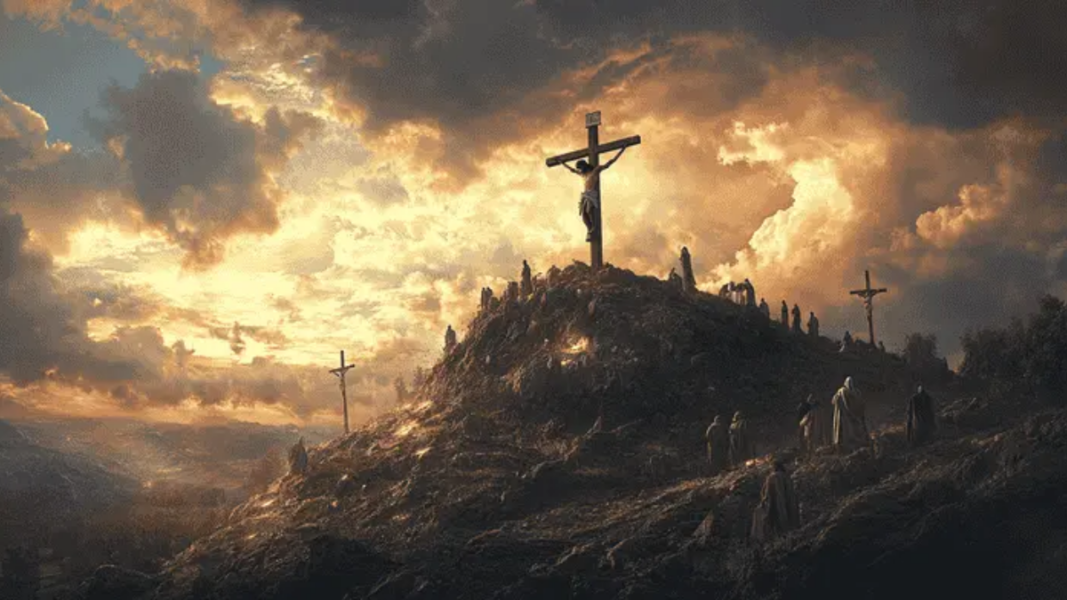
The objective redemption of humanity, wrought once and for all by the bloody sacrifice of Christ, is one of the most difficult theological problems for Christian thinkers of yesterday, today, and always. In fact, it is the problem par excellence. Many find it stinging to reflect on this delicate topic, especially in these postmodern times where the great ideals of humanity are put into question, and the great narratives are viewed with contempt. And none in the history of the world is like this one, a truth so impressive that it overflows all the limits of human reason.
Let us listen to Dante:
«You say: ‘I well understand what I hear
But why God willed it, is hidden from me,
To redeem us in this way alone?'»
Buried is this decree, brother,
In the eyes of those whose wit
Has not matured in the flame of love»
(Divine Comedy. Paradise VII).
Although the Bible and the Tradition of the Church teach that Christ died on the cross to take upon Himself the sins of men and save us, today a Copernican shift is observed in many current theologians, who, victims of our liquid modernity, are horrified by this Truth of faith and forget that Jesus Christ «is the same, yesterday, today, and forever.»
Let us recall, for example, what the Basque priest and theologian José Antonio Pagola pointed out in his popular and controversial work «Jesus, an Historical Approximation» (2007, 4th edition, Edit. P.P.C. pp. 350-351). His phrases are in italics and quotation marks:
«Jesus did not interpret his death from a sacrificial perspective. He did not understand it as a sacrifice of expiation offered to the Father. It was not his language” (note: what then of his words in Mk. 10:45 or Mt. 26:27 -the Son of Man gives his life as a ransom for many-, or 1 Jn. 2:2 -He is the propitiation for our sins-).
“He had never linked the Kingdom of God with the cultic practices of the temple; he had never understood his service to God’s project as a cultic sacrifice” (note: the Epistle to the Hebrews, straight to the trash).
“It would have been strange that, to give meaning to his death, he resorted at the end of his life to categories from the world of expiation” (note: what do we do with Christ’s sacrificial expressions during the Last Supper, for example Mt. 26:27: -his blood is poured out for many for the forgiveness of sins-, words that every priest in particular must believe, by the way).
“He never imagined his Father as a God who demanded his death and destruction” (note: if he did not imagine it, why did he ask his Father precisely to deliver him from it in Gethsemane -Mt. 26:39 or even before -Jn. 12:27-) “so that his honor, rightly offended by sin, might finally be restored and, consequently, he might thereafter forgive human beings” (note: where do we place brutal Pauline expressions like «God made Christ sin» -2 Cor. 5:21- or the tremendous sentence of Heb. 9:22, «without the shedding of blood there is no remission»).
“He is never seen offering his life as an immolation to the Father to obtain mercy for the world from him” (note: then how is it that Saint Paul says exactly the opposite, 2 Cor. 5:19, -God, in Christ, reconciled the world to himself-, since we were children of wrath -Eph. 2:3-).
“The Father does not need anyone to be destroyed for his honor. His love for his sons and daughters is gratuitous, his forgiveness unconditional» (note: without repentance and conversion, Jesus says, there is no possibility of forgiveness, Lk. 13:3).
In short, why go on…, as we see, it is proper to modernist theologians to remake at their whim everything manifested by the Bible and the Gospels that does not fit with that humanist-immanentist (modernist) spirit developed in theology in recent decades. And it is striking that, on this point, atheists are much more honest than these, for when unbelievers criticize the Scriptures they do not deliberately forget any text, although they go at them hammer and tongs like a bull in a china shop. For example, I extract from the book “The God Delusion” (2006), written by the combative atheist biologist Richard Dawkins, a paragraph precisely on the immolation of Christ.
“I have described atonement, the central doctrine of Christianity, as vicious, sado-masochistic and repellent. We might also dismiss it as being insanity, though its omnipotent familiarity has dulled our objectivity. If God wanted to forgive our sins, why not just forgive them, without having to be tortured and executed in payment” (p. 271).
Dawkins criticizes -and despises, because he does not understand it- an essential Truth of our faith: that Christ died in expiation for our sins. In contrast, cowardly theologians, who like to dance with the world and distort the genuine meaning of the Scriptures, simply evade intellectual combat and shamelessly deny that central doctrine of Christianity, turning the Son of God into a kind of pacifist hippie avant la lettre, whose clumsiness led to his execution on a gibbet (an occupational accident one of them even claimed). It seems as if modernists wanted to apologize to atheists, in sackcloth and ashes, for having believed in the past that insanity of expiation.
In fact, Saint Paul himself comes much closer to Dawkins’ reflection than to that of those modern/modernist theologians, for the Apostle had expressed (though without pejorative judgments) the same reflection as the spirited South African biologist, using the identical word that we have underlined:
“Since the world through its own wisdom did not recognize God in divine Wisdom, God willed to save believers through the insanity of preaching. For Jews demand signs and Greeks seek wisdom; but we preach Christ crucified, a stumbling block to Jews and insanity to Gentiles” (1 Cor. 1:22-23).
And indeed, the idea that God, to save humanity, comes down to our world made man, goes about doing good, and dies on an infamous cross seems certainly a folly, something that makes no sense at all. Muslims do not understand it either, because Muhammad cut to the chase, and denied in the Quran the historical fact of the crucifixion of a prophet as great as Jesus (Sura 4:157). In short, the questioning of our adversaries challenges all Christians who take our faith seriously, and desire «to give a reason for our hope» (1 Pet. 3:15). Why save us, if he could have created us saved without the possibility of sinning, or simply, after sinning, have saved us without the sacrifice of the cross by virtue of his omnipotence? Why such a horrible and humiliating death?
Paul, twenty-five years after the crucifixion of Jesus, will recall in a letter the truth that was proclaimed shortly after his death: “Christ died for our sins, according to the Scriptures” (1 Cor. 15:3). For Paul and for the entire primitive community (from whom he had received this doctrine), the death of Jesus has had (and has) a redemptive meaning for all men, for all sinners, here and now. It is something unprecedented in the entire Old Testament. Who could have invented something like that, a salvation not at the end of times (Jn. 11:24) but present in the sacrifice of Jesus; a salvation without any parallelism with texts of the Torah? And reading Paul’s letter carefully, we see that this revolutionary perception of the meaning of Jesus’ death had arisen very shortly after the event of Calvary. Paul converts three years after his crucifixion, when he was traveling to Damascus to arrest the Christian community, which leaves us amazed that there already existed, outside Jerusalem, Jews who saw in Jesus (a cursed one hanged on a tree, condemned by the representatives of his people (Gal. 3:13), let us not forget) the definitive word of God. Just three short years!
Therefore, the kerygma of the expiation of sin by the sacrifice of Christ is not only nuclear to the Christian faith, but also practically parallel to the birth of the faith itself, after the events following Easter. How could an idea so original in the Jewish world and at the same time so “foolish” triumph and in the way it did?
Paul will point out that this “insanity” is “the wisdom of God” and that “the insanity of God is wiser than that of men; and the weakness of God stronger than that of men” (1 Cor. 1:25). However, that phrase actually indicates very little, for it does not get to the heart of the matter to be debated: why did we have to be redeemed by the cross of Jesus? Dawkins is right in his questions, and possibly also in the qualification of insanity, though he errs in trying to offend this doctrine with the qualifications of sado-masochistic, cruel, or repellent.
In short, I will try, as a lay Christian and to the extent of my clumsy understanding, to explain to atheists and to my brothers in faith -I exclude modernists- why I firmly believe in this doctrine of expiation; why I consider it the greatest, most sublime, and most beneficial of all those we have known in the history of humanity. In fact, it is not an idea forged by human intelligence, but proceeds from an unprecedented action of God in history, and only very shortly afterward, could it be assumed as the greatest truth of our Christian faith (and of all humanity). Of course, I do not desire polemics with modernist theologians for the reason pointed out before: atheists criticize because they do not believe (they are sincere); modernists say they believe, but criticize the faith they say they believe and distort it because they really do not believe (they are false). Therefore, atheists are more honest and always have the door open to rectification, while modernists have closed it forever with their dishonesty and pride. Consequently, I address only the former -and all Christians of good faith-.
Continued in Part II