


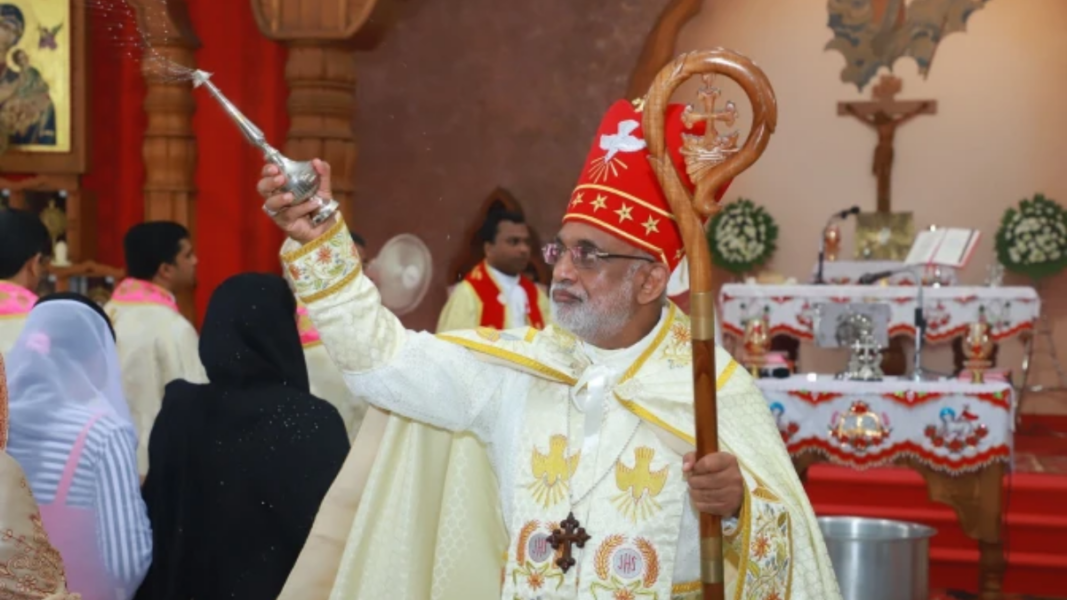
The Syro-Malabar Church, one of the main Eastern Catholic Churches in communion with Rome, has announced that 2026 will be a “Year of Community Strengthening” (Community Empowerment Year) in the face of fears of demographic “extinction” in its main territory in India, especially due to emigration.
In a circular letter dated January 10, Major Archbishop Raphael Thattil warned against “thoughtless migration” to countries outside India, noting that it can lead to large debts and weakening of faith. The letter was published after the Syro-Malabar Bishops’ Synod meeting held from January 6 to 10, and it will be read in churches on Sunday, January 18.
A Church of five million, with strong concentration in Kerala
According to The Pillar, the Syro-Malabar Church has about five million faithful worldwide, of whom more than four million live in India. A particularly large portion is concentrated in the southern state of Kerala. The Church is organized into 35 eparchies (dioceses): 31 in India and four for the diaspora (Australia, Canada, United Kingdom, and United States).
However, emigration is not limited to the Anglo-Saxon sphere: the medium mentions communities in the Middle East—particularly in the United Arab Emirates—and in Germany, where a Carmelite priest originally from Kerala, Joshy Pottackal, will be ordained auxiliary bishop of Mainz in March.
The Pillar cites a 2023 report that estimates around 600,000 Syro-Malabar faithful emigrated in the last 20 years and that, in the last decade, 100,000 families moved to Australia, Canada, and the United States.
“Not just job seekers”: call to create work and sustain families
In his circular, Thattil calls for addressing the demographic decline—which reduces the community’s public presence—within families. He also encourages strengthening the faithful’s capacity to become job creators, not just “seekers” of work, and points to positive experiences in some dioceses where agriculture has been developed with scientific criteria and has generated employment.
A Syro-Malabar spokesperson, Father Tom Olikkarott, stated—according to the article—that the problem is not only the reduction in social representation, but the risk of entire communities disappearing, a reality that would affect several groups in Kerala. He also pointed out the social impact: young people who emigrate, elderly without care, decline in marriage, and rejection of having children.
Anti-Christian persecution and liturgical dispute
Thattil’s letter also mentions the increase in attacks against Christians in India on the eve of Christmas and denounces the interpretation of acts of charity as “forced conversions,” fueling a culture of hatred.
Finally, the Major Archbishop addresses the prolonged internal liturgical dispute. He recalled that the 2021 synodal decision to adopt a unified form of the Eucharistic liturgy in the 35 eparchies remains in force, although full unity has not been achieved due to opposition in the archeparchy of Ernakulam-Angamaly. After years of protests, a compromise was reached: parishes may maintain their preferred form as long as they offer at least one celebration with the unified form on Sundays and major feasts. Thattil called for abandoning the path of protest and opting for reconciliation.