


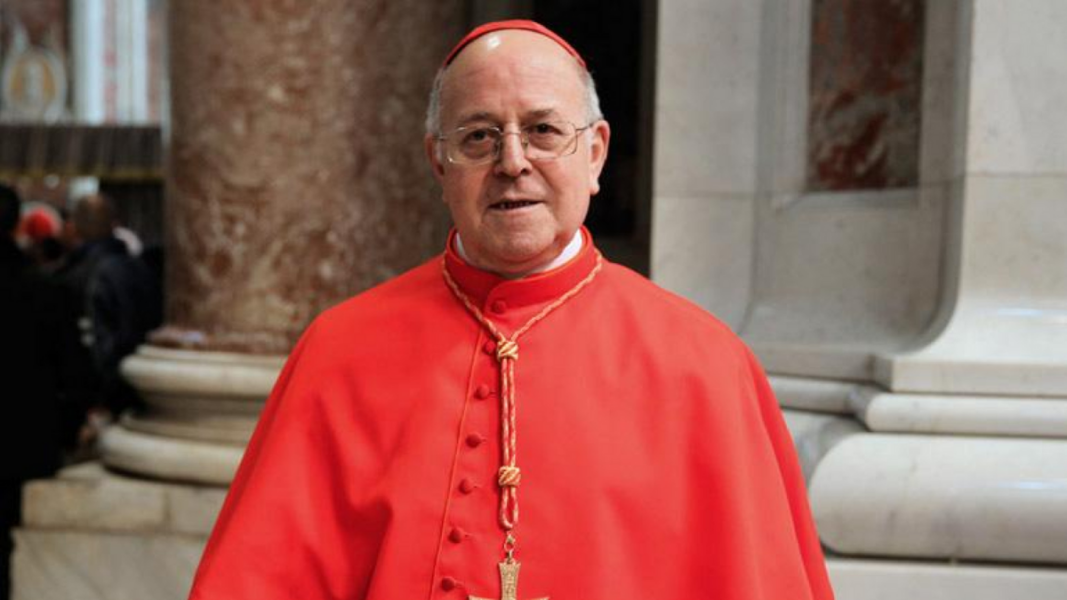
Cardinal Ricardo Blázquez, emeritus archbishop of Valladolid, places the Vatican II at the center of the ecclesial “path,” describing it as “the major event in the last centuries” and stating that its reception “is far from being completely received.” His statements come after the extraordinary consistory held in Rome on January 7 and 8, convened by Pope Leo XIV, and disseminated by the Archdiocese of Valladolid.
Blázquez interprets as significant the Pontiff’s decision to emphasize continuity with the Council and, moreover, to announce a new cycle of catechesis in 2026 focused on Vatican II. For the cardinal, that initiative is precisely oriented toward continuing to “receive” the Council: “how it is received, acted upon, and lived.”
Vatican II as a “permanent question” and program for the future
In his reading, Vatican II raises questions that the cardinal considers decisive: “Church, what do you say about yourself? What do you say about God? What testimony do you give about Jesus Christ in our world?” With this, Blázquez presents the Council not only as a historical fact, but as a interpretive framework for the identity and mission of the Church in the 21st century.
This way of posing it has clear implications: when it is affirmed that the Council is still “not fully received,” it opens the door for ecclesial life to remain permanently in a state of reform, with a “reception” that never ends and that, in practice, can become a criterion for reorienting doctrine, discipline, and practice according to the spirit of each era.
Continuity with Francis and consolidation of a “conciliar” language
Blázquez also frames the consistory in explicit continuity with the previous pontificate: one of the themes chosen unanimously was evangelization taking as a guide Evangelii gaudium; and the second theme was synodality, understood as a deepening of “ecclesial communion” “according to Vatican II.”
In practice, the vocabulary that Blázquez highlights—“communion,” “walking together,” “reception of the Council”—consolidates a way of speaking about the Church in which the process tends to prevail over the definition; the structure over doctrinal certainty; and “welcoming” over the classic mandate to guard, transmit, and teach clearly what has been received.
A fundamental issue: indefinite reception or integral fidelity?
Blázquez’s thesis—Vatican II as the great event and still “incompletely received”—leaves open a decisive question for the Church: if the future is understood as an indefinite prolongation of the Council, there is a risk that the Church lives in an unstable interpretation, where “applying the Council” ends up meaning endless reinterpretation. And in that dynamic, what suffers most is usually the concrete: catechesis without ambiguities, complete moral preaching, and liturgical continuity, which come to depend on the “climate” of the ecclesial moment.
Blázquez celebrates that Leo XIV is promoting catechesis on the Council in 2026. The question—inevitable—is whether that new cycle will serve to clarify and close debates, recovering a reading in continuity with the entire Tradition, or whether it will once again feed the idea that Vatican II is an open program that enables new “receptions” without end.