


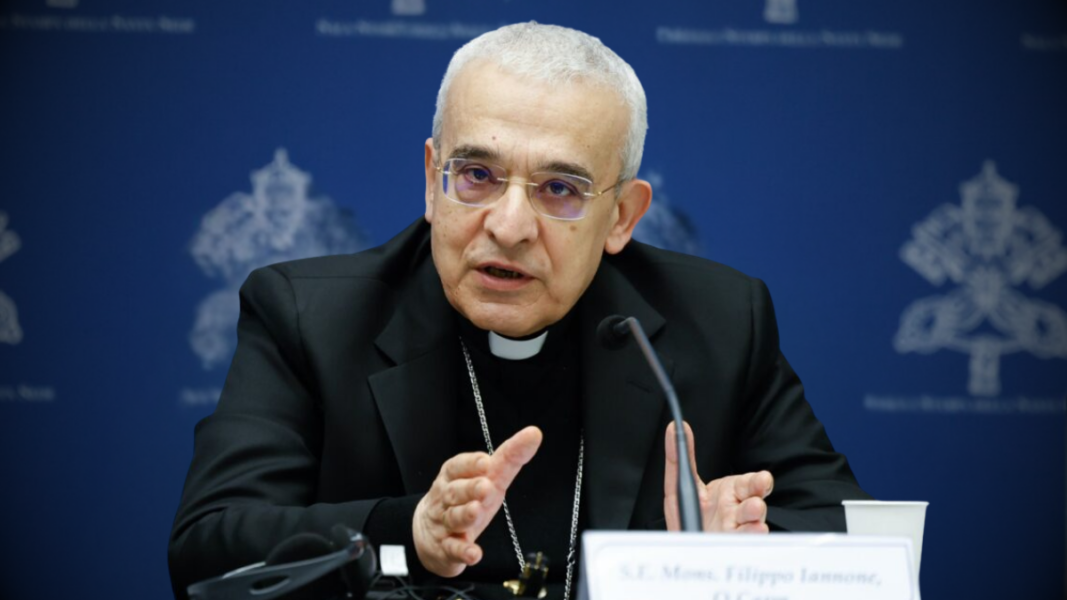
According to the Italian media outlet, Il Giornale, the next consistory scheduled for June could include a first and limited “batch” of new cardenals. In that list, the name that appears first is that of Filippo Iannone, current prefect of the Dicastery for Bishops and a key figure in the curial organizational chart.
The newspaper interprets this possible election as more than an administrative appointment: it would be a political and ecclesial signal of the new pontificate, by strengthening the one who occupies one of the most strategic dicasteries for the government of the Church.
A consistory read in a key of change
Il Giornale frames Iannone’s prominence within a broader context: the return of extraordinary consistories, a practice that—according to the media—brings Leo XIV closer to the style of John Paul II and moves away from the government style of Francis.
The Italian newspaper states that, despite the fact that in the last consistory emblematic themes of the previous pontificate were addressed, such as synodality or Evangelii gaudium, many cardinals consider that Francis’s influence will tend to dilute quickly.
Curia, synodality and liturgy: the background
In its analysis, the Italian media recalls that during the last consistory several reports on sensitive issues were prepared: synodality, Curia reform, and liturgy. Although not all were discussed in the hall, the newspaper emphasizes that the general climate points to a critical review of some of the most characteristic lines of the previous pontificate.
It is in this framework where the possible promotion of Iannone is placed: an appointment that would strengthen the authority of the Dicastery for Bishops and that could anticipate a broader change of course in episcopal selection.
An early signal of the pontificate of Leo XIV
For Il Giornale, if the appointment of Filippo Iannone as cardinal is confirmed, Leo XIV would be sending a clear message from the beginning of his pontificate: consolidating his team in key positions before addressing more far-reaching reforms.
Although it is a merely speculative topic, this first gesture could be just the beginning of a deeper reconfiguration, in which the weight of decisions would no longer be conditioned by the immediate heritage of the previous pontificate.