


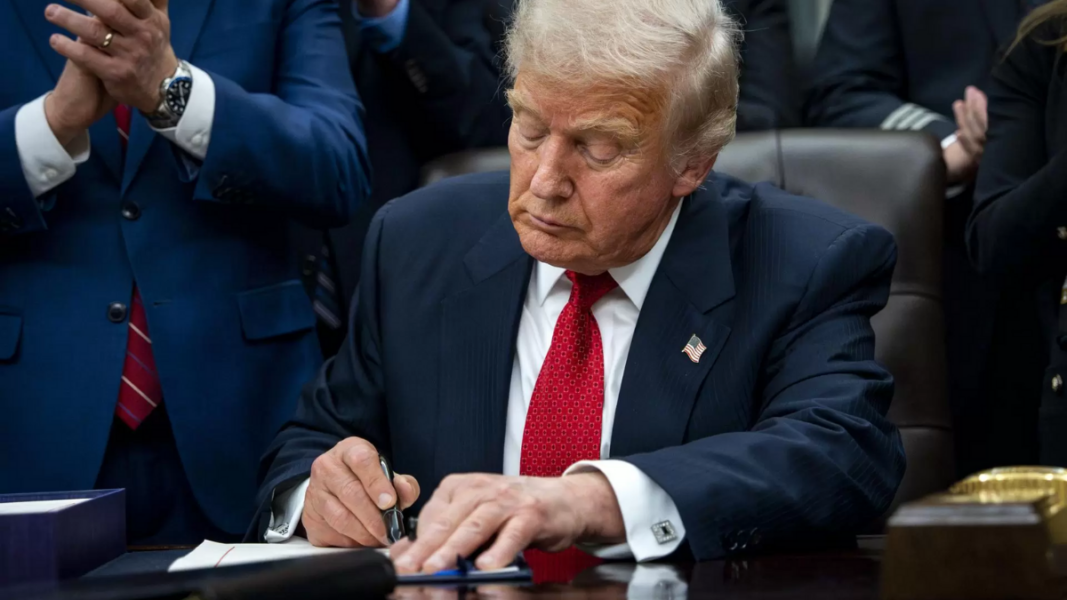
The United States Conference of Catholic Bishops (USCCB) has thanked the Donald Trump administration for a regulatory modification that eliminates the obligation to spend a year outside the country between two R-1 religious visas. According to the bishops, the change will reduce disruptions in parishes and Catholic works—especially in rural areas—while many foreign priests and religious wait for years (even decades) for permanent residency.
Days after the visit of the USCCB president, Archbishop Paul S. Coakley, to President Donald Trump, the U.S. Conference of Catholic Bishops has issued an official statement in which Coakley and Bishop Brendan J. Cahill, responsible for the episcopal committee on Migration, describe the measure as “a truly significant step” to sustain essential religious services in the United States and avoid “disruptions” in established ministries and works.
The prelates explicitly thank the Administration for its work in addressing the difficulties affecting “foreign-born religious workers,” their employers, and the communities they serve.
The specific change: what happens with the R-1 visa
In practical terms, the R-1 visa is the permit that allows priests, religious, and other workers from recognized denominations to carry out their mission in the United States.
Until now, those who exhausted the maximum stay time with that visa (generally five years) had to leave the country and, if they applied for a new R-1, were required to remain at least one year outside the U.S. before being able to return.
The rule announced by the Trump Administration (an Interim Final Rule, scheduled for publication in the Federal Register) eliminates that “mandatory year” outside the country: there will no longer be a minimum time outside between R-1 visas, as long as the rest of the requirements are met.
In practice, this “one year outside” requirement caused gaps in parishes, chapels, schools, and social works when the priest or religious who served them had to leave due to administrative obligation. This particularly affects dioceses with a shortage of clergy and isolated areas, where replacement is difficult or directly impossible.
The USCCB emphasizes that the change provides relief while religious await permanent residency (green card), a process that—according to the bishops—has extended to deadlines of “several decades” for some applicants.
The bishops call for a broader legislative solution
Although they celebrate the measure, Coakley and Cahill add that it is not enough. To “provide all the necessary relief” and fully protect the exercise of religious freedom, the bishops urge Congress to approve the Religious Workforce Protection Act, a bipartisan-supported proposal that, in their opinion, would provide long-term stability to these communities and religious workers.