


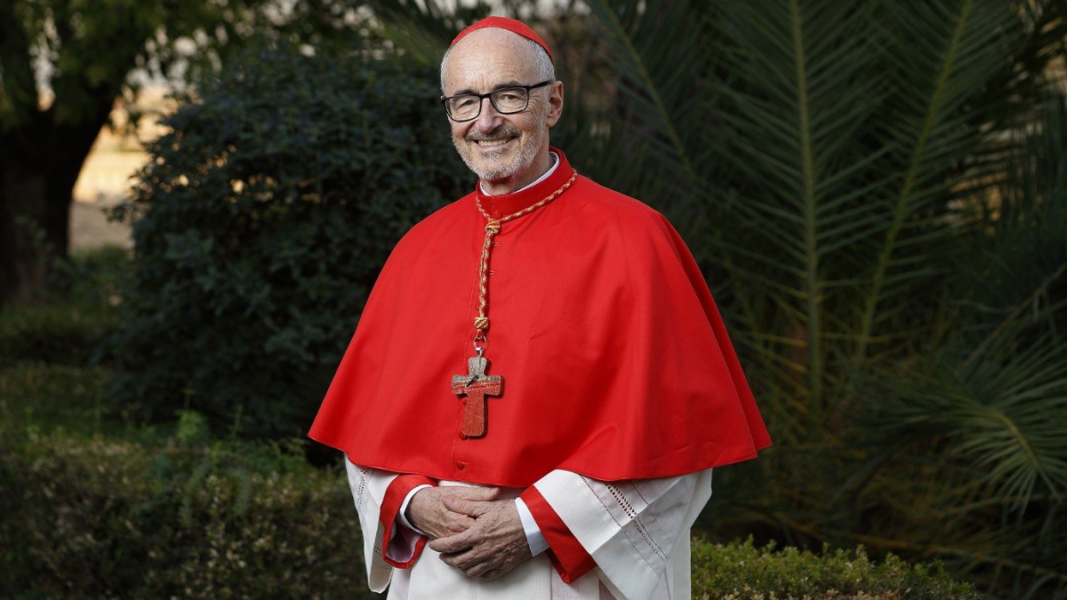
Cardinal Michael Czerny, SJ, has described the first extraordinary consistory of Leo XIV’s pontificate as “excellent.” In an interview granted to The Pillar, the cardinal explained that, unlike ordinary consistories—which are shorter and more protocolary—the meeting last week allowed for real work among the cardinals, with sustained debate and small group dynamics. Czerny also defended the Pope’s desire to listen, above all, to those who are active, and valued as “very encouraging” that Leo XIV immediately announced the intention to repeat the experience.
A consistory “of the College as such”
For Czerny, the distinctive feature of the consistory was not only the convocation, but its content: the fact that the College of Cardinals functioned as a consultative body and not as a courtesy meeting.
“Overall, it was an excellent experience. It could be said that it was an experience of the College of Cardinals as such,” he stated. And he explained it with a direct comparison: “Normally we meet on occasions, like in a normal consistory, but basically we just greet each other and say goodbye. In contrast, this time we lived in full collegiality, and it was a magnificent experience.”
That “being in collegiality,” in practice, meant sufficient time to speak, listen, and organize ideas jointly, with a working format intended to favor less rhetorical interventions and more focused on concrete contributions.
The method: small groups and initial bewilderment
Czerny admits that not everything was evident from the beginning. Some cardinals—he says—felt confused by the methodology, because the bulk of the meeting took place at small tables, similar to the dynamics of the Synod on Synodality, instead of plenary sessions.
“There were some cardinals who were a bit confused about the methodology, since most of the meetings were held in small groups (…) instead of plenary sessions,” he noted.
Nevertheless, he maintains that the bewilderment lasted little. According to his account, once the group understood that the work was going to be real—and that the first afternoon would be entirely dedicated to discussion—the atmosphere changed immediately: “As soon as we gathered and realized that the first thing we would do was spend the entire afternoon debating, we realized that we were already working (…) and we got down to business. The three sessions were good.”
Liturgy and other off-agenda matters: no dramatization
In the interview, Czerny acknowledges that some cardinals would have wanted to address other topics—particularly the liturgy—but emphasizes that this absence did not dominate the atmosphere. His phrase is revealing, because it dismantles the idea of widespread frustration inside the room:
“Honestly, perhaps it’s a coincidence, but I didn’t hear anyone say: ‘Oh, sorry we didn’t address the liturgy.’”
Read also: They reveal Roche’s document on the liturgy
The underlying idea is clear: the method forced a choice, and once the framework was accepted, the priority was to make the most of the available time to advance on the selected topics, rather than turning the consistory into a sum of claims.
Listening to those who are active: a “realistic” logic
Czerny also speaks on a practical issue of internal functioning: whom it is advisable to listen to first. And here he defends, without ambiguity, the criterion of giving priority to those in direct pastoral service, because they are the ones who bear the decisions on the ground.
“I think it’s realistic. The Holy Father needs to listen mainly to those who are active,” he stated. And he added an organizational nuance: “His opportunities to listen to the elders or those in the curia are much greater than those of a diocesan bishop.”
In other words, Czerny suggests that the Pope can access voices from Rome relatively easily—due to proximity and structure—while the diocesan bishop, far from the center, needs spaces specifically designed to be heard.
The immediate announcement: a sign that the Pope was satisfied
One of the elements that Czerny highlights as most significant is that Leo XIV immediately announced the intention to repeat the formula. For him, that announcement was not a mere organizational detail, but a gesture interpreted as approval of the result.
“The fact that the Pope announced it immediately was very encouraging. In a certain sense, it was a very concrete expression of his gratitude,” he explained. And he concluded with an idea that almost serves as a verification criterion: if the consistory had not served to obtain real advice, the Pontiff would hardly have proposed repeating it.
“The correct order” before the fight over priorities
Czerny avoids presenting the consistory’s agenda as a battle of importances. He prefers to frame it as a matter of sequence: doing what is necessary at the right time so that the rest can be addressed later under better conditions.
“As I said before, it’s important that things happen in the correct order. And if you do X before doing W, even though both are good, they are in the wrong order and it won’t work well.”
The message, as he conveys it, is that the consistory does not intend to close substantive debates in a day and a half, but to set a course: deciding what needs to be done first so that complex—and potentially conflictive—topics can be addressed later with greater serenity and effectiveness.