


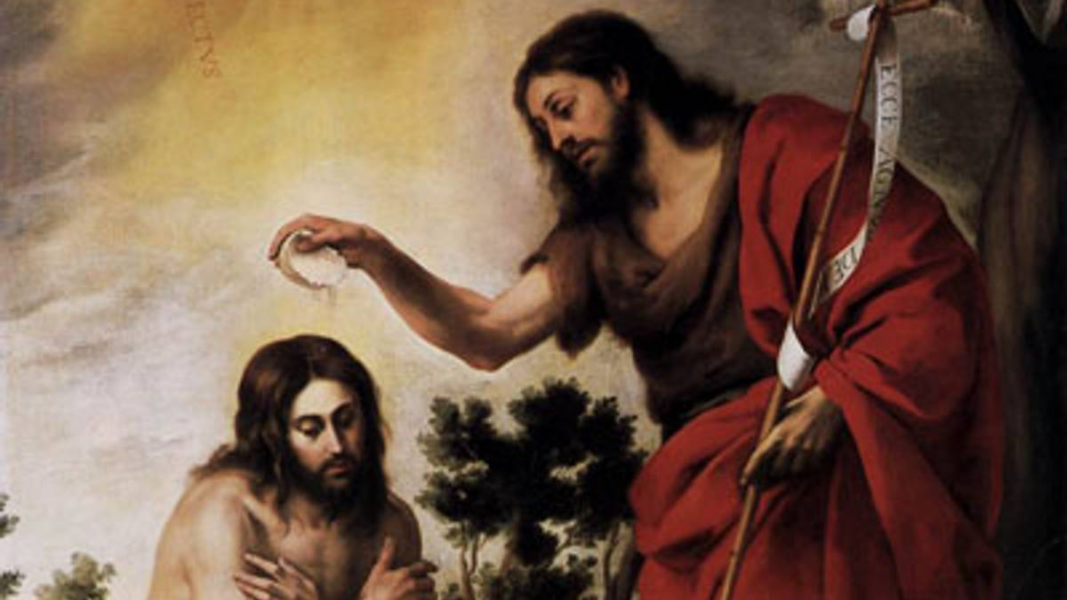
“I tell you, among those born of women there is no prophet greater than John…” (Luke 7:28).
With these words coming from the mouth of God’s Eternal Word, Saint John the Baptist is crowned as the supreme prophet who prepares everything for the coming of the Messiah. He was no ordinary man, the cousin—in the earthly plane—of the Savior; it is Christ who exalts him and sets him as a model to follow for all people. In the Sacred Scriptures, we have a graphic-visual description of this prophet like no other. It describes what he eats, how he dresses, his physique, his habits, and his apostolate. This cannot go unnoticed, since if Divine Wisdom illuminated the authors of the Holy Gospels with such precise knowledge, it is because God wants to draw our attention to these particularities worthy of imitation. This character from Sacred Scripture has such impact in such a short time that it does not escape the eye of the devout Christian. In this line of thought, this great prophet is known, carries out his apostolate, and is beheaded in just a few pages; it can be said that everything happens very quickly, but that does not mean it is superfluous. The bimillennial Tradition of the Holy Mother Church has cultivated great devotion and knowledge around him, and it manifests through the expansion of popular piety among the peoples of Christendom toward the precursor of the Savior from time immemorial.
One can speak extensively about Saint John the Baptist, but we return to the memory of the first words cited here, which come directly from Jesus Christ, who does full justice to his person. We know well the history of salvation with all the events that occurred before and after the coming of Our Lord Jesus Christ. Now, there is a merely hypothetical question that the present author has considered for some time to serve as an opportunity for spiritual learning to increase apostolic zeal. The doubt sounds daring, but it goes like this: What would happen if Saint John the Baptist had failed? Let us proceed to answer this question.
Easy Answer
Let us say that Saint John the Baptist is born, grows to the age of intellectual maturity, and the window of opportunity that God, through grace, grants him opens to go out and carry out his mission so essential for the Redemption. Right at that moment, for any reason, the man chosen by the Most High decides not to proceed, dedicates himself to something else apparently pious, or detaches himself from the very purpose of his life. Oh, thanks to the Most Holy Trinity that this did not happen, since the mere hypothesis causes terror! Continuing with the present theory, it happens that he lives a pious life, full of God and always seeking to do justice. Taking this into account, what would happen? A very easy answer: Nothing, nothing would happen; the plan of Redemption would take place anyway.
The infinite Divine Wisdom could arrange for another person or another means to fulfill the entrusted mission. God the Father would have respected his free will, but perhaps his story would have been different. It is true that God makes use of adversities, but that does not mean it is right when a person abandons the path clearly marked by Divine Providence. With that answer, we have enough to respond to the theoretical framework posed.
Lessons
Blessed be the name of the Lord for having given us a beacon of light and zeal for the house of God like the Baptist! To achieve that God pronounces words similar to those stated about Saint John, we must imitate his example in proportion to our duties of state. To pinpoint the qualities worthy of following, one must ask a diametrically different question from the premise of the present article: What did Saint John the Baptist do to fulfill his mission?
The first thing he did was fulfill God’s will in his life. He did exactly what God expected of him to prepare the way for the Messiah through his tireless preaching and apostolate. Based on this, the other characteristics of his person derive. The second is his hatred for human respects; the celebrated Saint John Mary Vianney has an entire sermon dedicated to the nefarious human respects, the same being so harmful that he curses them severely. The third is his total intransigence for the truth; this pillar of the Baptist is of vital relevance today when we see that several people and groups yield to small crumbs, apparent openings, or social pressure that leads them to think that one is alone. Seeing the snares of the sowers of discord and those who sought to buy his loyalty, the humble voice crying in the wilderness remained firm in everything, even facing authority corrupted by vice. The fourth is his apostolic austerity, which detaches the soul from diminishing attachments for a perfect service to be offered to the Most Holy Trinity. Not only material austerity, but of another kind of attachments or comforts, which is why a substantial volume of individuals called to arduous service by Christ the King remain within their comforting amenities.
The level of perniciousness of the enemies of the Church has reached a gravity never seen before, coupled with the fact that they camouflage themselves with greater cunning compared to other times. The subtlety of deceptions, bold maneuvers, false pantomimes performed to lull the lukewarm to sleep, all this—and more—forms part of the tools of evil to make the current Saint Johns the Baptist fail or become discouraged in their mission. Following the course of the sanctified and fruitful life of the Baptist is an easy recipe to excel in holiness for these times of crisis. The hypothetical theory discussed in the present writing has served us to make a reflection applicable to our times; this can accompany us throughout our life, where we strive to do the best possible apostolate to serve Him of whom we are not worthy to untie the strap of His sandal. Let us ask for his intercession constantly to discern with courage, prudence, and fortitude the most suitable course of our actions to always give witness of a militant and fervent Catholic in his zeal for the house of God.