


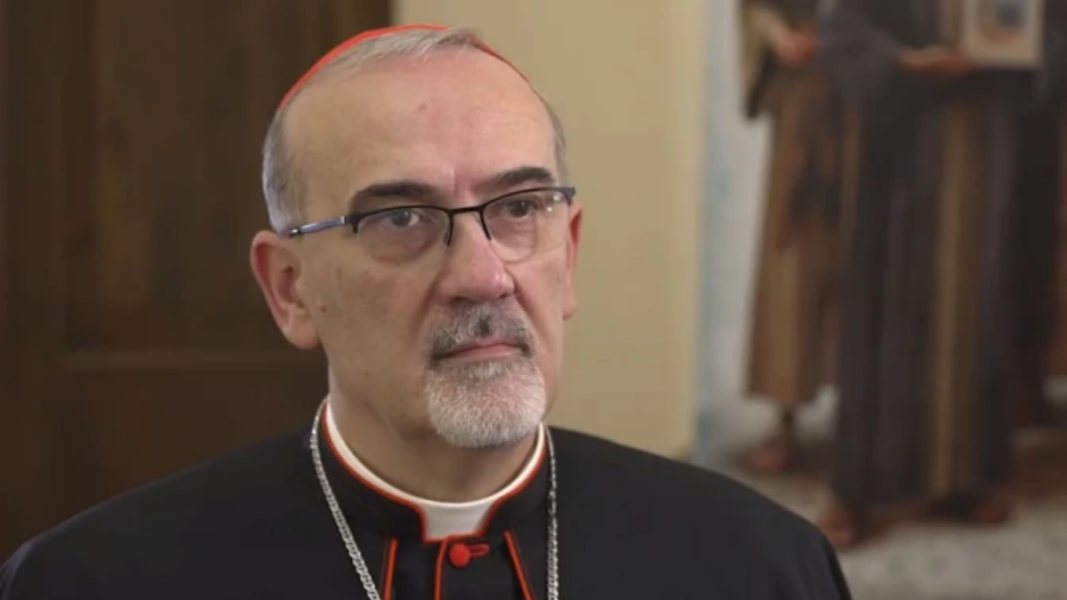
There is a border that neither propaganda, nor repression, nor diplomatic calculations can completely erase. Cardinal Pierbattista Pizzaballa, Latin Patriarch of Jerusalem, describes it with a simple phrase: the desire of peoples to live a dignified life. And he warns that when that demand is ignored, tension erupts again, in Iran and also in the Holy Land. The prelate speaks from Jordan, on the Dead Sea, where he is participating in an update meeting with about sixty priests from the Latin Patriarchate, along with several bishops and vicars. His reading of the moment is clear: authorities may try to contain the situation, but they cannot indefinitely suppress the hunger for peace, justice, and dignity, “an integral part of every person’s conscience”.
A diocese crossed by war in four countries
Pizzaballa does not speak in the abstract. The Latin Patriarchate— he recalls— covers four nations and all of them, in one way or another, are conditioned by the conflict. Not in the same way, but with real wounds.
In Jordan, he explains, the blow has been mainly economic and social: commercial paralysis, uncertainty, and difficulties for travel. In the West Bank, on the other hand, the situation “continues to deteriorate,” aggravated by closed borders and lack of permits that suffocate the ordinary life of the Palestinian community. In Israel, especially in Galilee, he points out a less visible but corrosive phenomenon: a growing separation between the Jewish majority and the Arab minority, with a crisis of coexistence that is no longer just economic, but relational.
Gaza: “there is no open war,” but deaths continue
Where his diagnosis becomes harshest is in Gaza. Pizzaballa emphasizes that, even with the ceasefire and the decline of “open warfare,” reality has not normalized. He speaks of selective bombings, of devastation that does not recede, and above all, of a silent emergency that kills without headlines: the lack of basic medicines.
According to his description, today there may be a bit more food than before, but there are no antibiotics or basic treatments; people die from the cold and from the absence of medical care, in a horizon that remains “very uncertain” for the population. The expression he uses leaves no margin: the situation remains one of “total devastation”.
“Return”: the call to pilgrims
With the same realism with which he describes the crisis, Pizzaballa sends a message: he asks pilgrims to return to the Holy Land, including Jordan, which he presents as a “more serene” and vital part of the diocese, with a young and cohesive Catholic community.
His appeal goes beyond religious tourism: he understands pilgrimage as an act of faith and also as concrete support for Christian communities that live in permanent tension. That is why he insists on organizing pilgrimages and states that it is “absolutely safe.” In addition, he resorts to a classic spiritual image: the Holy Land as a “fifth Gospel,” an experience that makes faith more concrete by touching the places of the Lord.