


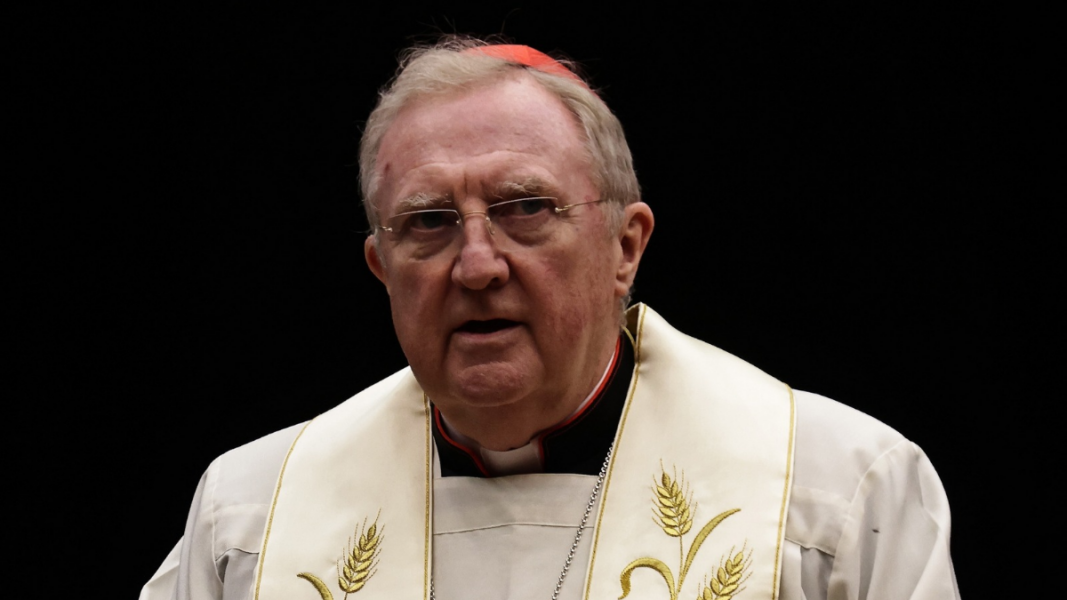
The text, until now undisclosed, on the liturgy, prepared by Cardinal Arthur Roche, prefect of the Dicastery for Divine Worship, has come to light after the Extraordinary Consistory held in Rome in early January. The document, dated January 8, 2026, confirms that the issue of the Traditional Mass was clearly on the agenda and that in the Roman curia a firm thesis is maintained: the post-conciliar reform would be irreversible and the 1962 Missal would be reduced to a concession without stable projection.
According to what has been disseminated, the text circulated in English and Italian versions and was published by Diana Montagne on Substack. It is not an isolated writing: it was one of the four materials delivered to the cardinals for reflection and discussion, within a package of topics set by Pope Leo XIV: evangelization, the Roman Curia, the synod and synodality, and the liturgy.
The document, structured in eleven points, offers a x-ray of the approach that is intended to be consolidated in the Church regarding the liturgy. Its thesis runs through the entire text: ecclesial “unity” is linked to ritual uniformity, and contestation of the liturgical reform is interpreted, at bottom, as a problem of acceptance of Vatican II.
A history of “reforms” to justify a reform
The document starts from a premise: the liturgy has “always” been reformed. It traces from the early centuries to the 20th century to present the modern reform as one more step in an “organic” process. This reading is not neutral: it seeks to deactivate the accusation of rupture and frame any resistance as nostalgia or fixation on the past.
The key point is that the reform is presented as the normal mode of continuity. However, in practice, the text itself tends to turn that continuity into an argument of authority: if the liturgy changes, then the current reform is not only legitimate, but the criterion that must be imposed.
Saint Pius V and unity understood as uniformity
One of the most significant passages is the appeal to Saint Pius V and the bull Quo primum. The document recalls that, after Trent, the goal was to preserve unity with a common way of celebrating, and draws from it an implicit conclusion: today as well, unity would require a single ritual framework.
The comparison has rhetorical weight, but it is not innocent: it serves to legitimize a liturgical policy that, in fact, narrows the space for coexistence with the traditional liturgy and places the debate in terms of discipline and obedience rather than authentic ecclesial plurality.
Tradition as a “living river”: the interpretive framework
The text insists on a notion of Tradition as a dynamic reality, citing Benedict XVI. On paper, it seems like a call for balance: to preserve “solid tradition” and allow “legitimate progress.” But the practical application of the argument is clear: the post-conciliar reform is presented as an authentic expression of Tradition, while attachment to previous forms falls under suspicion of immobility.
The consequence is predictable: what should be a principle of continuity becomes a tool to delegitimize the liturgical permanence of what has been inherited.
“Without liturgical reform there is no reform of the Church”
The document quotes words from Pope Francis to emphasize that the liturgical reform is at the center of ecclesial reform. According to the text, the conciliar objectives—spiritual, pastoral, and missionary renewal—would necessarily pass through the promotion of the new liturgical paradigm.
Here the approach is evident: the liturgy does not appear only as a sacramental and spiritual sphere, but as a lever of ecclesial governance. The debate ceases to be merely liturgical: it becomes a debate about the model of Church that is wanted to be affirmed.
The problem was not the reform, but the formation
The document admits that the application of the reform “suffered” and continues to suffer, but locates the root in the lack of formation, especially in seminaries. It does not contemplate—at least in the disseminated text—that part of the liturgical crisis may be related to systematic abuses tolerated for decades or to an effective rupture in the Catholic sensibility of many faithful.
The reading is significant: the conflict is acknowledged, but the framework of the reform is protected, displacing the problem to the level of those who have not understood or applied it well.
Traditionis custodes as a “logical” consequence
The most delicate part comes when the document clearly defends the approach of Traditionis custodes and links the liturgical issue to the acceptance of the Council. The practical conclusion is contundent: one cannot “go back” to the previous rite and the reformed Missal would be the only expression of the lex orandi of the Roman Rite.
The 1962 Missal then appears as a tolerated exception, not as a liturgical treasure to be custodied. In that framework, Traditionis custodes is presented as an instrument to “restore unity,” but unity is defined in a strict way: a single ritual form as the horizon.
An ecclesiological conflict
The document insists that liturgical tensions are not a matter of sensibilities, but an ecclesiological problem: the acceptance of Vatican II and its ecclesiology, especially as expressed in Lumen gentium. In practical terms, those who love the traditional liturgy are placed on uncomfortable ground: ritual preference can be interpreted as a symptom of doctrinal or ecclesial resistance.
A revealing text
The document does not necessarily bring novelties, but something more useful: it confirms the mindset from which the liturgy is governed today in Rome. “Unity” tends to be identified with uniformity, and the traditional liturgy is presented as a problem that must be contained.
With this approach, the conflict is not resolved: it is managed. And while the language of communion is insisted upon, many faithful perceive that the real space to live Tradition is not expanded, but reduced.
It remains to be seen what Leo XIV will do from now on with an issue that, far from being closed, continues to mark the life of many communities and faithful. If Rome truly intends liturgical peace, a clear response without ambiguities will be needed, that puts an end to legal uncertainty and pastoral improvisation that have multiplied conflicts.
We make available to the reader the complete and translated document:
EXTRAORDINARY CONSISTORY
(January 7-8, 2026)
Liturgy: careful theological, historical, and pastoral reflection “so that the sound tradition may be preserved and, however, the path to legitimate progress may remain open” (SC 23).
LITURGY
Card. Arthur Roche
1.-In the life of the Church, the Liturgy has always experienced reforms. From the Didaché to the Traditio Apostolica; from the use of Greek to that of Latin; from the libelli precum to the Sacramentaries and the Ordines; from the Pontificals to the Franco-German reforms; from the Liturgy secundum usum romanae curiae to the Tridentine reform; from the partial post-Tridentine reforms to the general reform of the Second Vatican Council. The history of the Liturgy, we could say, is the history of its continuous “reforming” in a process of organic development.
2.-Saint Pius V, in addressing the reform of the liturgical books in observance of the mandate of the Council of Trent (cf. Session XXV, General Decree, chap. XXI), was moved by the desire to preserve the unity of the Church. The bull Quo primum (July 14, 1570), with which the Roman Missal was promulgated, states that “as in the Church of God there is one way of reciting the psalms, so it is most fitting that there be one rite for celebrating Mass” (cum unum in Ecclesia Dei psallendi modum, unum Missae celebrandae ritum esse maxime deceat).
3.-The need to reform the Liturgy is strictly linked to the ritual component, through which — per ritus et preces (SC 48) — we participate in the paschal mystery: the rite is in itself characterized by cultural elements that change over time and in places.
4.- Moreover, since “Tradition is not the transmission of things or words, a collection of dead things” but “the living river that unites us to the origins, the living river in which the origins are always present” (BENEDICT XVI, General Audience, April 26, 2006), we can certainly affirm that the reform of the Liturgy desired by the Second Vatican Council is not only in full harmony with the true sense of Tradition, but constitutes a singular way of placing itself at the service of Tradition, because the latter is like a great river that leads us to the gates of eternity (ibid.).
5.- In this dynamic vision, “preserving solid tradition” and “opening the path to legitimate progress” (SC 23) cannot be understood as two separable actions: without “legitimate progress” tradition would be reduced to a “collection of dead things” not always healthy; without “sound tradition” progress runs the risk of becoming a pathological search for novelty, which cannot generate life, like a river whose course is blocked separating it from its sources.
6.- In the address to the participants in the Plenary of the Dicastery for Divine Worship and the Discipline of the Sacraments (February 8, 2024), Pope Francis expressed himself as follows:
“Sixty years after the promulgation of Sacrosanctum Concilium, the words we read in its introduction, with which the Fathers declared the purpose of the Council, never cease to enthuse. They are objectives that describe a precise desire to reform the Church in its fundamental dimensions: to make the Christian life of the faithful grow day by day; to better adapt to the needs of our time the institutions subject to change; to foster everything that can promote union among all who believe in Christ; to strengthen what serves to call all to the bosom of the Church (cf. SC 1). It is a task of spiritual, pastoral, ecumenical, and missionary renewal. And to carry it out, the conciliar Fathers knew where to start, they knew that there were particularly urgent reasons to undertake the reform and promotion of the liturgy” (Ibid.). It is as if to say: without liturgical reform, there is no reform of the Church.
7.- The Liturgical Reform was elaborated on the basis of a “precise theological, historical, and pastoral investigation” (SC 23). Its scope was to make fuller participation in the celebration of the Paschal Mystery for a renewal of the Church, People of God, Mystical Body of Christ (see LG chapters I-II), perfecting the faithful in unity with God and among themselves (cf. SC 48). Only from the salvific experience of the celebration of the Easter season, the Church rediscovers and relaunches the missionary mandate of the Risen Lord (cf. Mt 28:19-20) and becomes, in a world torn by discord, leaven of unity.
8.- We must also recognize that the application of the Reform suffered and continues to suffer from a lack of formation, and this urgency to address it, starting from the Seminaries to “give life to the type of formation of the faithful and to the ministry of the pastors that have their summit and source in the liturgy” (Instruction Inter oecumenici, September 26, 1964, 5).
9.- The primary good of the unity of the Church is not achieved by freezing division, but by meeting in sharing what cannot but be shared, as Pope Francis said in Desiderio desideravi 61:
“We are continually called to rediscover the richness of the general principles set forth in the first numbers of Sacrosanctum Concilium, understanding the intimate bond between this first of the Council’s constitutions and all the others. For this reason, we cannot return to that ritual form that the conciliar Fathers, cum Petro et sub Petro, felt the need to reform, approving, under the guidance of the Holy Spirit and following their pastoral conscience, the principles from which the reform was born. The holy pontiffs Saint Paul VI and Saint John Paul II, in approving the reformed liturgical books ex decreto Sacrosancti Oecumenici Concilii Vaticani II, have guaranteed the fidelity of the Council’s reform. For this reason I wrote Traditionis custodes, so that the Church may raise, in the variety of so many languages, one and the same prayer capable of expressing its unity. [Cf. Paul VI, Apostolic Constitution Missale Romanum (April 3, 1969) in AAS 61 (1969) 222]. As I have already written, I intend that this unity be restored throughout the Church of the Roman Rite”.
10.- The use of the liturgical books that the Council sought to reform was, from Saint John Paul II to Francis, a concession that in no way envisaged its promotion. Pope Francis—even conceding, in accordance with Traditionis Custodes, the use of the Missale Romanum of 1962—pointed the way toward unity in the use of the liturgical books promulgated by the holy popes Paul VI and John Paul II, in accordance with the decrees of the Second Vatican Council, the unique expression of the lex orandi of the Roman Rite.
11.- Pope Francis summarized the theme as follows (Desiderio desideravi 31):
“[…] If the liturgy is ‘the summit toward which the activity of the Church tends and, at the same time, the font from which all her power flows’ (Sacrosanctum Concilium, n. 10), then we can understand what is at stake in the liturgical question. It would be trivial to read the tensions, unfortunately present around the celebration, as a simple divergence between different tastes about a particular ritual form. The issue is mainly ecclesiological. I do not see how it is possible to say that one recognizes the validity of the Council—although it amazes me that a Catholic can presume not to do so—and at the same time not accept the liturgical reform born of Sacrosanctum Concilium, a document that expresses the reality of the Liturgy intimately united to the vision of the Church so admirably described in Lumen gentium. […]”.
Rome, 01.08.2026