


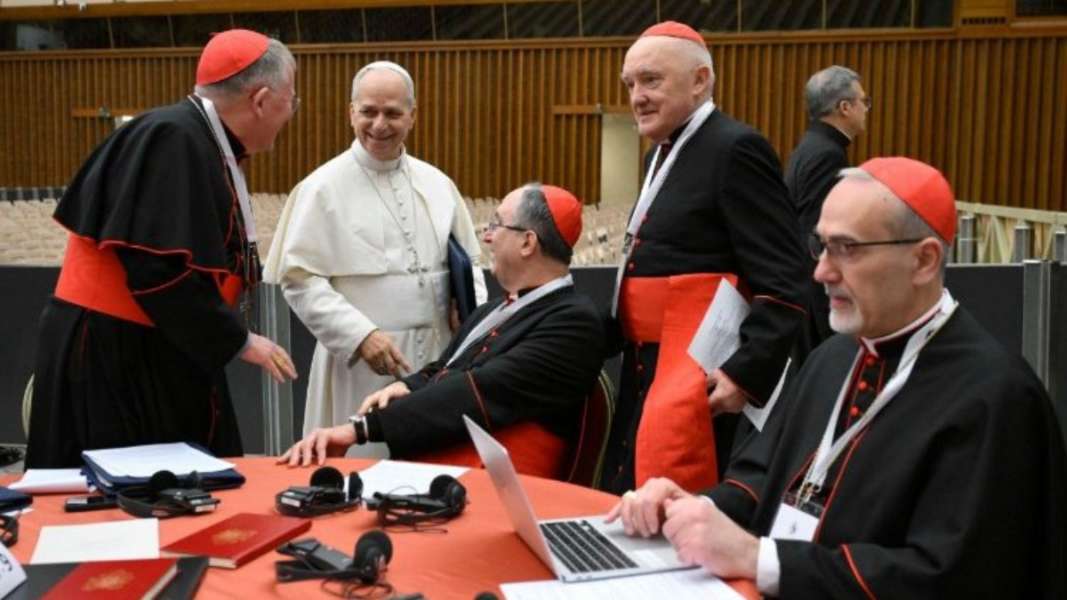
Nearly a week after the extraordinary Consistory convened by Pope Leo XIV, the Italian newspaper Il Giornale has published extensive excerpts from the reports prepared for the closed-door meeting between the Pontiff and the cardinals, which allow for a more detailed understanding of the scope of the debates and the lines that could mark the beginning of the new pontificate.
According to the Italian media outlet, the discussions ultimately focused on two of the four initially planned topics: a re-reading of the apostolic exhortation Evangelii gaudium and the issue of the Synod and synodality. Left out due to lack of time were the reflections on the apostolic constitution Praedicate Evangelium and the liturgy, although the reports prepared on these matters were still available to the cardinals.
Fernández and the re-reading of Evangelii gaudium
The first of the two reports presented in the hall was that of Cardinal Víctor Manuel Fernández, prefect of the Dicastery for the Doctrine of the Faith. In his intervention, Fernández emphasized that, although changes may occur compared to the previous pontificate, the impetus of Evangelii gaudium cannot be “buried.”
The Argentine cardinal defended an evangelization that does not rely on what he described as an “obsessive proclamation” of all doctrines and norms, appealing to pastoral creativity and a review of both ecclesial practices and the usual content of homilies and speeches.
Grech and synodality as a permanent method
The second report was presented by Cardinal Mario Grech, general secretary of the Synod. In it, he insisted that the synodal process in no way limits the primacy of the Roman Pontiff, recalling that it always falls to the Pope to convene, guide, and, if necessary, suspend the synodal path.
Grech proposed a synodality articulated at different levels, with differentiated involvement depending on the topics addressed, and even suggested periodic meetings of the Pope with the presidents of the episcopal conferences.
The undebated reports: Curia and liturgy
Although they were not discussed in the hall, Il Giornale also had access to the reports prepared on Praedicate Evangelium and the liturgy. The first, prepared by Cardinal Fabio Baggio, presents the reform of the Curia as a structure at the service of the mission and the bishops, insisting on “healthy decentralization” and a Curia conceived as a “center of listening.”
More controversial is the report by Cardinal Arthur Roche, prefect of the Dicastery for Divine Worship, dedicated to the liturgy. According to the Italian newspaper, the text adopts a clearly critical tone toward the traditional liturgy and unreservedly defends the restrictions imposed by Traditionis Custodes.
Roche argues that it is not possible to accept the validity of the Council without fully embracing the liturgical reform, a position that has generated tensions with communities linked to the traditional liturgy.
A debate that anticipates tensions
The publication of these reports sheds light on a Consistory that, although brief, points to in-depth debates at the start of Leo XIV’s pontificate, especially on matters such as synodality, evangelization, and the liturgy.