


The diocesan priest from Madrid, Jorge González Guadalix, has published on Infocatólica an article in which he denounces as a “shame” that both the State and the Church have to resort to donation campaigns to cover needs that, in his opinion, should be guaranteed through ordinary means.
In his text, titled The shame of having to resort to alms, the priest questions the normalization of collections and solidarity campaigns aimed at cancer care, people with disabilities, or other more vulnerable groups, when—as he points out—these areas should be supported by citizens’ taxes. In that sense, he criticizes that public money is allocated to ideological or cultural purposes while charity is appealed to for basic issues.
Criticism also within the Church
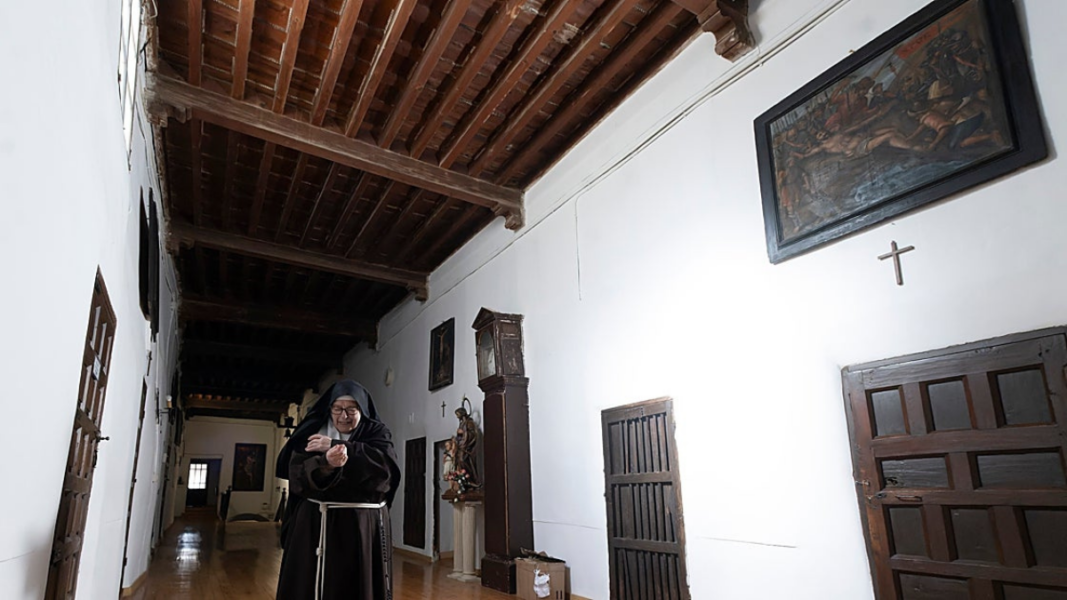
González Guadalix extends his reflection to the ecclesiastical sphere and cites as an example a recent campaign aimed at raising funds to help contemplative communities face heating costs during the winter. The initiative seeks to raise 100,000 euros to assist about 80 monasteries and convents throughout Spain, after in its first edition more than 68,000 euros were raised.
The priest is particularly critical of the fact that it is necessary to ask for alms from the faithful so that elderly nuns can warm themselves in the coldest months. In this context, he recalls that the Catholic Church will receive in the fiscal year 2024 more than 429 million euros through the allocation of 0.7% of the IRPF, a historic figure that, in his opinion, should allow attending to this type of needs without resorting to extraordinary campaigns.
The austerity of the monasteries
In his article, the author describes the harsh material conditions in which many contemplative communities live, characterized by extreme austerity. Numerous convents use obsolete and inefficient heating systems, such as butane stoves, diesel, or even wood, because they cannot afford more modern alternatives.
Although, in case of need, the faithful must help, the situation reveals a fundamental problem. For the priest, both from the civil and ecclesiastical point of view, it is unacceptable that resorting to alms to cover the essentials has been assumed as normal.