


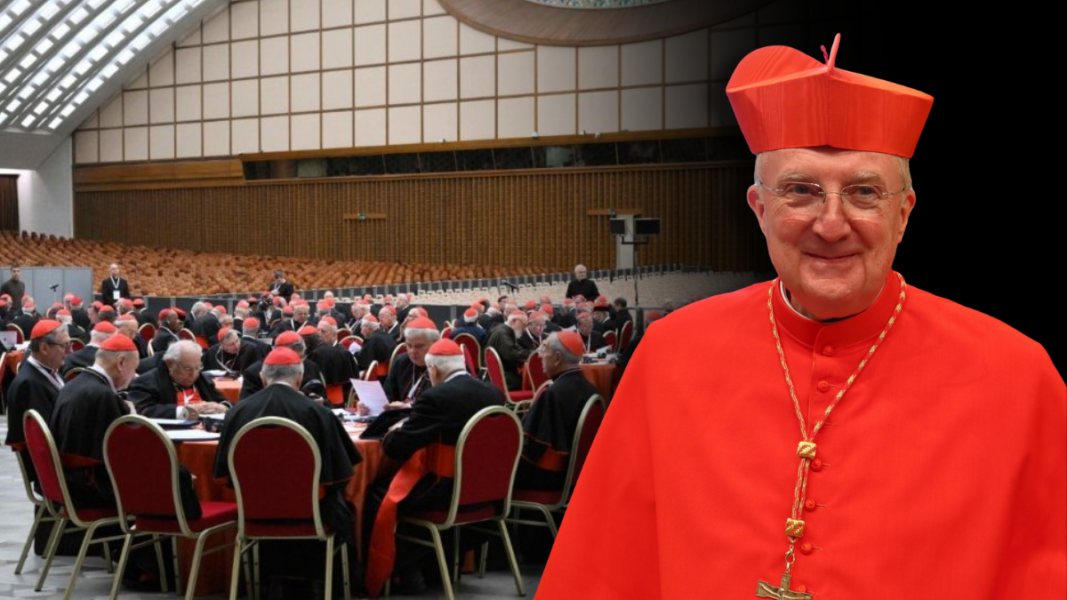
The extraordinary consistory held last week in the Vatican left out of the public debate one of the issues that most concern numerous faithful: the liturgy and, in particular, the Traditional Latin Mass. Although the topic was initially on the agenda proposed by Pope Leo XIV himself, it was finally set aside by vote, citing lack of time.
However, according to what The Catholic Herald revealed in a summary published on January 11, and later highlighted by Secretum Meum Mihi, the issue was not completely absent from the consistory. According to the testimony of a participating cardinal, the liturgy—and specifically the Traditional Mass—was introduced in writing, outside the debate in the plenary.
A text by Arthur Roche, delivered at the end
The passage quoted by The Catholic Herald is revealing:
“Although the liturgy was set aside, at the end they gave us a document written by Cardinal Arthur Roche, quite negative about the Traditional Latin Mass”.
This procedure—introducing a critical assessment through a written text and not through an open discussion among the cardinals—has been interpreted by various observers as a worrying sign. For many, it points to the fact that the Holy See’s orientation on this matter has already been decided in advance, without real willingness for collegial contrast.
An increasingly restrictive approach
As Secretum Meum Mihi underscores, this episode fits into a well-known trajectory. Cardinal Arthur Roche, current prefect of the Dicastery for Divine Worship, has been one of the main executors of the line marked by Traditionis custodes and its subsequent Responsa ad Dubia of 2021. In them, Roche demanded that bishops demonstrate how they were advancing toward a “unitary celebratory form,” which in practice has led to severe restrictions against the traditional liturgy.
In not a few dioceses—especially in the United States—this pressure has resulted in prohibitions that go beyond the legal text: removal of kneelers, veto on ad orientem celebrations, suppression of traditional ornaments, or arbitrary restrictions on the use of the traditional Roman rite.
Official silence and open questions
The fact that the cardinals received during the consistory a critical document on the Traditional Mass, without its content being subjected to public debate, raises legitimate questions. What arguments does that text contain? What specific assessment is made of the traditional rite? Is it a simple opinion or a programmatic document with practical consequences?
Its content could shed light on the direction that is intended to be imposed in liturgical matters and on the real role that the College of Cardinals is called to play in these decisions.
The next consistory, scheduled for the month of June, thus acquires special relevance. For many, it will be the occasion to check if the liturgy returns to the center of the debate or if, once again, decisions will continue to be made through indirect channels, far from frank and collegial discussion.