


Various cultural and educational initiatives developed in different Italian cities have once again brought to the forefront the concern about the spread of Islamism through cultural centers, schools, and public spaces. According to La Nuova Bussola Quotidiana, in recent weeks activities related to the teaching of Sharia, Islamic ethics, and the promotion of texts linked to figures of Islamic extremism have been recorded.
One of the most significant episodes took place on January 4 in Brescia, where the city’s Islamic Cultural Center organized a training day dedicated to the study of the objectives of Sharia. The course was taught by Sheikh Amin Al-Hamzi, a relevant figure in the European Islamic sphere and member of supranational organizations dedicated to the preparation of legal-religious opinions.
Links with International Islamist Networks
According to the information published by La Nuova Bussola Quotidiana, the initiative had the backing of entities related to the Bayan Institute, based in San Giovanni Lupatoto (Verona), an Islamic training center that has been mentioned in French intelligence reports on Islamic fundamentalism in Europe.
According to these reports, the Bayan Institute would be part of a transnational network of centers present in several European countries and linked to the environment of the Muslim Brotherhood. These structures would aim to systematically influence European institutions through the religious, cultural, and legal training of Islamic leaders.
The same institute would have received funding from the International Islamic Charity Organisation, an NGO based in Kuwait with activities in dozens of countries, recognized by international organizations for its humanitarian work, but flagged by French security services for the presence, in its governing bodies, of people linked to the Muslim Brotherhood.
Teaching of Islam in School Centers
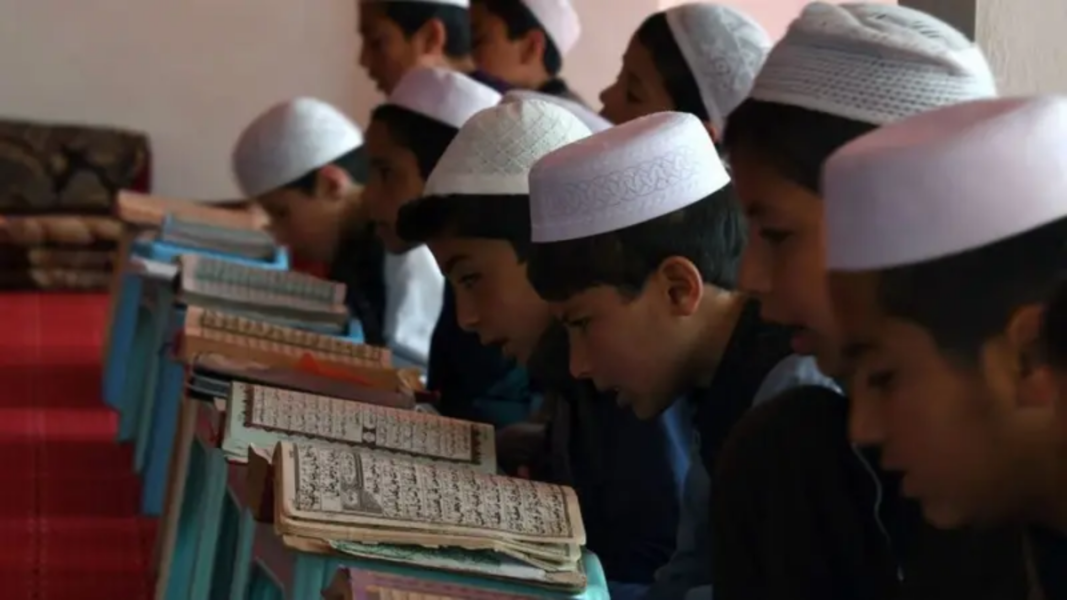
Another focus of attention is in Piacenza, where the Averroè Institute of Islamic Studies has promoted school visits to mosques and training sessions on Islam aimed at primary and secondary school students. According to the information disseminated by the institution itself, these activities include content on Muslim ethics, Islamic jurisprudence, the biography of Muhammad, and the study of the Quran.
At least two primary school classes and several secondary schools would have already participated in these initiatives. The situation has provoked political reactions, especially from parties like the Lega and Fratelli d’Italia, which have requested clarifications from the Ministry of Education and demanded that informed consent from families be guaranteed.
Controversy in Public Libraries
The controversy has also extended to the cultural sphere. In the Milan-Lambrate municipal library, a book attributed to Yahya Sinwar, leader of Hamas and considered one of the those responsible for the October 7 attack in Israel, was recently included among the recommended readings. The work was presented as a family-oriented autobiographical narrative, which generated criticism for the normalization of figures linked to Islamist terrorism.
Similar cases had already occurred previously, such as the presentation of the same book at La Sapienza University in Rome, initially suspended and later held after several weeks of controversy.
An Open Debate
The episodes reported by La Nuova Bussola Quotidiana have reopened the debate on the boundaries between religious freedom, cultural activity, and the risk of ideological penetration in educational and public spaces. Particularly controversial is the teaching of Sharia, a normative system that is not limited to the religious sphere, but regulates family, social, legal, and political aspects, and whose logic clashes with European civil orders.