


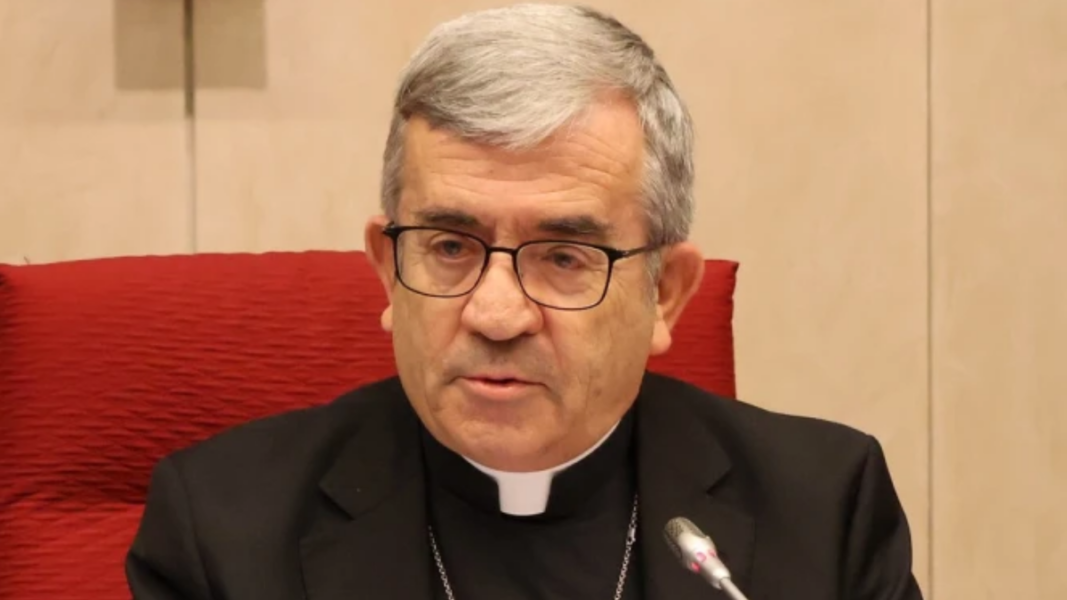
The statements by Monsignor Luis Argüello following the signing of the agreement between the Spanish Episcopal Conference and the Government, through which a channel for complaints is opened via the Ombudsman, deserve a serene but firm reflection. Not so much for what has been signed—which can be read as a gesture of institutional collaboration—but for the framework in which it is inserted and the implications it entails.
The president of the Episcopate has insisted that the agreement explicitly recognizes the Church’s reparation plan and that the new channel is not parallel to the PRIVA, but complementary; he also highlighted that it has the approval of the Holy See according to communications he himself had with the Secretary of State, Cardinal Parolin. Legally, it may be true. Ecclesiastically, the issue is more delicate.
A Recognition That Is Not Neutral
The State’s «recognition» of the Church’s reparation plan is not, in itself, a triumph. The Church does not need state validation to exercise justice, charity, and responsibility within its own house. When that recognition is presented as a legitimizing argument, it is worth asking who sets the conditions and from what presuppositions.
Recent experience shows that collaboration with political power on internal Church matters is rarely neutral. The State does not act out of pastoral concern or the spiritual good of the victims, but out of a political, media, and, in not a few cases, ideological logic.
The Ombudsman as Mediator: An Ecclesial Anomaly
Presenting the Ombudsman as a «complementary» channel may sound reasonable, but it introduces a disturbing element: the tacit assumption that the Church is not a sufficiently reliable sphere to welcome, discern, and repair. This thus opens the door to permanent external guardianship over a reality that, by its very nature, is ecclesial and not state.
This is not about denying the sins committed or downplaying the gravity of the abuses, but about remembering that the Church has—and must exercise—its own moral, legal, and pastoral authority. Delegating that function, even partially, erodes episcopal responsibility and reinforces the narrative of a Church incapable of governing itself.
Two Obsessions of the Government
Monsignor Argüello himself has pointed out a revealing fact: the two only issues that seem to interest the Government in its relationship with the Church are abuses and the Valley of the Fallen. This is not a minor observation. Both topics are used systematically as instruments of political pressure and ideological re-reading of the ecclesial past and present.
Accepting this framework without questioning it implies assuming that the Church always appears on the defensive, obliged to respond to external agendas, while other fundamental issues—religious freedom, education, family, life—remain outside institutional dialogue.
Prudence Is Not Submission
It is legitimate to seek paths of reparation and accompaniment for the victims. It is obligatory to do so with truth, justice, and charity. But pastoral prudence cannot be confused with the progressive cession of competencies or the normalization of state supervision over the internal life of the Church.
Ecclesial credibility is not recovered by handing over the initiative, but by exercising one’s own mission with clarity. The Church is not an NGO subject to external audits, but a reality founded by Christ, with direct responsibility before God and the faithful.
Time will tell whether this agreement truly serves the good of the victims or, on the contrary, consolidates a dangerous precedent. In the Church, decisions are not measured only by their intention, but by their fruits. And those fruits must be evaluated not from institutional complacency, but from the truth and freedom demanded by the Gospel.